⭐️⭐️⭐️⭐️⭐️ Over $500 million in business loans facilitated

Second Mortgage Private Loans

Over 200+ second mortgages facilitated Australia wide. Unlock equity and access capital. 

Hutch

Specialists in complex lending and strategic finance.

Leverage equity. Protect your first mortgage. Move your business forward.

What Is a Second Mortgage Private Loan?

A second mortgage is a loan secured by a second-ranking registered charge over your property, sitting behind your existing first mortgage. As a private lender, Secured Lending takes that second mortgage position — giving you access to the equity you’ve built up, while your first mortgage stays completely untouched.

You don’t need to refinance. You don’t need to approach your existing bank. And you don’t need to meet the same rigid criteria that block most borrowers from accessing capital through traditional channels.

Over 200 second mortgages facilitated across Australia — we know this product, and we know how to get them across the line fast.

Second mortgage private loans are short-term by design — typically 1 to 24 months — structured to bridge a gap, fund an opportunity, or resolve a pressing obligation while you work toward a longer-term solution. If you have equity in a residential or commercial property and a clear plan for repaying the loan, you may be eligible.


Who Uses Second Mortgage Private Finance?

You might be a good candidate for a private second mortgage loan if:

  • Your existing bank won’t lend additional funds against a property that already has a mortgage on it
  • You need capital quickly and can’t wait weeks or months for a formal bank process
  • You’re self-employed, operate through a company or trust, or have income that doesn’t fit standard serviceability assessments
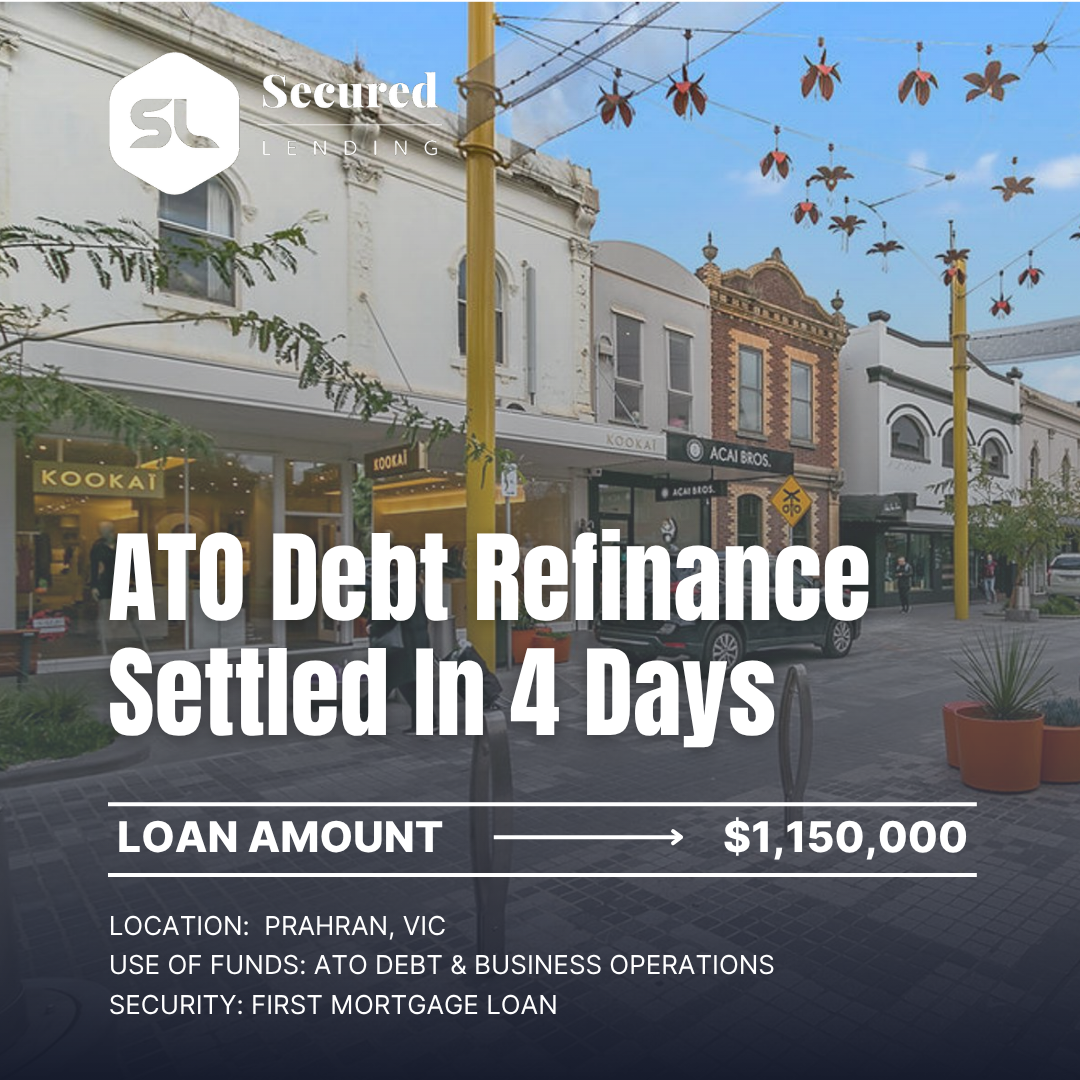
  • You have ATO debt, a creditor judgment, or an urgent payment obligation that needs to be cleared before it escalates
  • You want to fund business growth, acquire assets, or cover working capital without refinancing your first mortgage at a higher rate
  • Your bank has declined a refinance specifically because you have outstanding tax debt — a common catch-22 that a second mortgage can break
  • You need to bridge between the sale of a property and the settlement of a purchase
  • You’re behind on payments and need to consolidate debt before a formal default notice is issued

It’s ideal for business owners who need fast access to capital but don’t want to touch their first mortgage. Key features include:

  • Flexible loan terms — from 1 month to 24 months

  • Fixed interest rates — starting from 11.95%

  • Loan amounts based on equity — not your credit score

  • No need to refinance — your first mortgage stays untouched

Our team is here to help

Our dedicated team is always ready to assist you with a fast, obligation-free loan assessment

Frequently Asked Questions

How can we help you?

Yes — this is one of the most common and effective use cases for second mortgage private finance. The ATO is a secured creditor with significant enforcement powers, including director penalty notices, garnishee orders, and wind-up proceedings. Most banks will not refinance a borrower who carries active ATO debt because it creates a priority creditor risk. By using a second mortgage to clear the ATO debt first, you remove that obstacle and can approach your bank from a clean position. Borrowers in this situation often refinance back to mainstream lending within 6–12 months once their tax compliance is restored. Contact our friendly team today to discuss further.

Not necessarily — and in many cases, the reason a bank says no is the exact reason a private lender can say yes. Banks assess borrowers primarily on income, credit score, and liability profile. Private lenders assess the security property and the exit strategy. If a bank declined you because of ATO debt, irregular income, a trust structure, or a previous credit event, those factors carry significantly less weight with a private lender whose loan is secured in property. It's worth having a direct conversation with us before assuming the answer is no.

The two most important factors are property equity and exit strategy. On the equity side, we look at the current market value of your security property, the outstanding balance on your first mortgage, and the combined LVR the proposed second mortgage would create. On the exit strategy side, we look at how and when you intend to repay the loan — whether that's a property sale, a refinance, incoming contract proceeds, or another identified source of funds. Secondary considerations include the loan purpose, the borrower's legal and corporate structure, and any encumbrances on the title.

As a general guide, you'll need enough equity in your property to keep the combined LVR across your first and second mortgage at or below 70% for residential and commercial. If your property has appreciated significantly since you took out your first mortgage, you may have more usable equity than you realise. A preliminary equity assessment takes about 5 minutes — we use current market data and your first mortgage balance to give you a realistic borrowing estimate before you proceed.

Private mortgage loans are short-term by design — most run for 1 to 24 months — which limits exposure to property market fluctuations compared to long-term lending. At the time of approval, we assess the LVR conservatively to provide a buffer against moderate movements in value. If property values fall materially during the loan term, it may affect your ability to refinance or sell at the expected price — which is why a robust exit strategy that isn't solely dependent on a future valuation is important from day one. If circumstances change, the best approach is to contact us early so we can work through options.

If you have property equity available, a secured second mortgage almost always offers better terms than unsecured business finance. Unsecured loans are typically capped at lower amounts, carry significantly higher interest rates, and rely heavily on trading history and cash flow. A second mortgage allows you to borrow against an asset you already own, at rates that reflect the security behind the loan. Mezzanine finance is typically used in property development contexts where there is no existing first mortgage — it's a different product for a different purpose. If you own property with equity, a second mortgage is generally the most cost-efficient short-term capital option available outside of traditional bank lending.

Secured Lending does not lend to individuals. We only lend to companies, family trusts, unit trusts, and SMSFs subject to compliance requirements. 

Yes — this is exactly how most second mortgage private loans are structured and used. The typical path looks like this: you take a private second mortgage to address an immediate need (clear debt, fund a purchase, cover a cash flow gap), then use the loan term to stabilise your financial position, and refinance into a lower-cost first mortgage or business loan once you qualify. Lenders assess whether your exit strategy is realistic and achievable within the proposed term — so the clearer your refinance path, the stronger your application.

To get a preliminary assessment, you need very little — a rough idea of your property value, your first mortgage balance, and what you need the funds for. To proceed to formal approval, you'll typically need: a copy of your current first mortgage statement, a recent rates notice or evidence of property ownership, identification documents, a statement of the loan purpose, and details of your proposed exit strategy. You don't need full tax returns, P&L statements, or bank statements to get started — though these may be requested depending on the nature and complexity of your application.

Yes, though it adds a layer of complexity. When your first mortgage is held by a private lender rather than a bank, we need to review the terms of that first mortgage before proceeding — specifically whether it contains any restriction on subsequent encumbrances (a "no further mortgage" clause). Many private first mortgages do include these clauses, which means the first mortgage lender's consent would be required before a second mortgage can be registered. This isn't always a dealbreaker, but it does need to be identified early. If the first mortgage lender consents, the transaction can proceed normally. Bring us your first mortgage documentation at enquiry stage and we'll assess it upfront.

Your existing first mortgage lender typically doesn't need to approve the second mortgage, but they do need to be notified as part of the title and registration process. More relevantly, your first mortgage documents may contain a covenant requiring you to obtain consent before granting any further security over the property. Most standard bank mortgage documents include this obligation. Breaching it could technically trigger a default under your first mortgage — which is the last outcome anyone wants. Our legal team reviews your first mortgage terms as part of due diligence before we proceed, so this is something we handle systematically rather than leaving to chance.

A caveat is a notice lodged on title that protects a lender's interest in a property — but it is not the same as a registered mortgage. A caveat loan (sometimes called a caveat finance) is faster to settle because it bypasses the formal mortgage registration process, but it offers weaker legal protection for the lender. Because the security is less robust, caveat loans typically carry higher interest rates and lower LVRs than a registered second mortgage. A registered private second mortgage gives the lender a formal charge over the property that must be discharged before the title can be transferred or refinanced — which provides stronger security for both parties. If you have the equity and time to support a registered second mortgage, it will generally cost you less than caveat finance.

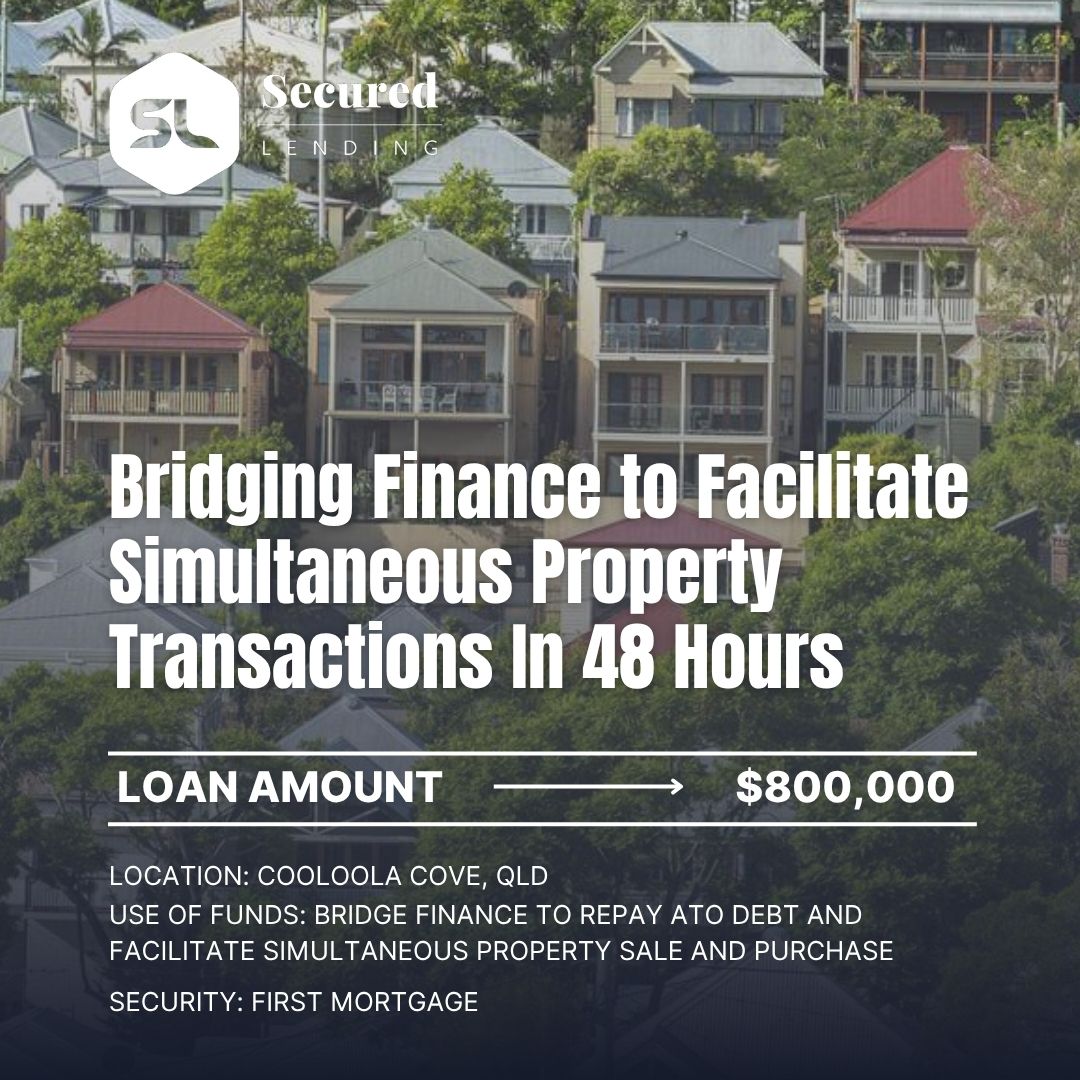
In some circumstances, yes — this is actually a scenario where private lending makes particular sense. If your property is under contract but settlement is weeks away and you have an urgent obligation to meet now, a second mortgage can bridge that gap, with the sale proceeds used to repay both the first and second mortgage on settlement. The key requirements are that the contract is unconditional (or near to it), the expected net sale proceeds are sufficient to clear both mortgages, and the settlement timeline aligns with the loan term. These are short, clean transactions when structured correctly — and we've settled them in under 48 hours when the situation demands it.

his is one of the most common situations we see — and it's a genuine catch-22. Your bank won't extend credit or refinance while you're carrying active tax debt, because the ATO sits as a priority creditor and creates risk for them. But without access to funds, you can't clear the debt. And the ATO won't wait indefinitely — enforcement action, director penalty notices, and garnishee orders are all on the table if the liability sits unresolved.

A private second mortgage breaks the cycle. You borrow against the equity in your property, clear the ATO debt immediately, and then approach your bank from a clean position — no outstanding tax liability, no judgment, no enforcement risk. With your compliance restored, mainstream refinancing becomes viable again. In many cases, borrowers are back with a bank product within 6–12 months at significantly lower rates. It's one of the most practical and cost-effective uses of second mortgage private finance in Australia, and it's a transaction we've facilitated repeatedly.

We're a direct private lender, which means loan decisions are made in-house by the people you're speaking to — not passed through a credit committee, not referred to a third-party funder, and not subject to approval delays caused by parties you'll never meet. We have our own in-house property valuation team. When we say we can move fast, that's why.

Beyond speed, the difference is specialisation. Over 200 second mortgages facilitated across Australia means we've worked through virtually every variation of this transaction — ATO debt scenarios, properties held in trust structures, arrears situations, urgent same-day settlements, complex titles, and interstate security. We've seen what can go wrong, and we know how to prevent it.

Our pricing is transparent from the first conversation — rates, fees, and terms are disclosed upfront with nothing buried in the fine print. And our legal and settlement team operates as part of the same process, which means fewer handoffs and faster outcomes for you.

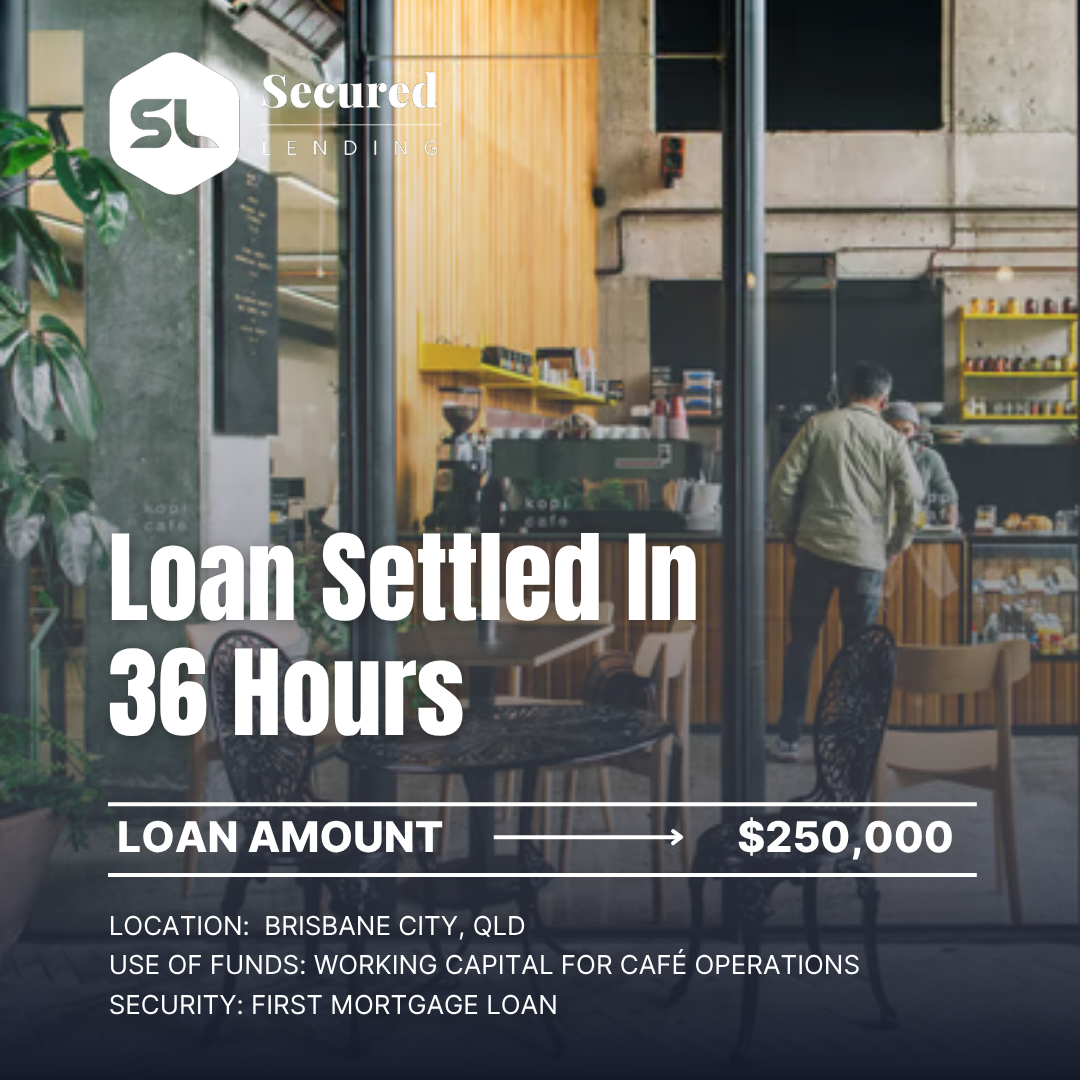
We can settle deals within 24 hours.