Private Lender for Hospitality Businesses
Finance that reads a trading year the way an operator does



Experts in strategic, short-term secured finance

Secured Lending is a private, non-bank lender for publicans, hoteliers, restaurateurs and venue operators. Accommodation and food services was second only to construction for companies entering external administration or receivership in 2025-26, according to ASIC. Takings rise and fall with the seasons, while wages, rent and supplier bills fall due every week. We top up working capital, clear ATO debt and refinance lenders, with loans from $250,000 secured by a first or second mortgage over property your business or a director owns. If your venue needs cash through a quiet stretch, we would be glad to help.
Who We Help
- Freehold publicans and hotel owners with real equity in the venue itself
- Motel, boutique hotel and accommodation operators funding a refurbishment or a purchase
- Restaurant and cafe operators on a leasehold, borrowing against the director's home or investment property
- Bar and licensed venue owners moving on a site, a licence or an equipment upgrade
- Operators buying a venue, taking on a lease assignment, or funding a fit-out to a deadline
- Groups carrying an ATO debt that has grown through a slower stretch of trade
- Operators topping up working capital to pay wages and suppliers through a quiet season
- Venues still carrying balance sheet damage from the COVID years despite trading well now
- Operators declined by a bank on servicing while holding substantial property equity
How We Can Help You
- We assess the property and the exit, so a seasonal or event-driven revenue line is not a reason to decline
- Freehold venues are lent against directly, and leasehold operators are funded against the director's home or investment property
- Our own valuers assess the security, including going-concern hotels and pubs a desktop model cannot price
- We hold our own funds and our own credit authority, so a decision takes hours and settlement can happen within 24 hours
- A second mortgage releases capital without disturbing an existing first facility or breaking a fixed rate
- Terms run from 1 to 24 months, most borrowers use 3 to 6, and rates start from 9.7% p.a., interest only
Hospitality Finance Scenarios We Fund
Hospitality lending is not one product. A freehold publican refinancing a venue needs a different structure to a cafe operator on a leasehold clearing an ATO position. Below are the scenarios we are asked for most often.
Topping up working capital through a quiet season
A quiet season cuts takings, but wages, rent, insurance and supplier bills still fall due every week. Where supplier costs have risen, less of each sale is left over to carry the venue through to the busy months.
A working capital loan tops up the venue's cash, so staff are paid on time, suppliers stay on terms and the venue is stocked and staffed for the busy season. It is a short facility, repaid from the peak season trade or a refinance.
- Wages paid on time through the quiet months
- Supplier accounts paid on terms, so deliveries keep coming
- Rent, insurance and licence fees covered while takings are down
- The venue stocked and staffed before the busy season begins
- Second mortgage leaves an existing first facility in place
- Exit is the peak season trade or a refinance
Freehold pubs and hotels
A freehold venue holds real value in the land, the building and the licence, and almost none of it is reachable when the operator actually needs it. The money is wanted now, for a second site, a refurbishment or a tax position, and the equity just sits there through the quiet months doing nothing.
You get that capital out of the venue you already own, and you get it while the opportunity is still available. The trading year becomes a timing question rather than a credit question, and the facility clears on the exit you nominate.
- Going-concern pubs and hotels assessed by our own valuers
- The venue keeps trading as normal for the life of the facility
- Capital released for a second venue, a refurbishment, or an ATO position
- A second mortgage sits behind your existing first facility, which stays in place
- The equity in the venue is put to work instead of sitting idle
- Exit is a refinance, a partial sale, or trade through a strong run
Motels and accommodation
Occupancy moves with the calendar. School holidays, events and the summer run fill the rooms, and the shoulder months pay the same rates, insurance and wages against far less revenue. A refurbishment usually has to happen in exactly the window when income is thinnest.
The rooms come back online before the season they were meant to serve, not after it. The work is done, the beds are sellable for the run that pays for them, and the facility is repaid from the trade it unlocks or a refinance once the results are on the books.
- Motels, boutique hotels and serviced accommodation all funded
- Funds a refurbishment, a room upgrade, or the purchase of the next site
- The work is done in the off season, not in the middle of the peak run
- Rates, insurance and wages keep getting paid through the shoulder months
- A thin winter is read as seasonality, not as a weak venue
- Exit is a refinance, a sale, or the peak season trade
Restaurants, cafes and bars
Most restaurant, cafe and bar operators trade on a leasehold, so there is very little in the business itself that can be borrowed against. A licence transfer, a second site or a kitchen that has failed all land at once, and the trade cannot be paused while the money is found.
The kitchen keeps running, the staff are paid, and the site gets taken before someone else takes it. A strong operator on a lease can reach serious funding here, and the facility clears from trade, a refinance, or the sale of the business.
- Leasehold venues funded without a freehold
- Second mortgage sits behind an existing home loan, which does not have to be broken
- No security is taken over the venue, the lease or the equipment
- Funds a licence transfer, an equipment replacement, or a second site
- The doors stay open while the work is done, so the trade is not lost
- Exit is trade, a refinance, or a sale of the business
Venue purchase or fit-out
A venue coming to market moves fast, and a fit-out has a fixed opening date attached to it. Deposits, lease assignments, licence transfers and builders all fall due long before the doors open and the first dollar comes across the bar.
The venue is yours before the next bidder moves, and the fit-out is finished in time to open on the date you set rather than a month into the season. The facility carries the venue to the point it is trading, and the exit is a refinance to a longer-term lender once there is a history to show them.
- Funds a deposit, a purchase, or a full fit-out
- The deposit is met at the price the venue was offered at
- Builders and suppliers are paid on time, so the fit-out does not stall
- The opening date holds and the venue trades into the season it was bought for
- Structured around the opening, not around a trading history that does not exist yet
- Exit is a refinance to a longer-term lender once trading history exists
Bridging finance
Two venues rarely settle on the same day. A publican buying a second hotel before the first one sells, or an operator whose sale has slipped past the purchase date, is holding a gap that has a fixed cost and a hard date on it.
The purchase completes on the date it was contracted for, and the venue you are buying does not go back on the market while a sale takes its time. The loan is sized to the period between the two dates and repaid from the sale proceeds or a refinance once the position settles.
- Covers the gap between a venue purchase and a sale
- The settlement holds, even when the outgoing sale runs late
- Caveat loan available where the window is very short
- The venue being sold does not have to be discounted to make a date
- Both venues can be held for the length of the gap
- Exit is the sale proceeds or a longer-term refinance
ATO tax debt
ATO debt is common across hospitality, and much of it dates back to the COVID years rather than to anything happening in the venue now. Penalty interest compounds on the balance, recovery action does not pause for a quiet quarter, and a director penalty notice can follow a broken payment plan. The ATO says that where a business does not pay or does not engage with it, it may take firmer action, including garnishee notices to your bank or merchant card provider and director penalty notices.
The ATO stops escalating and the penalty interest stops compounding, because the position is cleared in a single payment. What is left is a short, defined facility repaid from trade or a refinance.
- Clears the ATO position in a single payment
- Stops penalty interest compounding on the balance
- Suitable where a payment plan has already been broken
- The venue keeps trading and the staff keep being paid while it is sorted out
- An old COVID era balance is treated as history, not as a verdict on the venue
- Exit is trade through a strong run, a sale, or a refinance
Refinancing off a bank
Banks have tightened sharply on hospitality since 2020, and the result lands on operators who have done nothing wrong. A facility is not renewed, a limit is cut, or a review arrives with a twelve month average that flattens a strong summer into a soft number, and the venue underneath it is still full every weekend.
The facility is replaced and the deadline is met, so the venue is not pushed into a rushed sale to satisfy a review date. From there the operator moves to a longer-term lender on their own timeline, and that refinance is the exit.
Where a lender is calling in the loan, we can refinance it out before or after it issues a default notice or appoints a receiver.
- Refinances an expiring or non-renewed bank facility
- Clears a facility reviewed in a quiet quarter
- Room to trade through to a season that shows the venue as it really is
- Works where the trade is strong but a twelve month average is soft
- First and second mortgages both available
- Exit is a refinance to a longer-term lender, or a sale
Our Loan Products
- First mortgage: the cleanest position, used where a freehold venue is unencumbered or an existing facility is being refinanced in full
- Second mortgage: sits behind an existing first, so a bank facility or a home loan does not have to be broken to release equity for the venue
- Bridging loans: covers the gap between buying one venue and selling another, or between a fit-out cost and the trade that repays it
- Caveat loans: our fastest product, lodging a caveat rather than registering a full mortgage, for genuinely urgent and short repayment windows
Related Reading
- →Private lender for hotel and motel finance
- →Private lender for a pub or bar purchase
- →Private lender for restaurant finance
- →Bridging finance for hospitality businesses
Bad Credit Finance for Pubs, Bars and Venues
Hospitality trading records are lumpy by nature, and one poor year in the accounts can leave a credit file no bank will touch. We lend against the freehold property behind the business, to 70% LVR, and value it on a going-concern basis where that is the right measure. Defaults and arrears are ordinary on the files we fund in this sector.
"Hospitality takings arrive in waves, and a year of trade averaged into a single figure reads a strong venue as a volatile one. We read it as timing. That is what lets an operator trade through the shoulder months, finish the refurbishment before the season rather than during it, and keep the doors open when the quiet quarter lands."

Gino Tabila
Associate Director
Recently Asked Questions
Get an indicative offer within hours, not weeks.
No credit check. No obligation.
Why Secured Lending?
Are you a broker? Find out why brokers love working with us.
Case Studies
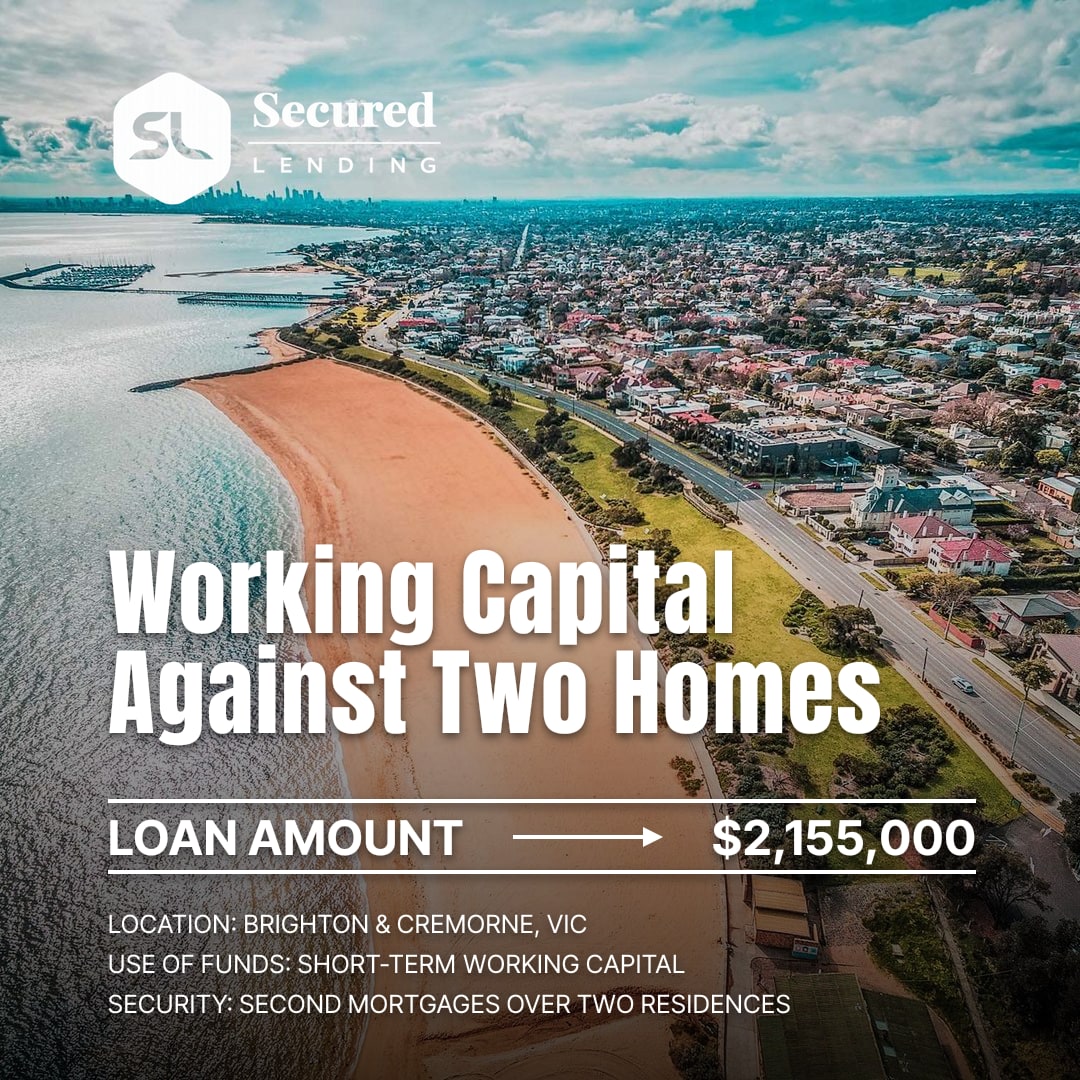
$2.155M Second Mortgage Working Capital Facility Across Brighton and Cremorne

$280K Second Mortgage for Short-Term Cash Flow in Kooyong

$545K Bridging Loan Across Three Suburbs in Melbourne's North-West

$400K Second Mortgage Repaid in Full After a Flexible Two-Month Extension

$1.8M First Mortgage Releases $980K of Working Capital for a Solar Business

$2.3M Second Mortgage Refinances an 18% Facility for a Glass Manufacturer

$800K Bridging Finance for Simultaneous Property Transactions in 48 Hours