Private Lender for Manufacturing Businesses
Capital released against the industrial property, at the speed the order book moves



Experts in strategic, short-term secured finance

Secured Lending is a private, non-bank lender. We fund manufacturers against the property they already own, usually the factory or the industrial premises they operate from, and we do it in days rather than months. A manufacturer buys raw materials and pays wages months before the finished goods are invoiced and paid, so the balance sheet looks its worst at exactly the moment the order book looks its best, and a bank serviceability model reads that as risk. Loans run from $250,000 to $10,000,000, secured by a first or second mortgage over industrial, commercial or residential property. This is business purpose lending, we lend our own funds, and a complete enquiry gets a decision in hours.
Who We Help
- Food and beverage producers carrying ingredient, packaging and labour costs well ahead of the invoice
- Metal fabrication and engineering workshops funding materials on a fixed-price contract
- Plastics, injection moulding and packaging manufacturers holding resin and stock against forward orders
- Manufacturers releasing equity from the factory to fund a plant upgrade or a production line
- Operators who have won a large or seasonal order and need the raw materials in the door now
- Businesses carrying an ATO debt while the receivables ledger is healthy but slow
- Asset-rich manufacturers declined by a bank on servicing despite holding real equity in the premises
- Companies, trusts and directors borrowing against an industrial, commercial or residential property
How We Can Help You
- We assess the property and the exit, so a working capital cycle that runs months long is read as normal for the sector
- Our own valuers assess industrial and commercial security directly, including factories and warehouses a desktop model cannot price
- We hold our own funds and our own credit authority, so a decision takes hours and settlement can happen within 24 hours
- We take a first or second mortgage, so an existing facility does not need to be broken to release capital from the factory
- Terms run from 1 to 24 months, and most borrowers are with us for 3 to 6 while the exit completes
- Rates start from 9.7% p.a., interest only for the term
Manufacturing Finance Scenarios We Fund
Manufacturing lending is not one product. A food producer funding a seasonal run needs a different structure to a fabricator clearing an ATO position. Below are the scenarios we are asked for most often.
Food and beverage production
Ingredients, packaging, cold storage and labour are all paid for well before the pallets leave the dock, and the supermarket or distributor terms then stretch the wait out further. A new listing or a promotional run makes the gap wider, not narrower.
You take the listing instead of passing on it. The run is funded, the pallets ship on the date the buyer was given, and the facility clears when the invoices are paid. The assessment turns on the equity in the premises, so a single heavy production month does not decide the answer.
- You take the listing or the promotional run instead of passing on it
- Ingredients, packaging, cold storage and wages are covered through the gap
- The pallets ship on the date the buyer was given
- A second mortgage sits behind an existing home loan or facility
- Assessed on equity, not on one heavy trading month
- Exit is the receivables, a contract payment, or a refinance
Metal fabrication and engineering
Steel, aluminium and consumables are bought at the front of a job, the labour runs for months, and payment arrives on the terms the head contractor sets. A fixed-price contract means the material cost is carried in full and cannot be repriced.
The steel is on the ground when the job starts and the crew stays on the tools. The facility is sized to carry the job through to the point it is invoiced and paid, so it is short by design and the contract payment clears it.
- You take the contract instead of turning it down
- Steel, materials, consumables and labour are funded from day one of the job
- The fixed price you quoted still holds when the job runs
- A second mortgage sits behind an existing facility, which stays intact
- No P and L or tax return required for an asset-based assessment
- Exit is the contract payment or the progress claim
Plastics and packaging
Resin, film and board are bought in volume to hold a price, and moulds and tooling are paid for long before the first unit ships. Stock sits in the warehouse as working capital that cannot be spent on anything else.
You hold the price you were quoted on the resin, and the tooling is paid for before the first unit is due out. The stock on the floor stops being dead capital, and the facility is repaid as the orders convert.
- Resin, film, board, tooling and moulds are funded up front
- You buy at volume to hold a price rather than buying hand to mouth
- The line keeps running while the order book converts
- No security taken over your stock or your debtor book
- Our own valuers assess the premises directly
- Exit is the order book converting, or a bank refinance
Plant and factory upgrades
A production line needs replacing, a second shift needs a second machine, or a piece of plant comes up at the right price with a short window on it. Waiting six weeks on finance usually means watching the opportunity go to someone else.
The machine is installed and running before the contract starts, not three months into it. We release the capital against the factory or the industrial property, never against the plant itself, so the machine is never what we assess and never what carries the deal. The exit is often a refinance onto equipment finance once the line is up.
- The machine is in and commissioned before the contract begins
- Funds machinery, tooling, fit-out and line upgrades
- A short window on the right piece of plant can actually be met
- The second shift gets the second machine it needs
- The opportunity goes to you, not to the buyer who moved first
- Exit is equipment finance, a bank refinance, or trading income
Bridging finance
A new factory settles before the old one sells, a landlord will not extend a lease past the move-out date, or a long-term facility is approved but weeks away from funding while a deadline sits in front of it.
The deadline is met and the longer-term outcome still happens on its own timeline. You move into the new factory without having to dump the old one, and the facility clears the moment the sale settles or the incoming loan funds. Bridging is a core speciality, and the structure is built around a defined exit and a short term.
- You settle on the new factory before the old one has sold
- The move happens on the lease date, not the sale date
- Covers the gap while a longer-term facility is funded
- The old site is sold on its merits, not in a hurry
- Caveat loan where the deadline is immediate
- Exit is the sale, the incoming facility, or a bank refinance
Refinancing off a bank
Banks have tightened on manufacturing, and the result lands on operators who have done nothing wrong. A facility is not renewed, an overdraft limit is cut, or an annual review arrives in the middle of a build cycle, and the factory underneath it all is still there and still worth what it was worth.
The review date stops driving the decision and the factory stays yours. The business gets room to move to a longer-term lender on its own timeline rather than a timeline someone else set, and the refinance is done properly instead of in a panic.
- Refinances an expiring or non-renewed facility
- The cut overdraft limit is replaced with a defined, short facility
- The review date stops driving the decision
- The factory stays yours while the position is sorted out
- Production keeps running while a longer-term refinance is arranged
- Exit is a refinance to a longer-term lender, or a property sale
ATO tax debt
ATO debt attracts penalty interest that compounds, and recovery action does not pause while the receivables ledger catches up. Once a payment plan is broken the pressure escalates quickly, and a director penalty notice can follow.
The debt is cleared in a single payment and the escalation stops. The business repays a short, defined facility from trading or a refinance, and in most cases the cost of that facility is less than the penalties and the recovery action that would otherwise apply.
- Clears the ATO position in a single payment
- Stops penalty interest compounding on the balance
- Suitable where a payment plan has already been broken
- Wages and supplier accounts keep being paid while the debt is cleared
- The line keeps running instead of stopping on a recovery action
- Exit is the receivables, trading income, or a bank refinance
Working capital
A large or seasonal order is good news that costs money before it makes any. Raw materials, an extra shift, freight and supplier accounts all fall due while the finished goods are still on the floor, and debtor terms then push the payment out another month or two.
You take the order instead of turning it down. The raw materials are on site when the run starts, the staff are paid through the gap between production and payment, and the facility is repaid out of the income when the invoices land.
- The big order is accepted, not handed to a competitor
- Covers raw materials, wages, freight and supplier accounts
- The raw materials are on site when the run starts
- The staff are paid through the gap between production and payment
- A second mortgage keeps an existing first facility intact
- Exit is the receivables, a contracted sale, or a refinance
Our Loan Products
- First mortgage: the cleanest position, used where the factory is unencumbered or an existing facility is being refinanced in full
- Second mortgage: sits behind an existing first, so a bank facility over the premises does not have to be broken to release equity for materials, plant or tax
- Bridging loans: covers the gap between a purchase and a sale, or between the cost of a production run and the invoice that repays it
- Caveat loans: our fastest product, lodging a caveat rather than registering a full mortgage, for genuinely urgent and short repayment windows
Related Reading
- →Private lender for manufacturing business finance
- →Secured loan for manufacturing businesses
- →Bridging finance for manufacturing equipment
- →Private lender for an industrial property purchase
Bad Credit Lending for Manufacturers
A manufacturer's balance sheet looks worst exactly when the credit file does, and the two feed each other into a bank decline. We lend against the commercial or industrial property the business owns, never against the plant inside it, and we assess the equity inside 70% LVR rather than the trading history. Defaults, arrears and ATO debt are all workable.
"A manufacturer's balance sheet looks its worst at exactly the moment the order book looks its best, because the materials and the wages go out months before the invoice comes in. We fund that gap. It means the big order gets accepted instead of turned down, and the line keeps running while it is being filled."

Gino Tabila
Associate Director
Recently Asked Questions
Get an indicative offer within hours, not weeks.
No credit check. No obligation.
Why Secured Lending?
Are you a broker? Find out why brokers love working with us.
Case Studies
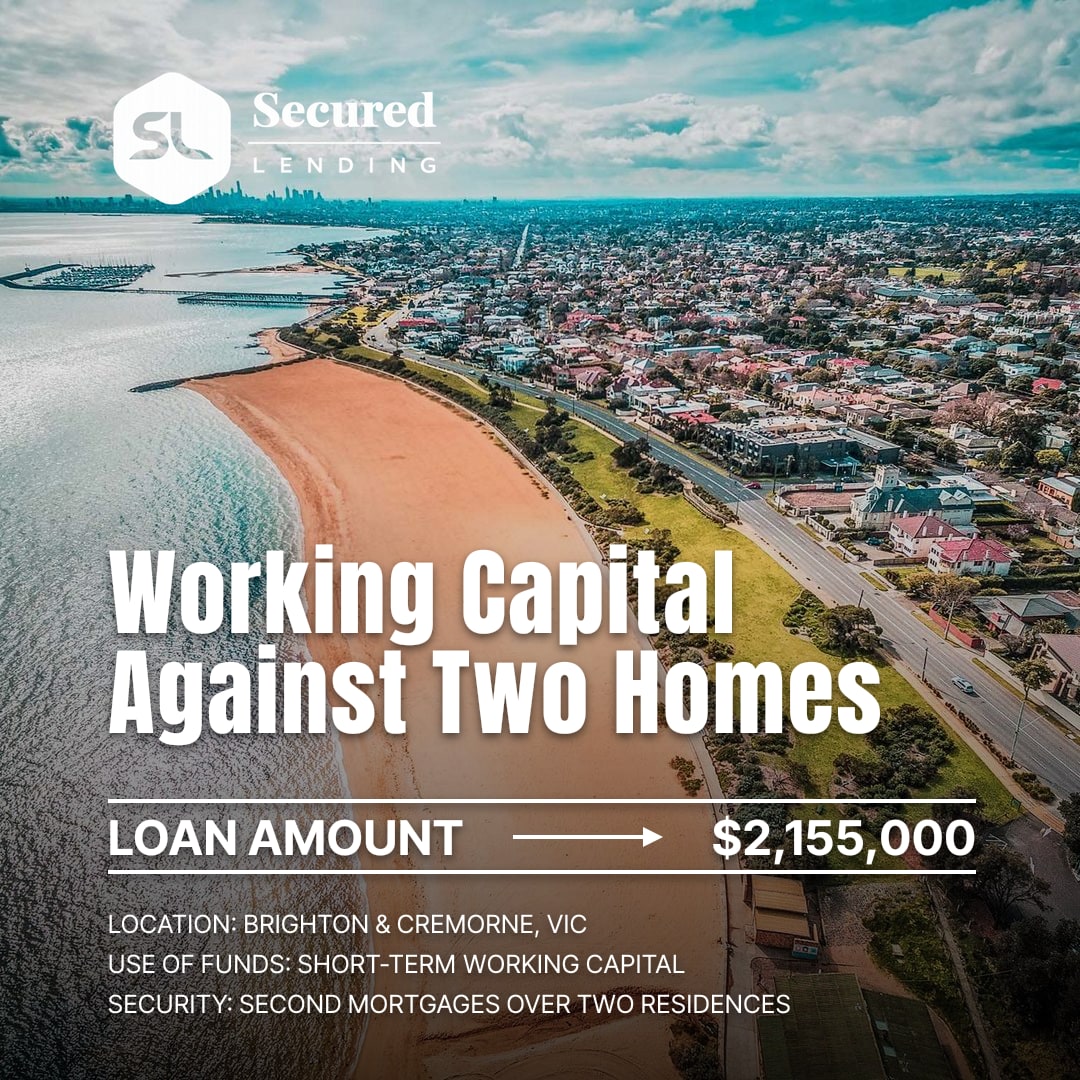
$2.155M Second Mortgage Working Capital Facility Across Brighton and Cremorne

$280K Second Mortgage for Short-Term Cash Flow in Kooyong

$545K Bridging Loan Across Three Suburbs in Melbourne's North-West

$400K Second Mortgage Repaid in Full After a Flexible Two-Month Extension

$1.8M First Mortgage Releases $980K of Working Capital for a Solar Business

$2.3M Second Mortgage Refinances an 18% Facility for a Glass Manufacturer

$800K Bridging Finance for Simultaneous Property Transactions in 48 Hours