Private Lender for Real Estate and Property Investors
Capital that moves at the speed of the deal, secured on the portfolio you already hold



Experts in strategic, short-term secured finance

Secured Lending is a private, non-bank lender. We fund property investors and real estate professionals against the securities they already hold, and we settle in days rather than months. Loans run from $250,000 to $10,000,000, secured by a first or second mortgage over one property or several. Investors with real portfolios are usually declined on servicing or on an exposure limit rather than on the merits of the deal, and an investor can be declined for having too much property rather than too little, because an exposure limit is a policy ceiling and not a judgment on the asset. We assess the security and the exit. This is business purpose lending only, exempt from the NCCP Act. We do not write owner-occupier home loans, we do not fund first home buyers, and we do not lend to individuals in their personal name for personal, domestic or household purposes.
Who We Help
- Portfolio investors funding the next acquisition while the bank works through a servicing review
- Buyers at auction with an unconditional contract and a hard settlement date
- Investors releasing equity across several securities to fund a deposit, a renovation or a further purchase
- Borrowers who need a single facility written across two or more properties rather than one deal per asset
- Investors buying before selling, where the incoming settlement is due ahead of the outgoing one
- Companies, unit and discretionary trusts, and SMSFs holding property for investment purposes
- Real estate and property professionals carrying an ATO debt against a strong asset position
- Established investors who have hit an exposure cap with their current lender on a particular asset class
How We Can Help You
- We assess the security and the exit, so a portfolio that is large rather than small is an asset in the file and not an obstacle
- We can write one facility across multiple securities, so the equity in the portfolio is treated as a single pool
- We hold our own funds and our own credit authority, so a decision takes hours and settlement can happen within 24 hours
- Our own valuers assess the security directly, including commercial, mixed-use and non-standard assets
- A second mortgage releases capital without disturbing an existing first, so a fixed rate stays intact
- Terms run from 1 to 24 months, most commonly 3 to 6, interest only, from 9.7% p.a.
Property Investment Scenarios We Fund
Investor lending is not one product. An auction settlement in 30 days needs a different structure to an equity release written across four titles. Below are the scenarios we are asked for most often.
Portfolio expansion and the next acquisition
The next asset is in front of you and the equity to fund it is already sitting in the portfolio. What is missing is a lender able to release it inside the window the vendor is working to.
You take the deal at the price it was offered at, and the capital that has been sitting idle across the portfolio is what pays for it. The facility is sized to the equity the portfolio actually carries, and it clears on a term refinance once the new asset is settled and tenanted, or on a sale within the portfolio.
- The equity already in the portfolio funds the next acquisition
- One facility can be written across several properties
- The buy is committed to inside the vendor's window, not after it
- An exposure cap at one lender does not have to cap the portfolio
- Facilities that are performing are left where they are
- Exit is a term refinance or a sale within the portfolio
Auction purchases with a hard settlement date
An auction contract is unconditional. There is no finance clause, the deposit is at risk, and the settlement date does not move because a credit assessment is still in a queue.
You bid with a settlement you can actually meet. The position is known before the paddle goes up rather than after it, the unconditional date is met, and the facility carries the purchase until a term lender takes it over.
- Funds an unconditional settlement to a fixed date
- The ceiling you can bid to is known before the auction, not after
- No finance clause, and no need for one
- The deposit is not left riding on a credit queue
- The purchase is carried through until a term lender takes it on
- Exit is a term refinance or the sale of another asset
Bridging finance and buying before selling
The asset you want is available now and the one funding it has not settled yet. Selling first to be safe usually means selling into a worse position, and it hands the timing of the whole portfolio to a buyer you have not met.
You buy the next one before selling the last one, on your timeline rather than the market's. The purchase completes now and the facility is repaid from the sale proceeds when that settlement occurs. It is short by design, because the repayment is already contracted.
- Covers the gap between an incoming and an outgoing settlement
- Removes the need to sell first and buy second
- No fire sale to meet somebody else's settlement date
- The outgoing asset is sold into the market you choose to sell into
- Repayment is already contracted, so the term stays short
- Exit is the sale proceeds or a term refinance
Equity release across multiple securities
Years of holding have built real equity, and it is spread across several properties rather than concentrated in one. Pulling it out one asset at a time is slow, and it usually means touching facilities that are performing perfectly well.
The capital that has been locked up for years comes back out and goes to work. We can sit in second position so an existing first facility and its rate stay untouched, and the funds go to a deposit, a refurbishment, a business purpose acquisition, or a capital call with a date on it.
- The equity sitting idle across four properties can fund the fifth
- Capital drawn from one property or from several at once
- Second mortgage keeps the existing first facility intact
- The rate on the existing first facility is not disturbed
- Funds a deposit, works, or a business purpose acquisition
- Exit is a term refinance or an asset sale
Cross-collateralised facilities
Property-rich investors hold more than one asset, and the equity that funds a deal rarely sits neatly inside a single property. Writing one loan per asset multiplies the paperwork, the valuations and the settlement dates for no benefit.
One facility, one assessment, one settlement date, across the whole pool. Residential, commercial and mixed-use assets can sit in the same structure, and our own valuation team assesses them directly rather than sending each one out to an external valuer.
- One facility written across two or more properties
- Residential, commercial and mixed-use assets accepted
- First and second mortgages, in combination where needed
- In-house valuers assess the whole position at once
- One set of paperwork and one settlement date, not four of each
- Exit is a term refinance or a sale of one asset in the pool
Refinancing off a bank or an expiring facility
A facility comes up for review, a limit is cut, or an exposure cap is reached on a borrower or an asset class, and none of it reflects on the properties themselves. A policy ceiling is a decision about a bank balance sheet, not a judgment on the assets you hold.
You get room to move. The position is refinanced, the cap is cleared without a forced sale, and you go to a longer-term lender on your own timeline rather than on a review timeline.
- Refinances an expiring, reviewed or non-renewed facility
- Clears an exposure cap without a forced sale
- Written for investors declined for holding too much property, not too little
- The portfolio stays intact while the file is put together properly
- The move to a longer-term lender happens on your timeline
- Exit is a refinance to a longer-term lender, or an asset sale
ATO tax debt for property investors
ATO debt attracts penalty interest that compounds, and an unresolved balance sits over every future finance application in the portfolio. Once a payment plan is broken the recovery pressure escalates quickly, and a director penalty notice can follow.
The balance is cleared in a single payment, the penalty interest stops compounding, and the ATO stops escalating. The facility is short and defined, and it is repaid from a rental refinance, an asset sale, or a term lender once the tax position is clean again.
- Clears the ATO position in a single payment
- Stops penalty interest compounding on the balance
- Suitable where a payment plan has already been broken
- No part of the portfolio is sold down to meet a recovery deadline
- Future finance applications stop being held up by the balance
- Exit is a refinance or an asset sale
Working capital across the portfolio
Rates, land tax, strata levies, a special levy, a vacancy between tenants, or a refurbishment that has to happen before a property can be relet. The costs are real and they land on a date, while the income they protect arrives later.
The cost is met on the date it lands, the refurbishment happens, and the property goes back on the market relet instead of sitting empty. The assets keep performing, nothing is sold at the wrong point in the cycle, and the facility is repaid from the rent, a refinance, or a planned sale.
- Covers land tax, levies, vacancy periods and refurbishment costs
- The works get done, so the property can be relet
- Nothing is sold at the wrong point in the cycle
- Second mortgage keeps an existing first facility in place
- Assessed on the equity in the portfolio, not on a trading forecast
- Exit is rental income, a refinance, or a planned sale
Our Loan Products
- First mortgage: the cleanest position, used where a property is unencumbered or an existing facility is being refinanced in full
- Second mortgage: sits behind an existing first, so a performing facility and a fixed rate do not have to be broken to release equity from the portfolio
- Bridging loans: covers the gap between a purchase and a sale, so an acquisition does not depend on an outgoing settlement occurring first
- Caveat loans: our fastest product, lodging a caveat rather than registering a full mortgage, for genuinely urgent and short repayment windows such as an auction shortfall
Related Reading
- →Private mortgage lender for investment property
- →Private mortgage lender for commercial property
- →Secured loan for expanding investment portfolios
- →Private lender for auction finance
Bad Credit for Property Investors
Investors with several properties and several lenders trip serviceability tests long before anything actually goes wrong, and one late payment can close the whole market to them. We lend against the equity in the investment property, to 70% LVR, and read the exit rather than the score. Business purpose only, rates from 9.7% p.a., and no full financials on an asset-backed file.
"The investors who come to us are rarely in trouble. They are usually the ones who have done it well enough that a bank has reached its exposure limit on them. An exposure cap is a policy ceiling, not a judgment on the deal. We fund the next acquisition, so the auction gets won and the off-market opportunity gets taken rather than watched."

Gino Tabila
Associate Director
Recently Asked Questions
Get an indicative offer within hours, not weeks.
No credit check. No obligation.
Why Secured Lending?
Are you a broker? Find out why brokers love working with us.
Case Studies
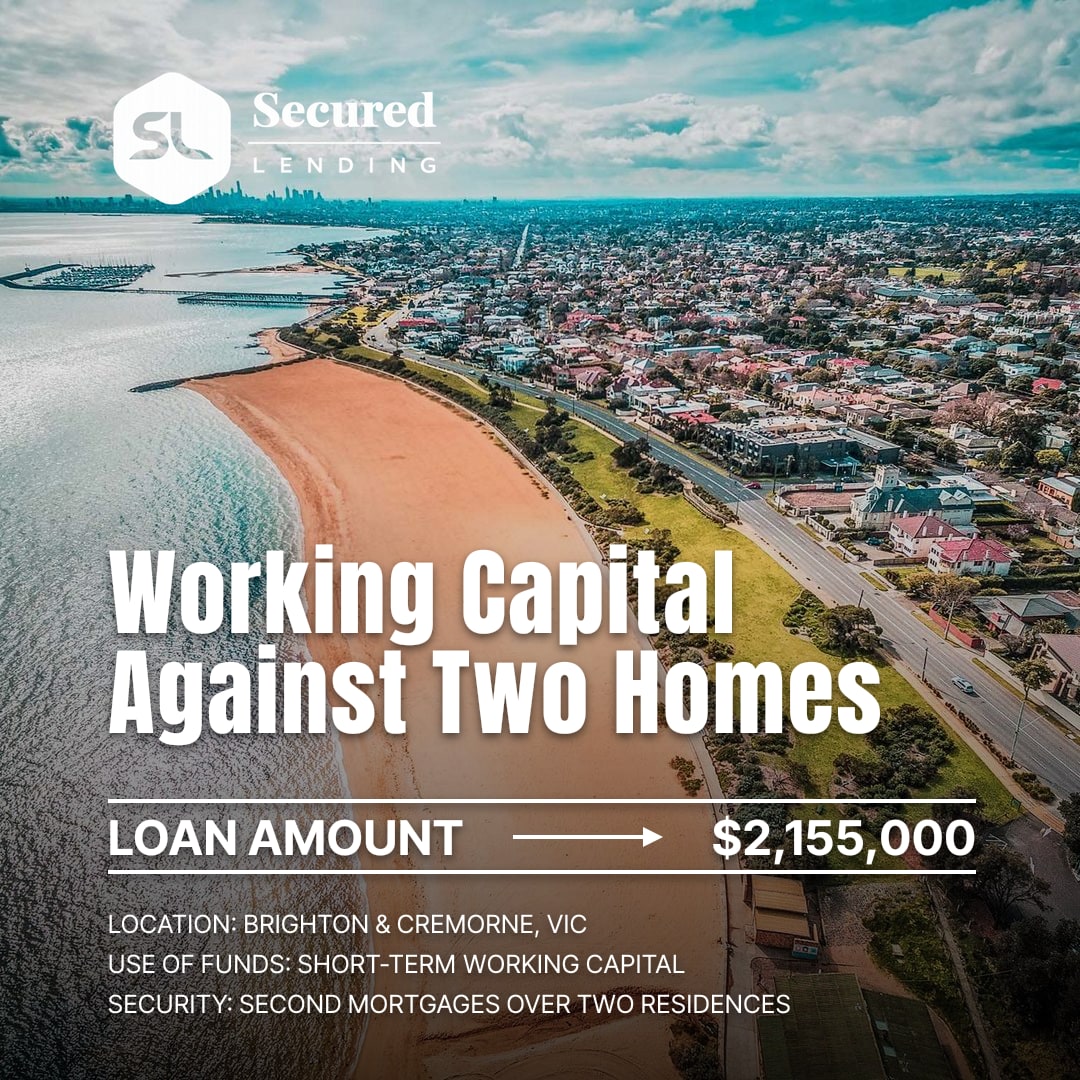
$2.155M Second Mortgage Working Capital Facility Across Brighton and Cremorne
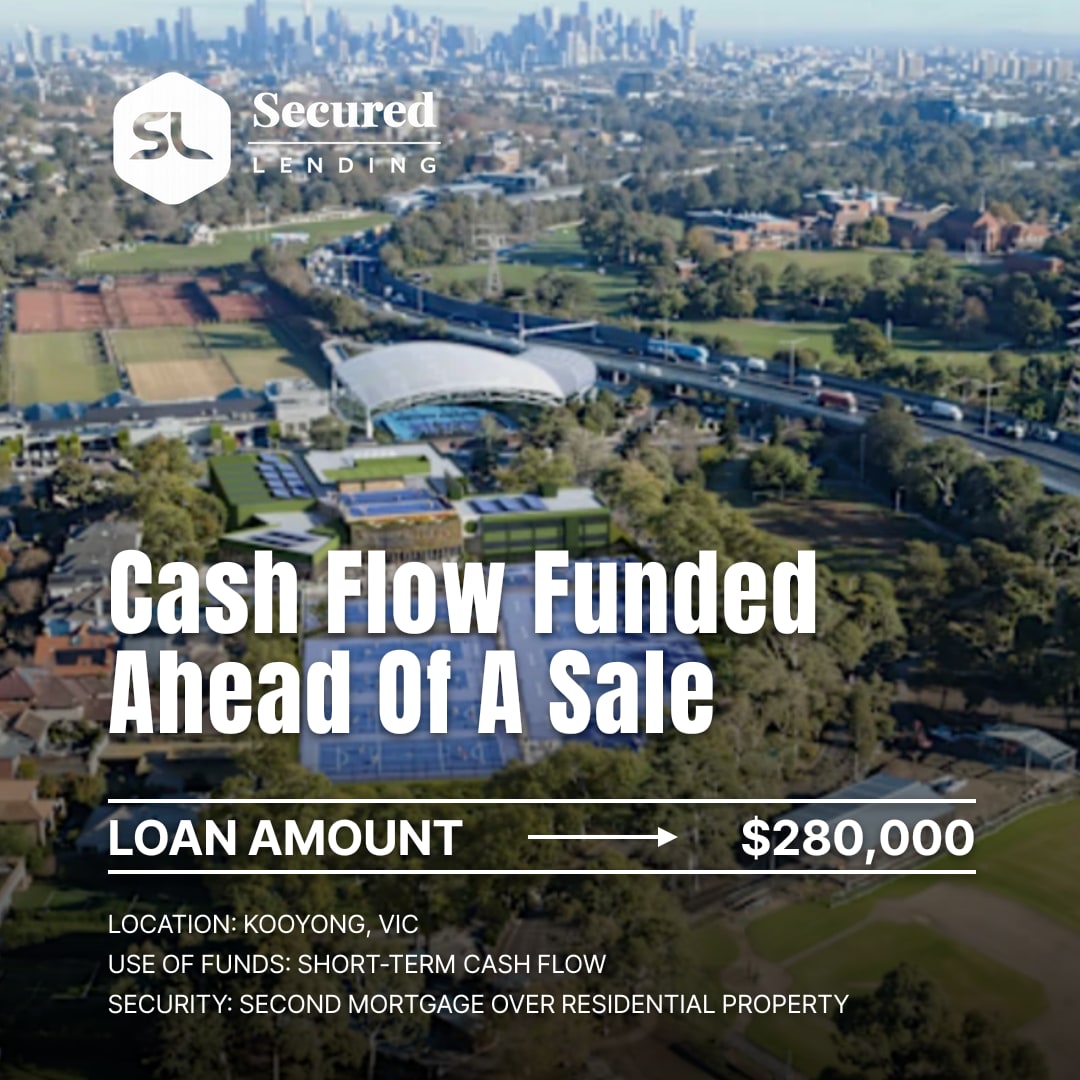
$280K Second Mortgage for Short-Term Cash Flow in Kooyong

$545K Bridging Loan Across Three Suburbs in Melbourne's North-West
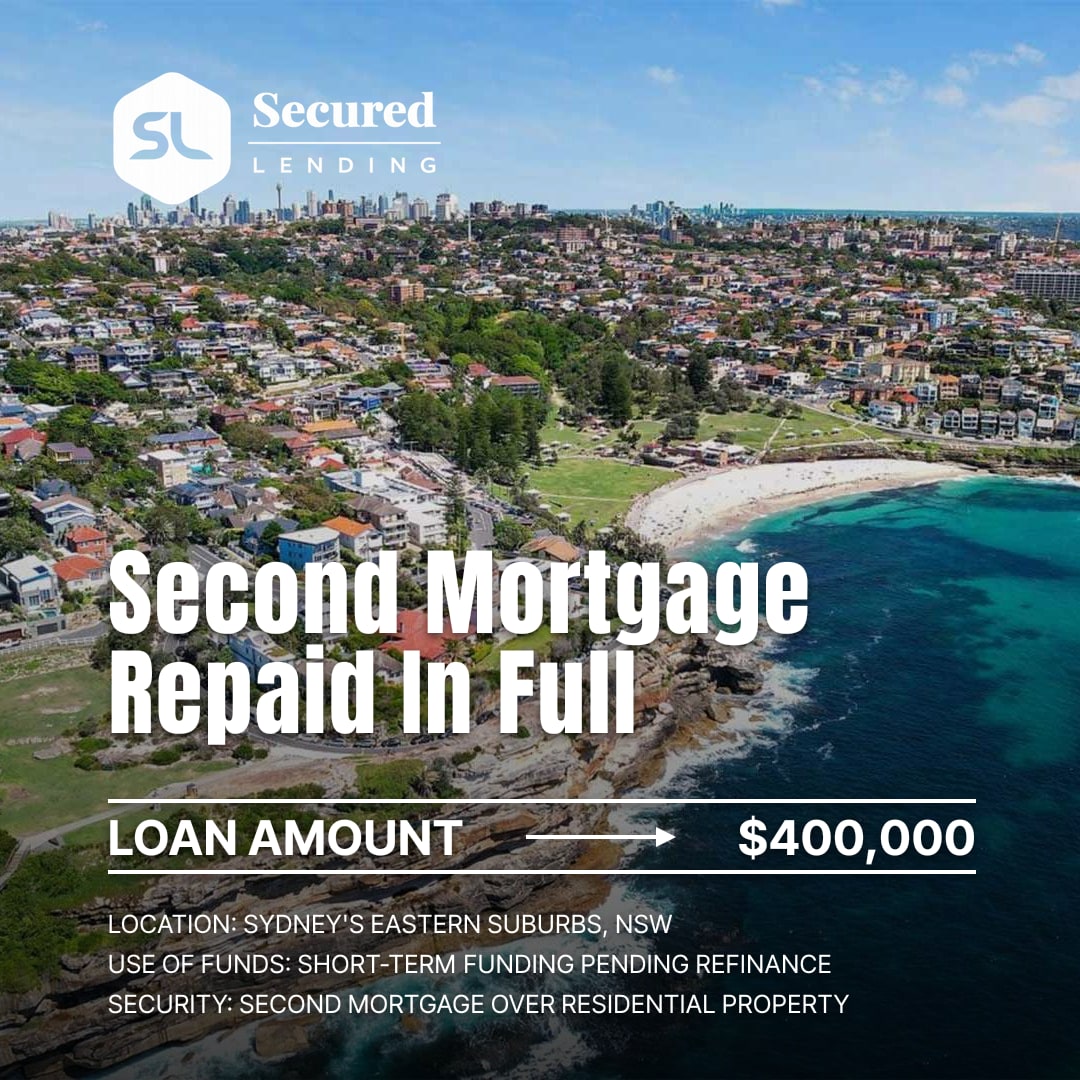
$400K Second Mortgage Repaid in Full After a Flexible Two-Month Extension
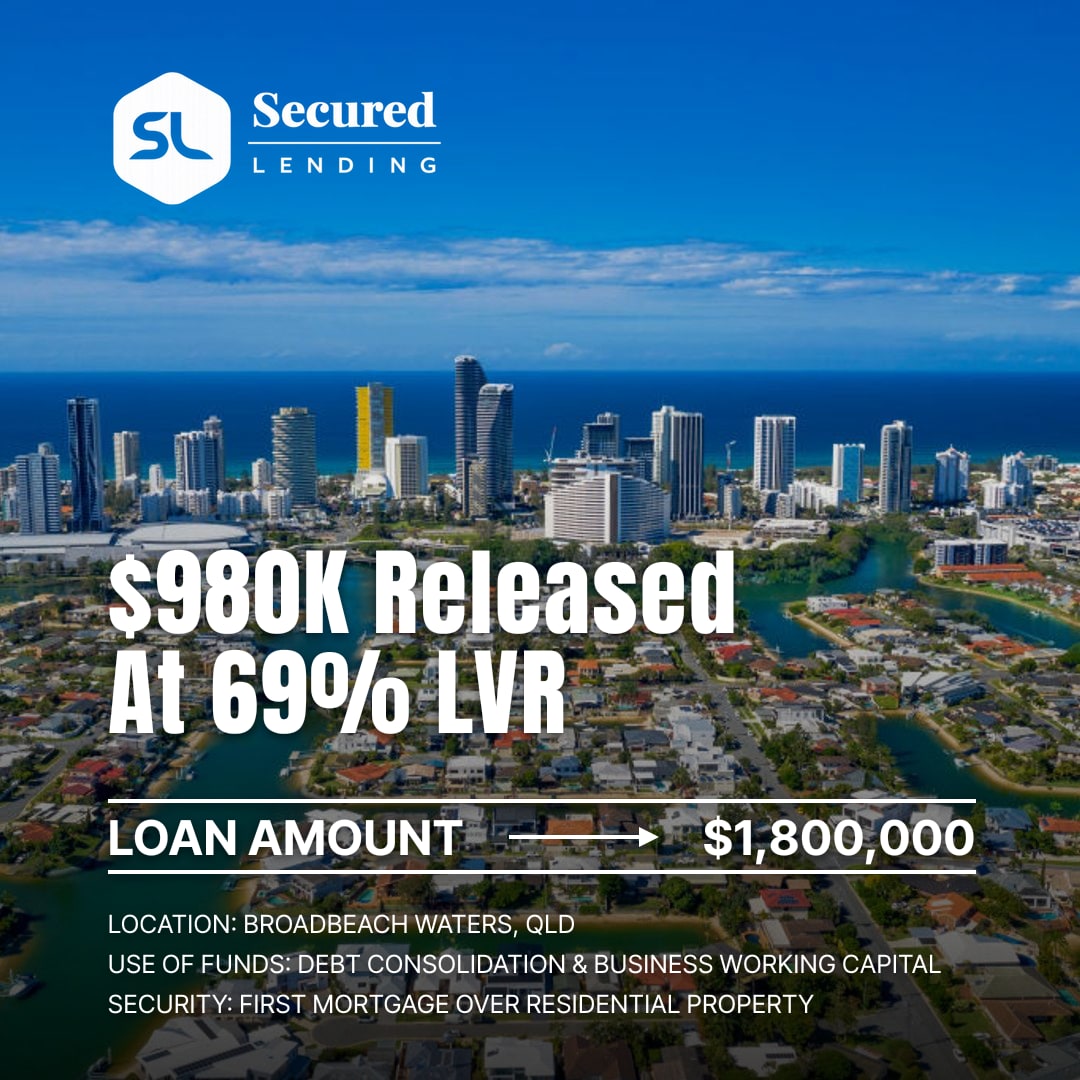
$1.8M First Mortgage Releases $980K of Working Capital for a Solar Business
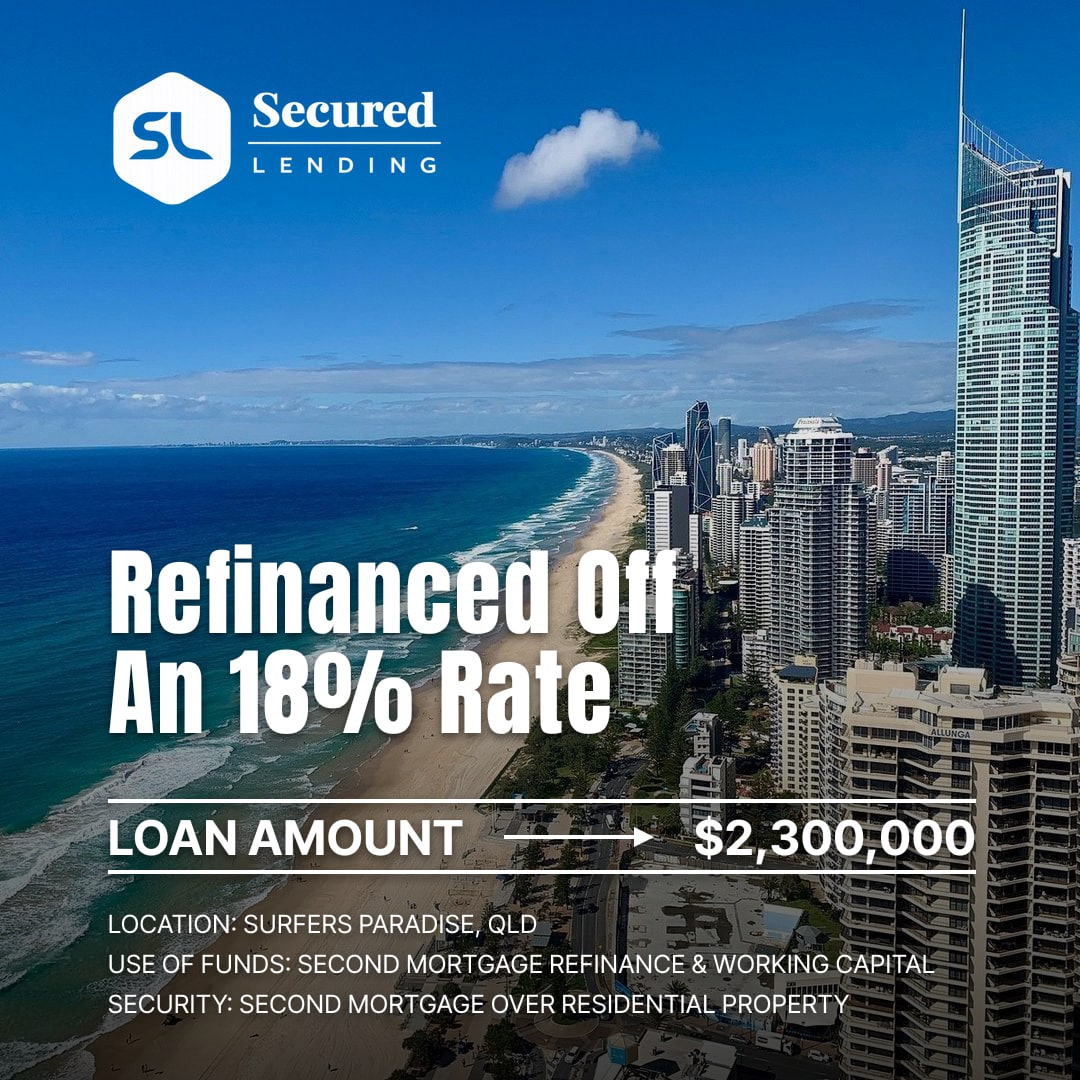
$2.3M Second Mortgage Refinances an 18% Facility for a Glass Manufacturer
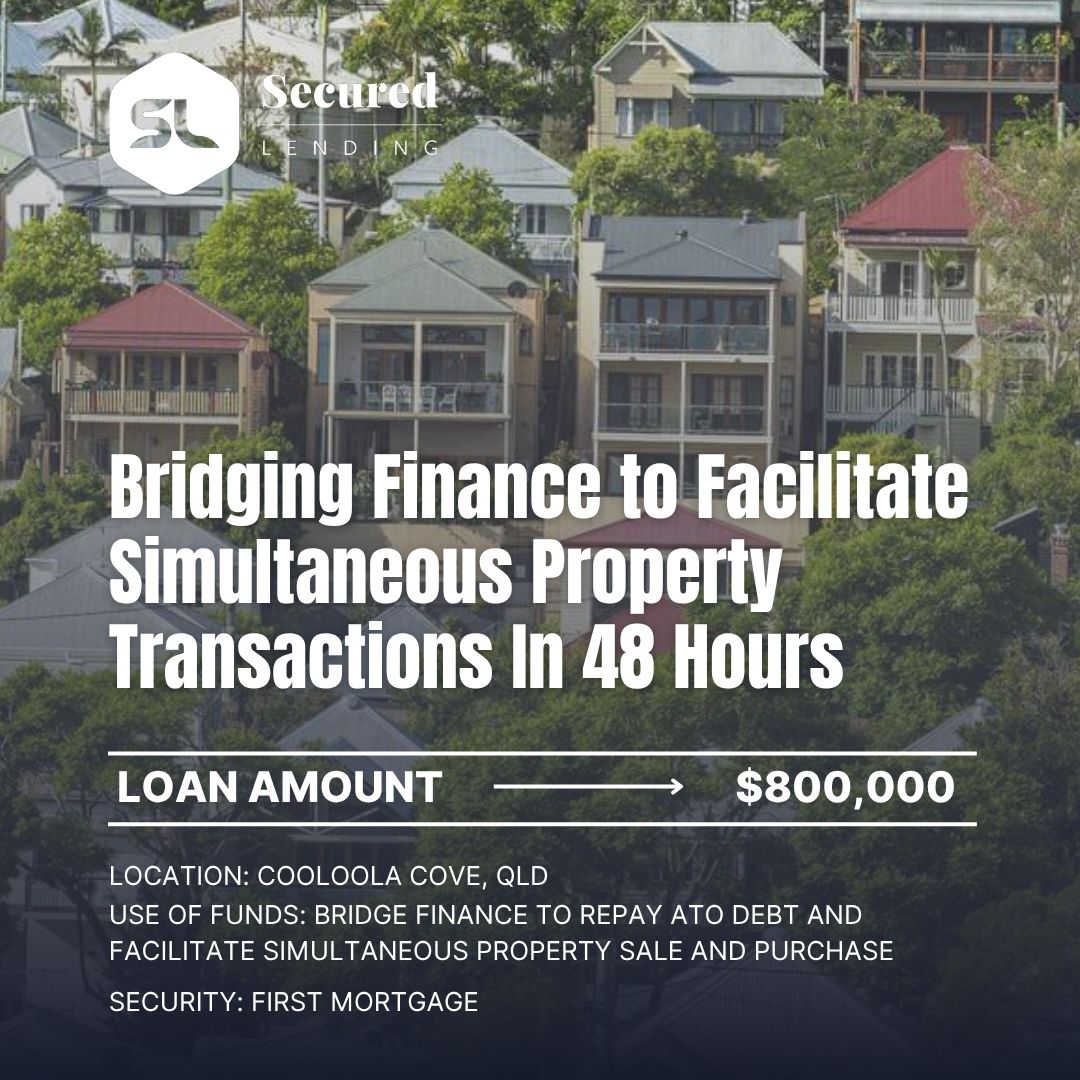
$800K Bridging Finance for Simultaneous Property Transactions in 48 Hours