Private Lender for Technology Companies
Finance sized to the growth curve, secured on property rather than recurring revenue



Experts in strategic, short-term secured finance

Secured Lending is a private, non-bank lender. We fund software, IT and technology companies against property held by the business, its directors or a family trust, and we do it in days rather than months. Loans run from $250,000 to $10,000,000, secured by a first or second mortgage over residential, commercial or industrial property. This is business purpose lending, and we lend our own funds, which is why a complete enquiry gets a decision in hours.
Who We Help
- Software and SaaS companies funding an engineering hire ahead of the revenue it produces
- Artificial intelligence companies carrying compute and model training costs ahead of the revenue
- Fintech and payments businesses funding a licence application, an audit or a compliance build
- Web3 and digital asset businesses that banks will not lend to
- IT managed service providers buying a competitor, or the contract book of one
- Digital agencies and systems integrators waiting out 60 and 90 day enterprise payment terms
- Hardware and device businesses paying for a production run before the purchase orders settle
- Companies carrying PAYG, GST and super built up through a year of deliberate reinvestment
- Founders paying out an early shareholder on a date fixed in a shareholders agreement
- Directors holding real property equity whose company was declined on profit or on tangible assets
How We Can Help You
- We assess the property and the exit, so a year of low profit while the company reinvested does not decide the outcome
- No profit and loss, forecast or cap table is required on an asset-based assessment
- We hold our own funds and our own credit authority, so a decision takes hours and settlement can happen within 24 hours
- We take a first or second mortgage, so a home loan or a commercial facility does not have to be broken to release capital
- Terms run from 1 to 24 months, and most borrowers are with us for 3 to 6 while the exit completes
- Rates start from 9.7% p.a., interest only for the term, so the facility is not competing with the cash being deployed into growth
Technology Finance Scenarios We Fund
Technology lending is not one product. A managed service provider buying a competitor needs a different structure to an agency carrying 90 day enterprise terms. Below are the scenarios we are asked for most often.
Acquiring a competitor
An acquisition carries a completion date written into the share sale agreement, and the vendor is usually talking to more than one buyer. The money has to be available on that date rather than six weeks after it.
The purchase completes on the date the agreement sets, funded against property held by the company, a director or a family trust. The facility is repaid by a refinance once the combined business has a trading history, or by a sale of the security.
- Completion happens on the date in the share sale agreement
- Funds a share purchase, an asset purchase or a contract book acquisition
- Security is property, never the code, the contracts or the customer list
- Lending to companies, family trusts and holding entities
- Second mortgage available behind an existing facility
- Exit is a refinance once the combined business has a trading history
Hiring and growth capital
A product roadmap needs engineers on the payroll months before the revenue they build arrives. Customer acquisition spend works the same way, paid in the month it runs and recovered over the life of the customer.
The hires are made on the planned schedule and the campaign runs at the planned budget. The facility is interest only, so it does not draw on the cash being deployed, and it clears from revenue, a raise, or a refinance once the run rate supports one.
- Funds engineering salaries, contractors and customer acquisition spend
- Interest only for the term, so growth spend is not competing with repayments
- A loss year in the accounts does not decide the answer
- No forecast or cap table required on an asset-based assessment
- Security is a director's home, an investment property, or premises held by the company
- Exit is revenue, a raise, or a refinance once the run rate supports one
Enterprise payment terms
A signed enterprise contract pays on the client's terms rather than yours. Sixty and ninety day terms are normal once a customer is large enough, and the work is delivered and the people are paid long before the invoice clears.
Payroll, contractors and cloud costs are met on time across the gap, and the facility clears when the invoice is paid. The term is short by design, and the size of the facility is set by the property rather than by the debtor ledger.
- Covers payroll, contractors and cloud infrastructure across the gap
- Works for 60 and 90 day enterprise and government terms
- We lend against property, not against the invoices or the debtor ledger
- Terms from 1 to 24 months, most files 3 to 6
- Second mortgage keeps an existing first facility intact
- Exit is the invoice, a milestone payment, or a refinance
ATO tax debt
PAYG, GST and super accumulate quickly against a large engineering payroll, and a growth year can end with a balance that is compounding. Once a payment plan is broken the recovery action escalates, and a director penalty notice can follow.
The debt is cleared in a single payment secured against property, the penalty interest stops compounding, and you hold a short defined facility instead. Where the debt threatens a government panel listing or a tender that tests tax compliance, clearing it is usually the point of the loan rather than a side effect.
- Clears the ATO position in a single payment
- Stops penalty interest compounding on the balance
- Protects a government panel listing or a tender that tests tax compliance
- Suitable where a payment plan has already been broken
- Acts before a director penalty notice reaches the directors
- Exit is revenue, a raise, or a refinance to a longer-term lender
Bridging to a raise or an R&D refund
A funding round has a term sheet and a completion date. The refundable R&D tax offset arrives after the AusIndustry registration is through and the company tax return is lodged. Both are dated events, and the costs that fall due before them will not wait.
Payroll, suppliers and development keep running to the dates they were planned for, and the facility is repaid when the round completes or the refund is paid. The term is matched to that date rather than to a repayment schedule.
- Bridges to a completion date on a signed term sheet
- Bridges to a refundable R&D tax offset already registered with AusIndustry
- Interest only for the term, repaid in one payment at the event
- Terms from 1 to 24 months, set to the date of the event
- Security is property held by the company, a trust or a director
- Exit is the round completing, or the refund being paid
Refinancing a bank or venture facility
A facility reaches the end of its term, a covenant is tested against a weak quarter, or a lender decides it is no longer writing in this sector. The property securing the facility has not changed.
You choose the next lender on your own timetable rather than under a lender's review deadline. The position is refinanced, the date on the letter is met, and the business keeps trading while a longer-term facility is arranged properly.
- Refinances an expiring bank facility or a venture debt line
- Replaces a facility whose covenant was tested on one weak quarter
- The date on the demand or the expiry letter is met
- Time to choose the next lender rather than take the first one offered
- First or second mortgage, depending on what is already registered
- Exit is a refinance to a longer-term lender, or a sale of the security
Hardware and production runs
A device business pays a contract manufacturer, tooling and freight in full before a single unit ships, and the purchase orders that justify the run settle months later. The working capital has to be in place at the point of order.
The production run is placed at the volume the unit pricing was based on, and the facility is repaid as the orders settle. We release the capital against the property and the production is funded from those proceeds, which is a different thing to lending against the stock or the tooling.
- Funds tooling, a contract manufacturing run and freight
- The production run is placed at the volume the unit pricing was based on
- We lend against property, never against the stock or the tooling
- Works where the purchase orders settle after delivery
- Second mortgage available behind an existing facility
- Exit is the orders settling, or a refinance
Founder and shareholder buyouts
A co-founder leaving, or an early shareholder exercising a put option, is a payment with a date attached and a price already agreed. The company rarely holds that much cash, and the remaining shareholders rarely want to raise a round to fund it.
The departing shareholder is paid out in cash on the agreed date and the share register is settled without a dilutive round. The exit is a refinance once the new structure has a trading history, or a sale of the security.
- The exiting shareholder is paid out in cash, on the agreed date
- Avoids a dilutive round raised purely to fund a buyout
- Lending to companies, family trusts and holding entities
- We work alongside your accountant and solicitor on the structure
- Security is property held by the company, a trust or a director
- Exit is a refinance once the new structure has a trading history
Your Exit Strategy
The exit is the most important thing we assess, ahead of the profit and loss and ahead of the credit file. Before we look at anything else we want the answer to one question: how do you intend to repay the loan, and on what date? Most technology companies have a clearer answer than they realise. A round with a signed term sheet, an R&D refund already lodged, a contracted invoice or milestone payment, a trade sale under way, or a refinance once there are accounts a bank will read are all exits we fund against.
- It is specific: a named event with a date, not an intention to raise at some point
- It is documented: a term sheet, a share sale agreement, a contract, or a lodged claim
- It completes inside the term, which runs from 1 to 24 months
- It clears the balance, the interest and the costs, not the principal alone
- There is a second exit if the first one is delayed, usually a refinance or a sale
- It is tested at the enquiry rather than late in the loan term
A documented, dated exit also improves the pricing, because it carries more weight with us than a year of thin profit ever will. Where the exit is vague, we would rather say so at the enquiry than let it become a problem with weeks left on the term.
Our Loan Products
- First mortgage: the cleanest position, used where the property is unencumbered or an existing facility is being refinanced in full
- Second mortgage: sits behind an existing first, so a home loan or a commercial facility does not have to be broken to fund an acquisition
- Bridging loans: covers the gap between a cost and the event that repays it, a round completing, an invoice clearing, or an R&D refund being paid
- Caveat loans: our fastest product, lodging a caveat rather than registering a full mortgage, for a completion date measured in days
Related Reading
- →Secured financing for startups
- →Private lender for business acquisition finance
- →Second mortgage loans for market expansion
- →Caveat loan for a time-sensitive acquisition
Bad Credit and Technology Finance
A company that spent two years building before it sold anything looks thin on paper, and a director who carried the business personally through that period often has the arrears to show for it. A bank assessment stops at the arrears. Ours looks at the property and the exit. Where there is equity inside 70% LVR and a dated event that repays us, defaults and missed payments do not decide the outcome. No profit and loss required on an asset-based assessment.
- →When serviceability, not security, is what failed
- →Bad credit business loans for property-backed borrowers
"Most of the technology files that reach us are not distressed. They are early. The revenue is contracted, the round is signed, the R&D refund is lodged, and none of it lands on the date the payment is due. We are not underwriting the software, we are underwriting the property and the event that repays us. Where there is a completion date on a term sheet or a share sale agreement, we are glad to look at it well before that date gets close."

Gino Tabila
Associate Director
Recently Asked Questions
Get an indicative offer within hours, not weeks.
No credit check. No obligation.
Why Secured Lending?
Are you a broker? Find out why brokers love working with us.
Case Studies
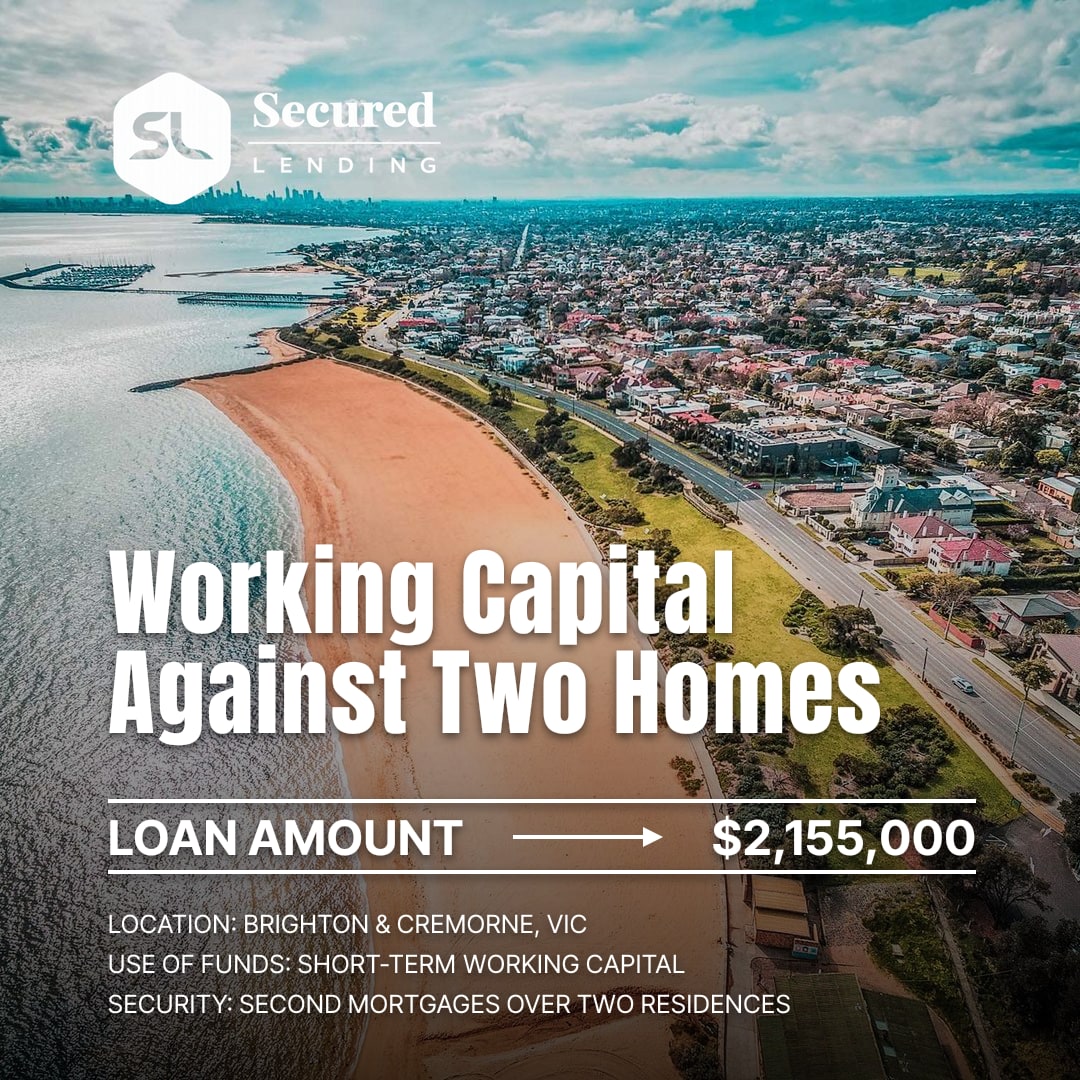
$2.155M Second Mortgage Working Capital Facility Across Brighton and Cremorne
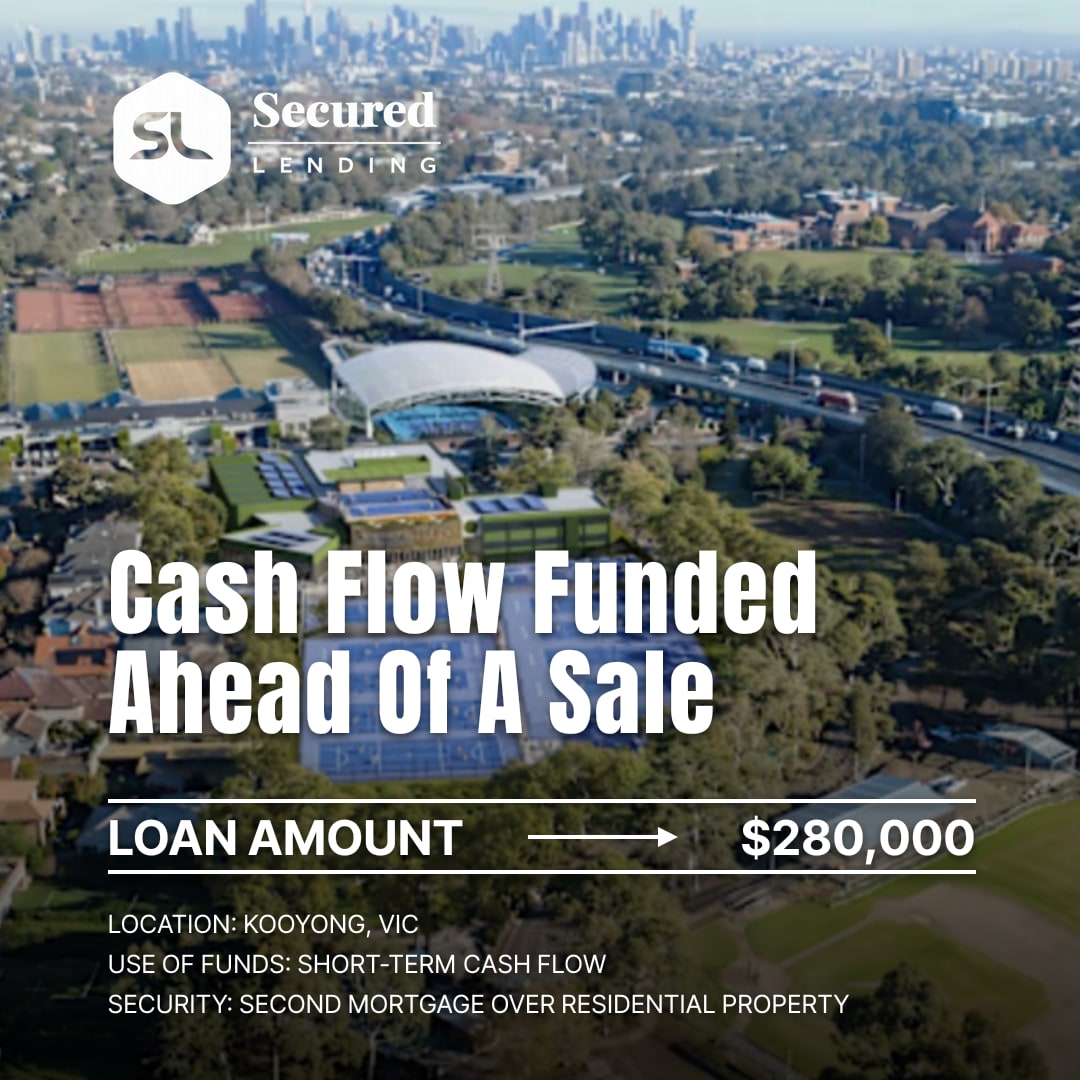
$280K Second Mortgage for Short-Term Cash Flow in Kooyong

$545K Bridging Loan Across Three Suburbs in Melbourne's North-West
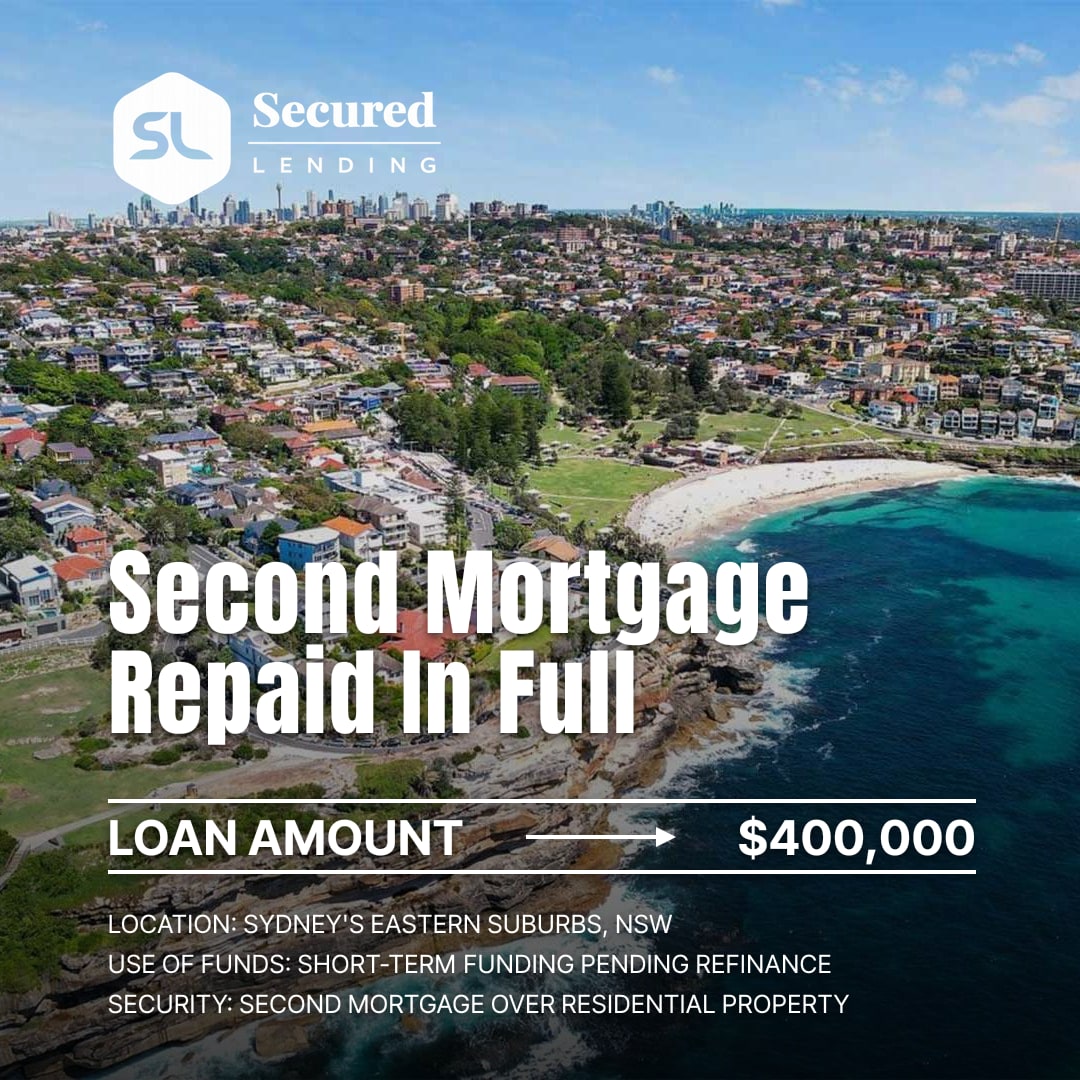
$400K Second Mortgage Repaid in Full After a Flexible Two-Month Extension
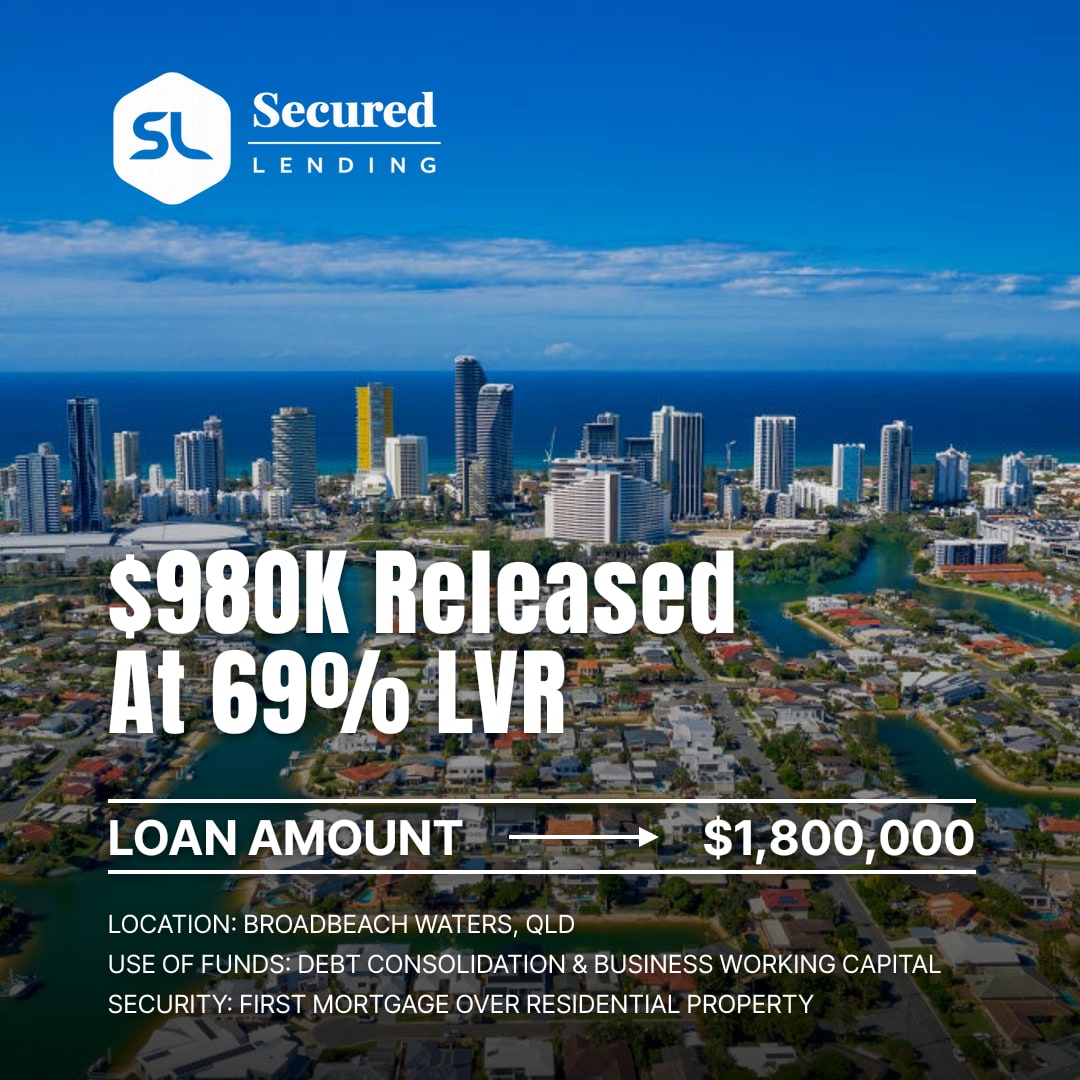
$1.8M First Mortgage Releases $980K of Working Capital for a Solar Business

$2.3M Second Mortgage Refinances an 18% Facility for a Glass Manufacturer
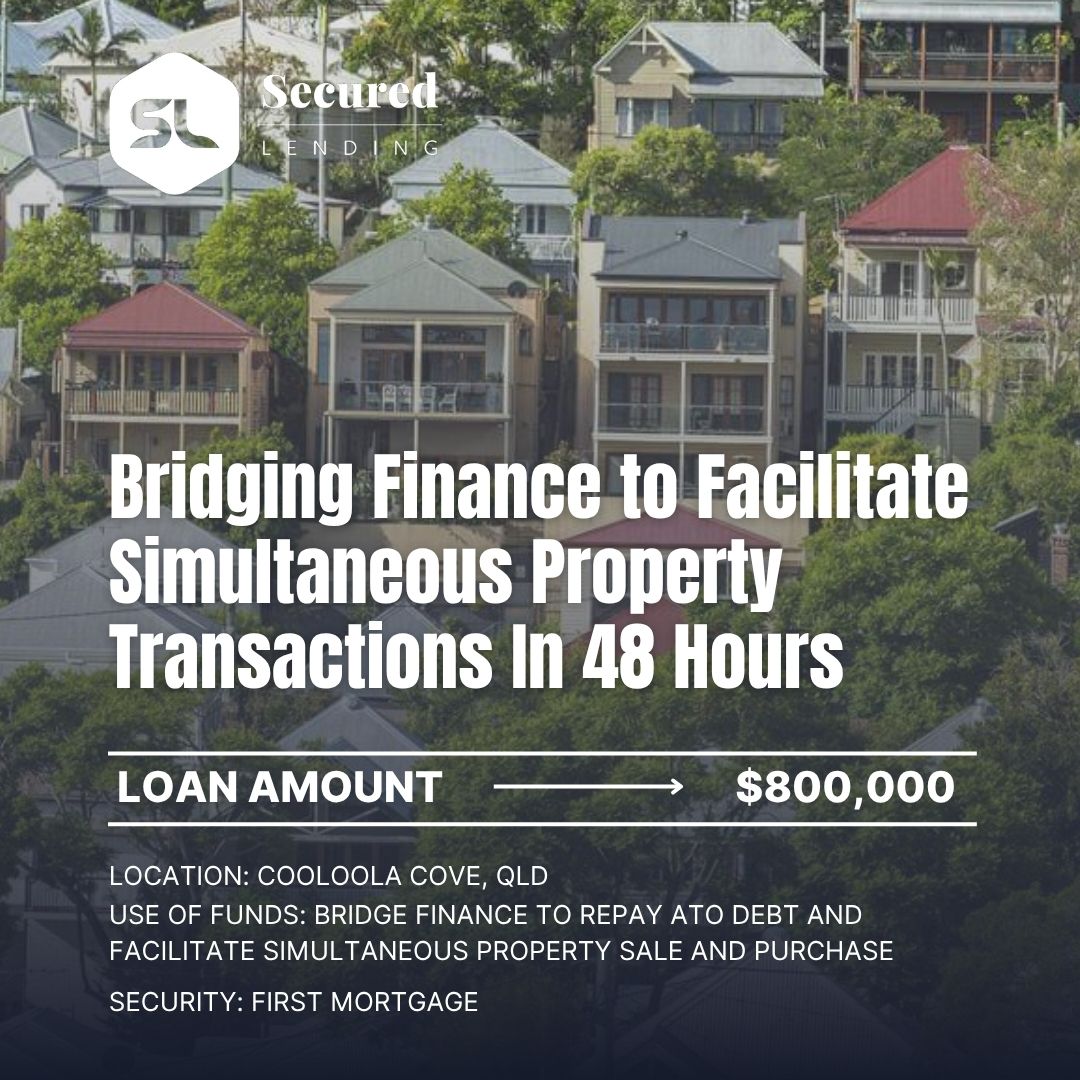
$800K Bridging Finance for Simultaneous Property Transactions in 48 Hours