Fast Bad Credit Business Loans Secured by Property

Defaults on file do not decide it. The property and the exit do

Expert
Expert
Expert

Experts in strategic, short-term finance

Aerial view of Sydney Harbour and the CBD
24hrsFast funding solutions
$250K-$10MLoan range
9.7% p.aInterest rates starting from
1-24 monthsShort term funding

ExcellentRated 5 out of 5 on Google

Rated 5 out of 5Jason V

Hands down, the best private lenders in the biz

Gino, Alec and Finn are exceptional at what they do. Top tier communication and transparent service.

Rated 5 out of 5Rhowell Dela Rosa

Every settlement has been smooth

Gino and the team at Secured Lending are our go-to when a deal needs to move fast or fall outside bank criteria.

Rated 5 out of 5Rory Mcgrath

Always my top choice for nearly all private lending scenarios

I run and operate a private lending brokerage and have worked with Mark and the team for years.

Rated 5 out of 5Luke Egan

Speed to market on lending advances second to none

The owner is also one of best commentators on LinkedIn calling out poor lending and recovery practices.

Rated 5 out of 5amal maharaj

True professionals in the non bank lending space

Straight forward application and assessment process with clear communication till loan settlement.

Rated 5 out of 5Sam Algeri

Excellent service, quick approvals and seamless settlements

The team at Secured Lending, particularly Gino and Finn, are fantastic to work with.

Rated 5 out of 5sebastian wright

Speed, reliability, transparency

Exceptional team. Exceptional Service. Loved working with the team at Secured Lending.

Rated 5 out of 5Jordan Thomas

Gino & Finn are the best in the business

Quick and painless to deal with, keep up the great work SL team!

Rated 5 out of 5Wayne McCarthy

Always willing to think outside the box to get deals done

We've had a great experience working with Secured Lending.

Rated 5 out of 5JP G

Quick, responsive and reasonable

With all the shady characters in the private lending market, its refreshing to find good people to deal with.

Rated 5 out of 5Joel Togo

Always thorough on assessment and will give you a prompt answer

With clients that are in time sensitive situations, this is crucial.

Rated 5 out of 5David Pruscino

Always professional and supportive

It's a pleasure dealing with the Secured team.

Rated 5 out of 5Monica Monsigneur

A professional and common sense lender who delivers

Rated 5 out of 5Thomas de Fegely

Great options in the private space

Have been dealing with Finn from Secured Lending, he has been very responsive.

Rated 5 out of 5Andrew Soo

A very reliable funding partner

Highly recommended.

Rated 5 out of 5Phil Boyle

Very efficient, responsive

Finn was a great help to assist in a very timely manner.

If a bank has declined you on credit history, the loan is not gone. It has moved to a different kind of lender. Secured Lending is a private, non-bank lender, and we fund Australian business owners carrying defaults, judgments, arrears and ATO debt every week. The test is not your score. It is whether there is enough equity in the property you can offer, and whether we can see the money that repays us.

What Counts as Bad Credit Here

Bad credit covers a lot of ground, and most of it is survivable. These are the things we see on files we approve:

  • •Paid and unpaid defaults listed by banks, lenders, suppliers or utilities
  • •Court judgments and writs registered against the business or its directors
  • •Mortgage arrears, including a default notice already issued by your current lender
  • •ATO debt, including a position that has been reported to the credit bureaus
  • •A discharged bankruptcy, a former debt agreement, or a Part IX arrangement that has run its course
  • •A run of recent credit enquiries from applications that were declined elsewhere
  • •A thin file, or no file at all, which is common for newer entities and trust structures
  • •A low score with nothing specific behind it, usually the output of a serviceability model rather than a credit event

What We Assess Instead

  • •The security property, and whether the equity sits inside 70% LVR. This is the single biggest factor
  • •Your exit: the sale, settlement, refinance or transaction that repays the facility
  • •What the money is for, and whether the loan leaves the business in a better position than it found it
  • •The title, including existing mortgages, caveats and anything registered against the property that has to clear at settlement
  • •Our own valuers assess the security directly, so a non-standard or part-complete property still gets a real number
  • •We lend our own funds and hold our own credit authority, so no external committee applies a scorecard to your file

What We Cannot Do

It is worth being direct about the limits, because knowing them early saves everybody time.

  • •We cannot lend to an undischarged bankrupt, or into a borrowing entity that is in liquidation or administration. A receiver appointed by your lender is not on its own a bar: we can refinance that lender out against real property
  • •We cannot lend without real property security. Where there is no residential, commercial or industrial property to mortgage, we are not the right lender
  • •We cannot lend for personal or consumer purposes. Every facility is business or investment purpose only
  • •We cannot go past 70% LVR. That ceiling holds on first and second mortgages and on every property type, and no credit story changes it
  • •We cannot fund a file with no exit. Without a sale, a settlement or a refinance that clears the debt, a short-term facility makes the position worse rather than better
  • •We cannot remove a default from your credit file, and neither can anybody who tells you they can

How the Loan Is Structured

These are short-term facilities, not a replacement for a bank loan. Most borrowers are with us for three to six months while they fix the underlying problem or complete the transaction that repays us.

  • •Secured by a first or second registered mortgage over residential, commercial or industrial property
  • •Loan sizes from $250,000
  • •Terms from 1 to 24 months, interest only, with interest capitalised where cash flow needs it
  • •Rates from 9.7% p.a. on a first mortgage, and from 11.95% p.a. on a second
  • •Maximum 70% LVR. On a second mortgage that is the combined position across the first and the second
  • •Approval in hours, and settlement within 24 hours where the title is clean

What You Need to Provide

This is a low doc process. We are assessing an asset, so we do not need the paperwork a bank would want before it even opened your file.

  • •Details of the security property, including the address and the title reference
  • •The borrowing entity, its directors, and the trust deed where a trust is involved
  • •Identification for each director or guarantor
  • •A recent rates notice, and payout figures for any existing mortgage
  • •An accountant declaration or six months of business bank statements, which covers most files
  • •Documented evidence of your exit: a signed sale agreement, a term sheet from an incoming lender, or a settlement date
  • •No full financial statements and no tax returns on an asset-backed file

What a Bank Tests, and What We Test

A bankSecured Lending
Credit scoreA pass or fail gateContext, never a gate on its own
ServiceabilityModelled from regular monthly incomeNot tested. The exit repays the loan
FinancialsTwo years of statements and tax returnsNot required on an asset-backed file
SecurityStandard property in a standard postcodeResidential, commercial, industrial, part-complete
ValuationAn external valuer, booked and queuedOur own valuers, assessing alongside the application
ExitA 25 year repayment scheduleA specific event inside 1 to 24 months
ATO debt on fileUsually an automatic declineOften the reason for the loan
Time to a decisionFour to eight weeks via a credit committeeHours, in-house, using our own funds

Scenarios We Fund

Bad credit is rarely the actual problem. It is usually a symptom of one of these, and each links to a longer read.

"A credit file tells us what somebody has been through. It does not tell us whether the loan will be repaid, and those are two different questions. We look at the property, the equity inside 70% LVR, and what clears the debt at the end of the term. Where those three line up, a default from eighteen months ago does not decide it, and we are always glad to talk a scenario through."

Gino Tabila

Gino Tabila

Associate Director

Secured Lending team
Expert
Expert
Expert
$500M+ funded

Get an indicative offer within hours, not weeks.

No credit check. No obligation.

Why Secured Lending?

✓Australian private lender, $500M+ funded
✓We use our own funds for fast decisions
✓24-hour settlements, loans from $250k
✓Rates from 9.7% p.a. | Terms 1 to 24 months

Are you a broker? Find out why brokers love working with us.

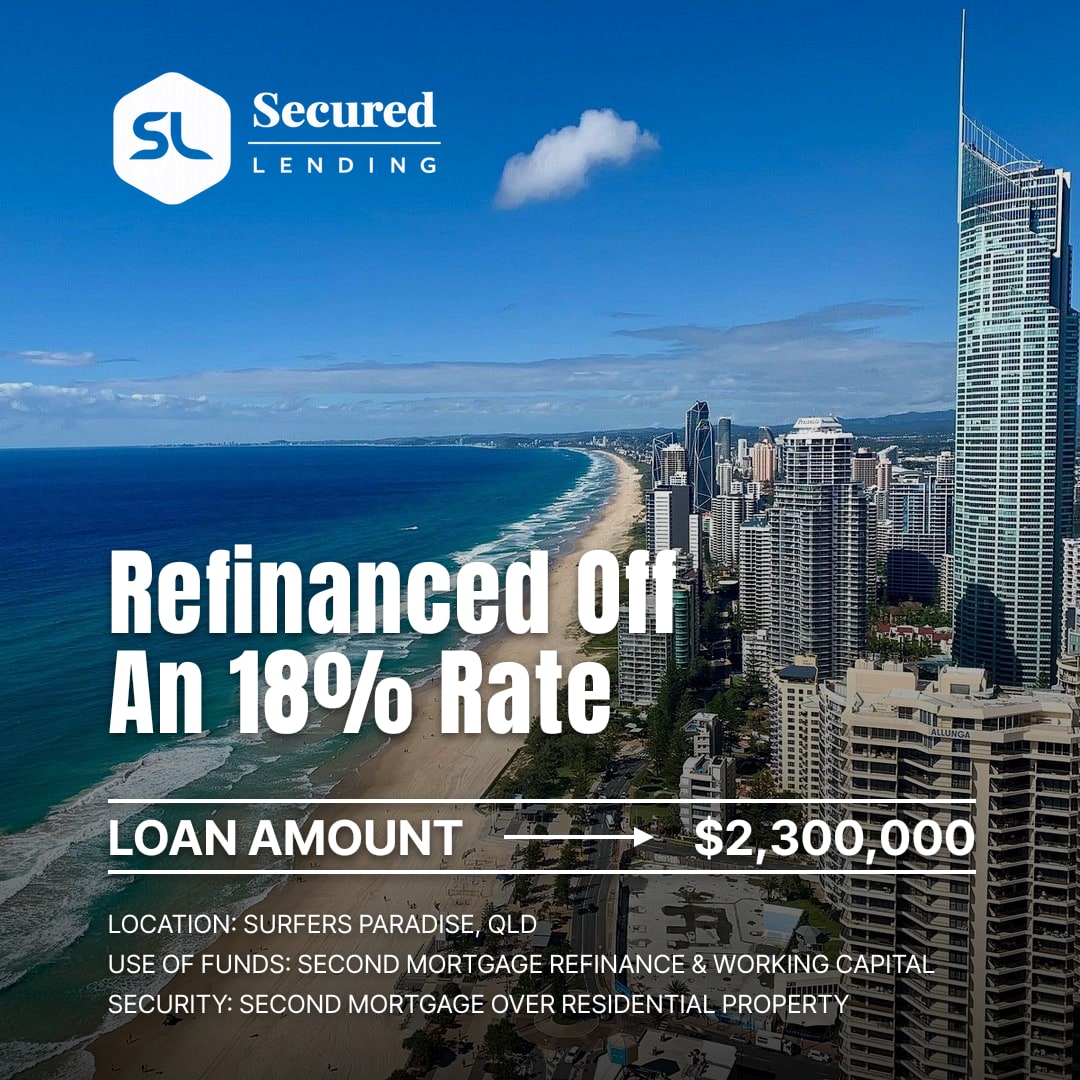
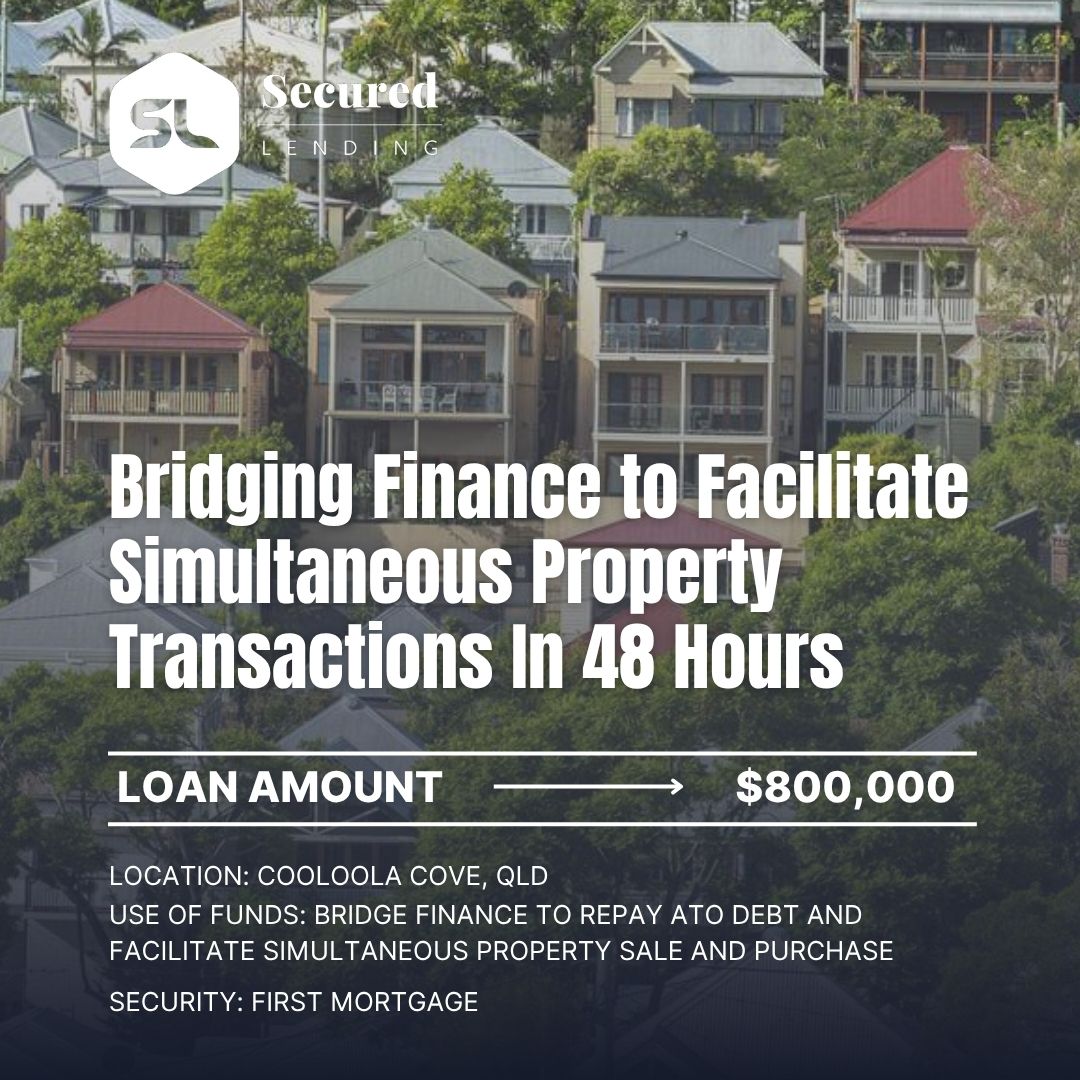
Success Stories

Case Studies

View all case studies

Recently Asked Questions

Yes. We can refinance a lender out after it has issued a default notice. What decides the loan is the property securing it, a loan within 70% of its value and a dated plan for repaying us. Send us the default notice, the bank's written payout figure and your repayment plan, such as a sale or a bank refinance once your company has a period of on-time repayments behind it. Ask the bank how your company's credit file will record the default once the loan is repaid.

It can. A discharged bankruptcy is one of the things we see on files we approve. The company is the borrower and the property it owns is the security, and what we assess is the equity inside 70% of the property value and how the loan will be repaid. The limit is an undischarged bankruptcy: we cannot lend while it is still running. Send us your discharge date with the property details.

Not necessarily. Anything registered against the title has to be cleared at settlement, so the loan has to cover the amount needed to remove the writ as well as the purpose of the loan, within 70% of the property value. Ask the creditor's solicitor for that amount in writing and include it in what you send us.

No. A run of recent enquiries from applications declined elsewhere is one of the things we see on files we approve, and there is no minimum score in our assessment. What decides the loan is the property, the equity inside 70% of its value, and how the loan will be repaid. Ask your broker to send us the property details and the reason each lender gave for declining.

No. Paid and unpaid defaults are both things we see on files we approve, and a default on its own does not decide the loan. Whether to pay it is your decision, and it does not have to happen before we lend. Send us the property details so we can look at the equity and the exit.

No. A former debt agreement that has run its course is one of the things we see on files we approve. The company is the borrower, and the office property it owns is the security. We look at the equity in that property inside 70% of its value and how the loan will be repaid. The credit report is read once, early, as context.

No. A thin file, or no file at all, is common for newer companies and is one of the things we see on files we approve. The company is the borrower, and your industrial property is the security. Bring the company's details, identification for each director, and a recent rates notice for the property to the first call.

An accountant declaration or six months of business bank statements covers most files. We do not ask for full financial statements or tax returns on a loan secured by property, so two loss-making years do not decide the loan on their own. What we look at is the property, the equity inside 70% of its value, and a documented exit, such as a signed sale agreement or a term sheet from an incoming lender.

No. We do not model monthly income the way a bank does. The loan is repaid by a sale or a refinance inside 1 to 24 months, so that sale or refinance is what we assess, along with the property and the equity inside 70% of its value. Bring evidence of the exit to the first call, because on our file it carries more weight than your monthly figures.

About $29,875 over six months. $500,000 at 11.95% p.a. is $59,750 a year, so six months is $29,875. That is at our starting second mortgage rate. Your rate depends on the property and the exit, and is confirmed once we have seen both.

No. A default on its own does not decide our loans, so there is no need to wait. We cannot remove a default from a credit file. Only an incorrect listing can be corrected. If you believe a listing is wrong, raise it with the business that listed it, which you can do yourself. Meanwhile, send us the property details, because the equity and the exit are what we assess.

Yes, provided you can offer real property as security and the loan is for a business or investment purpose. Secured Lending funds borrowers carrying defaults, judgments, arrears and ATO debt every week. The credit file is context. What decides the application is whether the equity in the security property sits inside 70% LVR, and whether there is a documented event that repays the facility.

The same as anybody else. We lend from $250,000 to a maximum of 70% LVR, and a damaged credit file does not lower that ceiling. What sets your figure is the assessed value of the security property and any debt already sitting behind it. On a second mortgage, the 70% is the combined position across the first and the second.

Rates start from 9.7% p.a. on a first mortgage and from 11.95% p.a. on a second. A messier credit history can move the rate, because more weight falls on the exit when the trading record cannot carry the file. Where the exit is documented and close, most borrowers with credit issues price in line with everybody else. Every cost is set out in the letter of offer before you commit.

No. There is no score below which we stop reading, and no score that guarantees approval. We pull a credit report because it tells us what pressure you are under and who else has an interest in the property, both of which shape how the facility gets structured. It is information, not a gate.

A decision in hours, and settlement within 24 hours on a clean file. A poor credit history does not slow that down, because the report is read once, early, and never sits in the settlement path. What does affect timing is the number of titles, whether a company or trust needs resolutions, and how quickly payout figures come back from an existing lender.

Not from us. Every facility we write is secured by a first or second registered mortgage over residential, commercial or industrial property, and that security is the reason we can be relaxed about credit history in the first place. Where there is no property available, whether held by the business, a director or a related trust, we are not the right lender for you.

No. Every facility is for a business or investment purpose, and you will be asked to declare that purpose in writing before settlement. Business purpose lending sits outside the National Credit Code, which is part of what allows the flexibility on credit history. Using the funds for personal or household spending would put the loan in the wrong regulatory category.

Tell us early. Terms run from 1 to 24 months and extensions are considered case by case, but the options narrow sharply once a facility is already past its expiry. If your exit is slipping, contact us while there is still time to arrange something. The worst outcome on a file like this is silence, because it turns a solvable timing problem into an enforcement problem.

Yes. We assess the property and the repayment plan, not a credit score, which is why we can fund deadlines such as an ATO debt or an expiring loan with defaults on file.

Expert
Expert
Expert
$500M+ funded

Get an indicative offer within hours, not weeks.

No credit check. No obligation.

Why Secured Lending?

✓Australian private lender, $500M+ funded
✓We use our own funds for fast decisions
✓24-hour settlements, loans from $250k
✓Rates from 9.7% p.a. | Terms 1 to 24 months

Are you a broker? Find out why brokers love working with us.

Home›Private Lender Australia›Bad Credit Business Loans