



If you’re buying before selling, settling a commercial purchase, refinancing urgently, or need funds to act on an opportunity, bridging finance can provide short-term capital secured against property. What usually matters most in these scenarios is speed, certainty, and a lender that understands complex timelines, business cash flow, and real settlement risk.
Recent client success
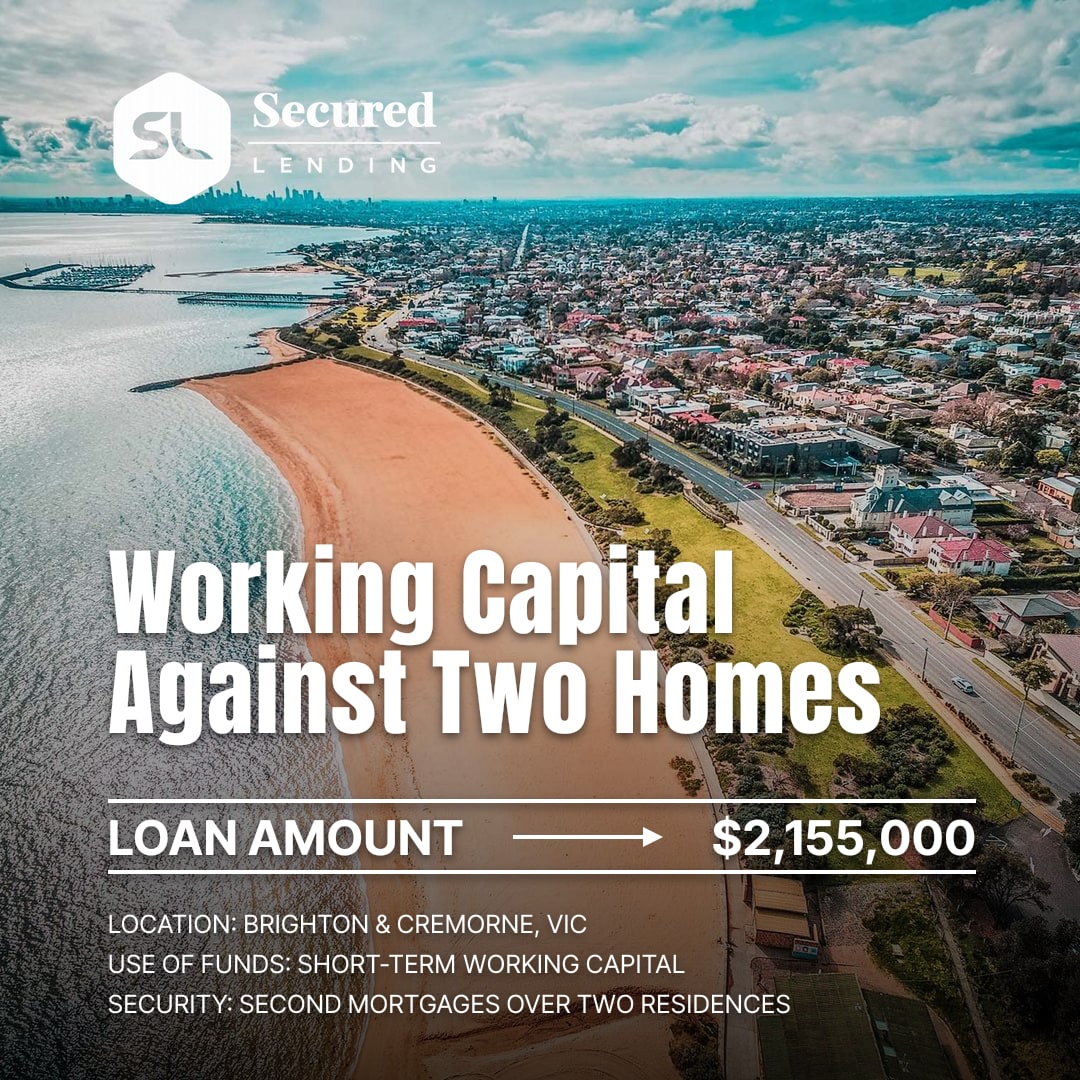
$2.155M Second Mortgage Working Capital Facility Across Brighton and Cremorne
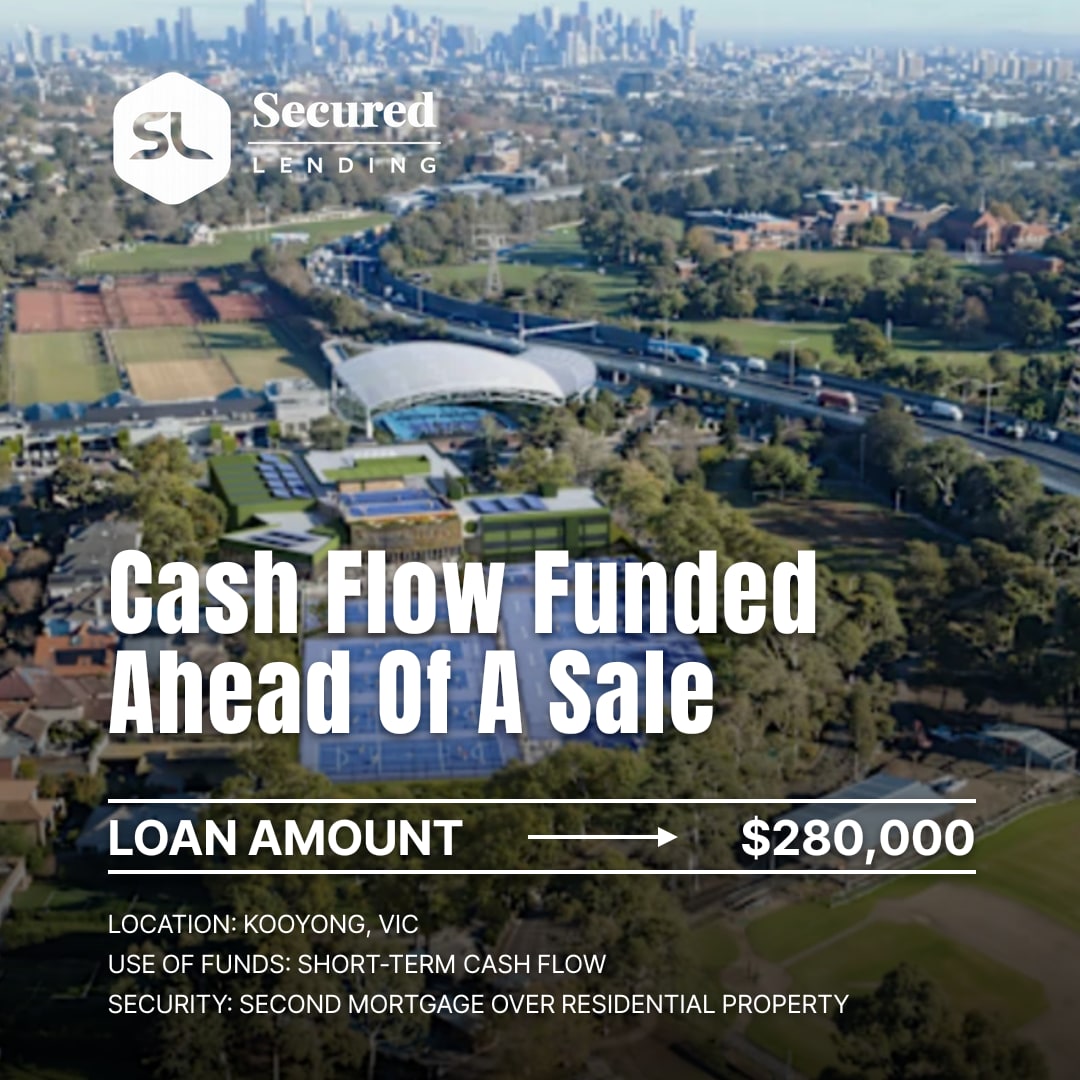
$280K Second Mortgage for Short-Term Cash Flow in Kooyong

$545K Bridging Loan Across Three Suburbs in Melbourne's North-West
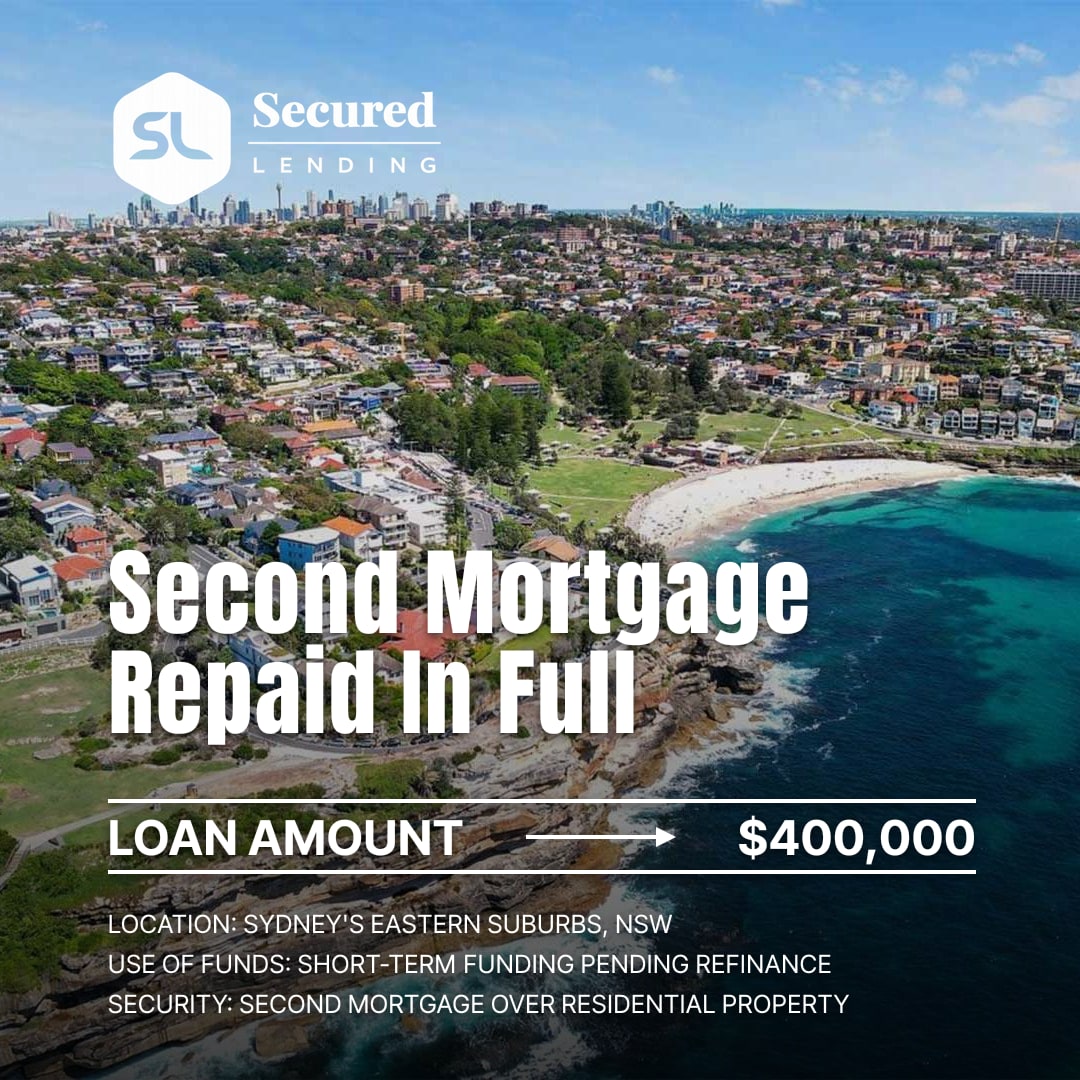
$400K Second Mortgage Repaid in Full After a Flexible Two-Month Extension
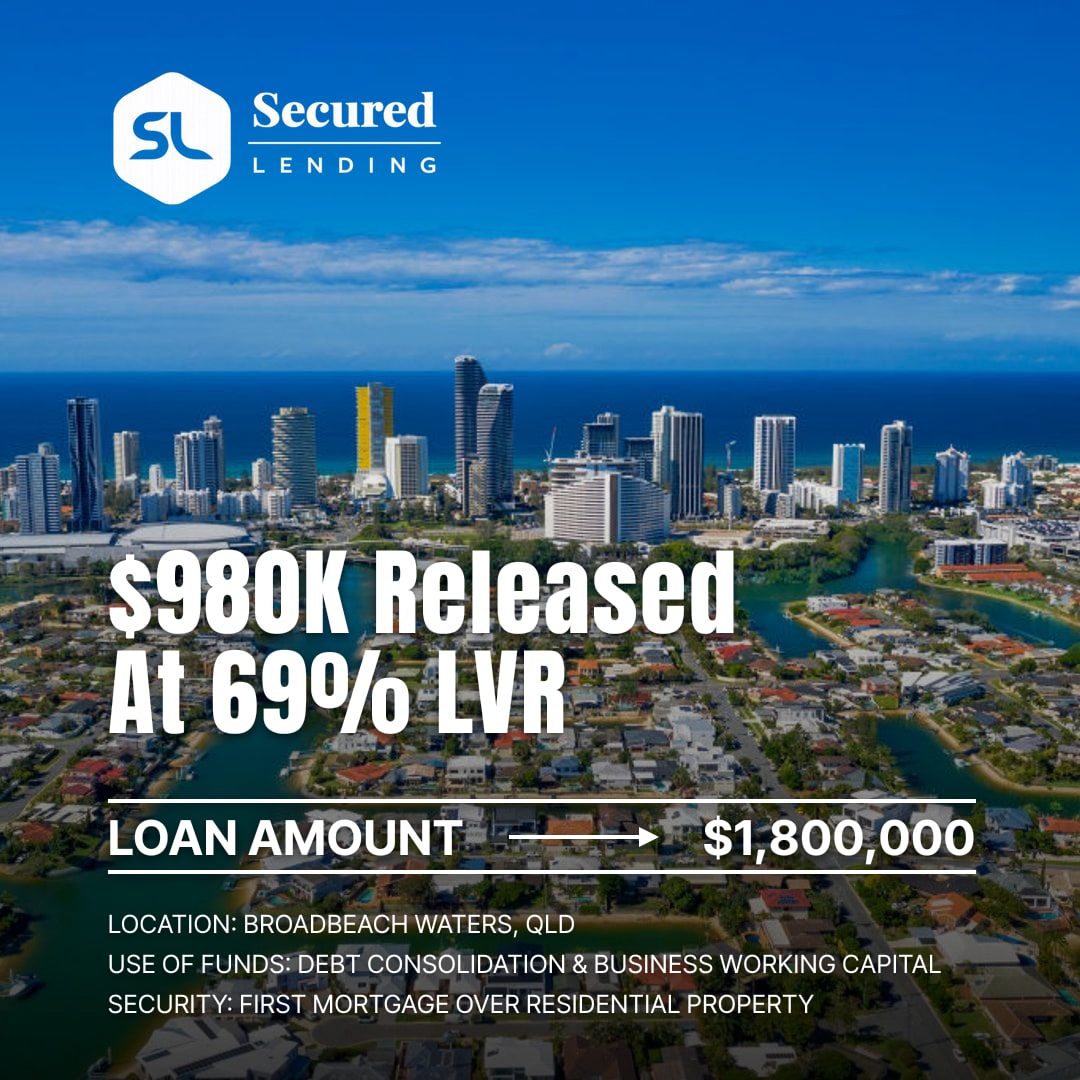
$1.8M First Mortgage Releases $980K of Working Capital for a Solar Business
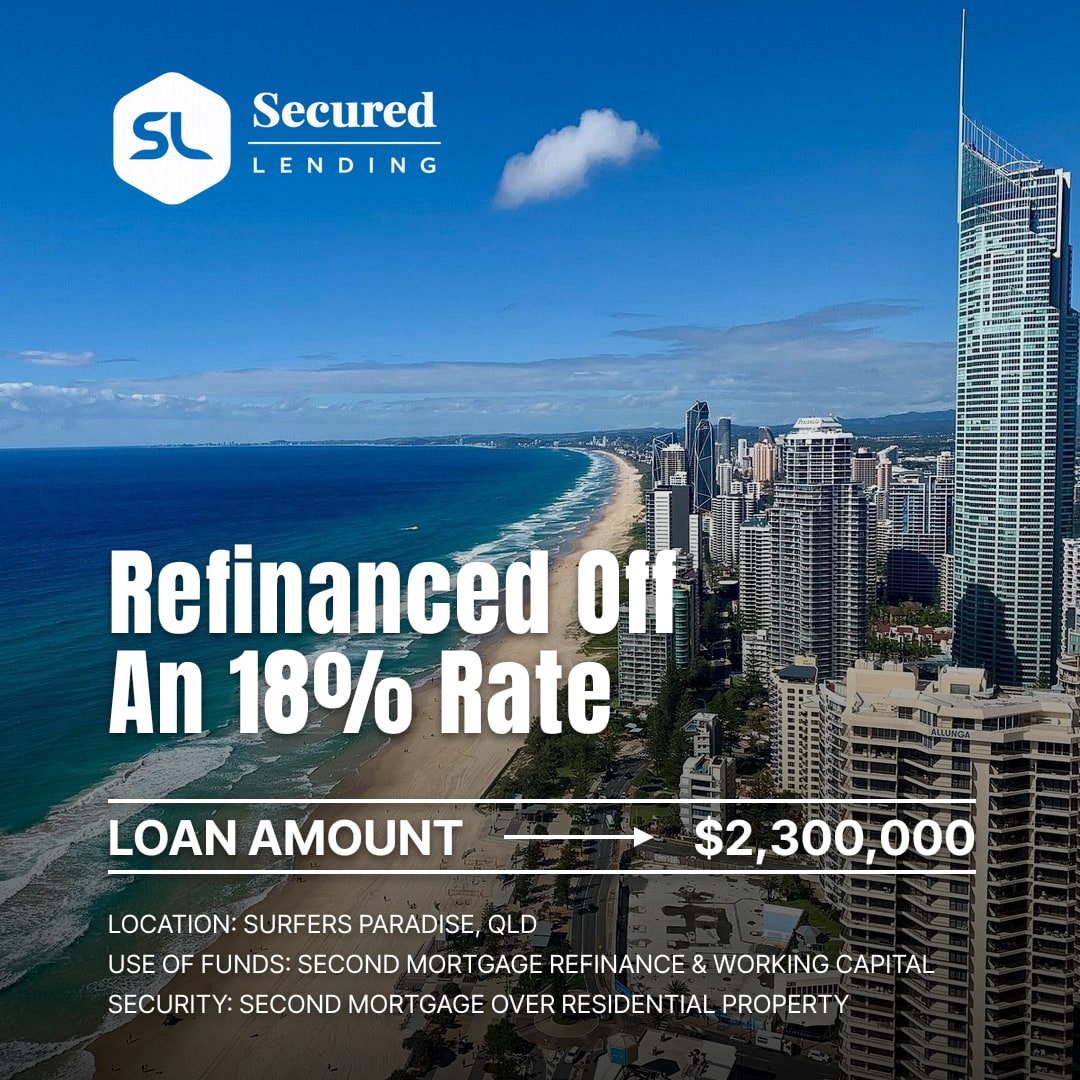
$2.3M Second Mortgage Refinances an 18% Facility for a Glass Manufacturer
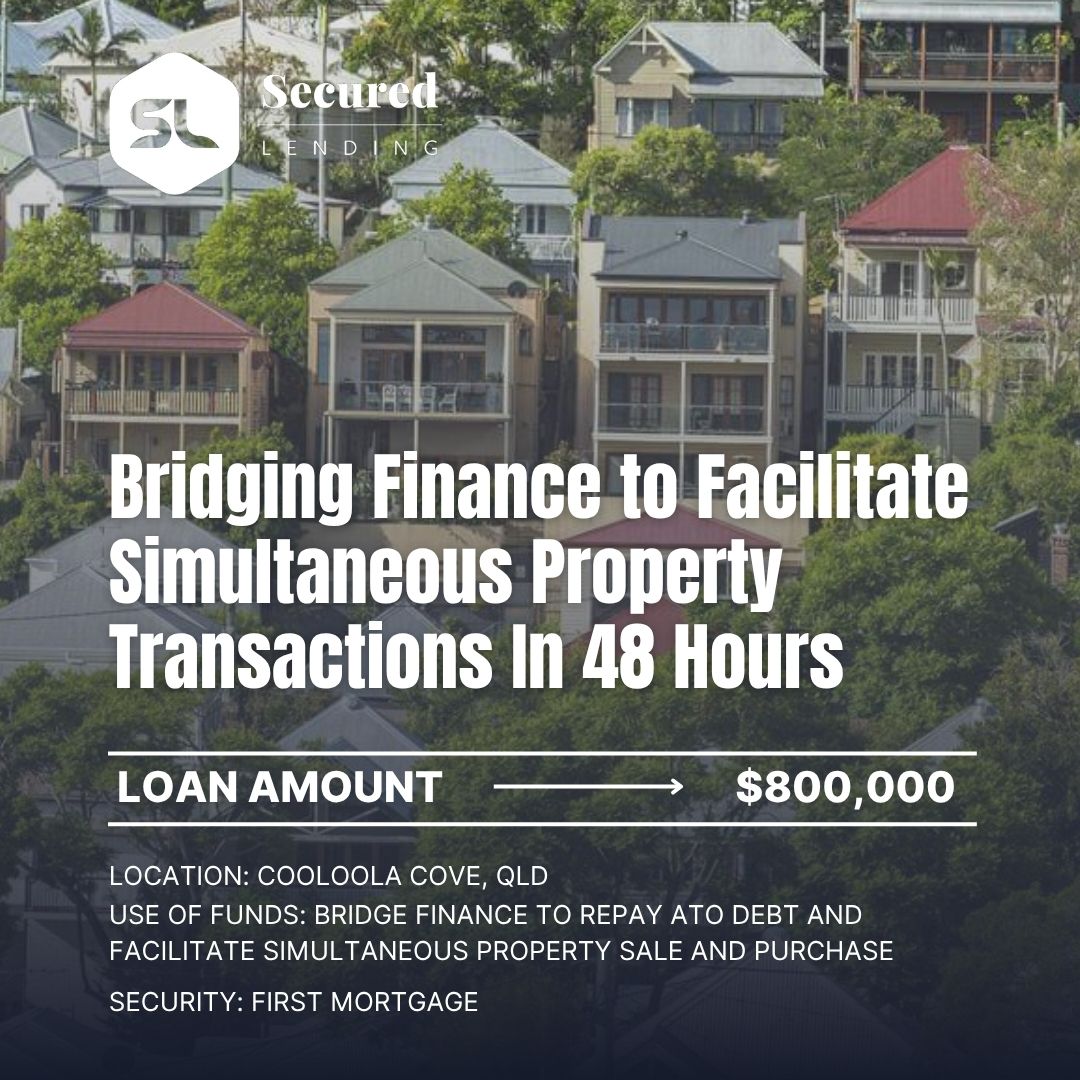
$800K Bridging Finance for Simultaneous Property Transactions in 48 Hours

$300K Second Mortgage for Dental Practice Working Capital in 5 Days
At Secured Lending, we speak with clients every week who require finance quickly. We’re happy to provide guidance on whether bridging finance fits your situation and what the requirements typically look like—security, exit strategy, serviceability approach, and realistic time frames. Contact us today.
Why business owners use bridging finance
Bridging loans are designed to cover a funding gap for a defined period—commonly while an asset is sold, a refinance is finalised, or a project reaches a milestone. They’re often used for:
- •Property purchases where settlement is approaching
- •Business or commercial property refinances with a tight deadline
- •Cash flow gaps tied to receivables, contract milestones, or seasonal trading
- •Time-sensitive acquisition or investment opportunities
- •Funding while development approvals or sale campaigns are underway
The most important piece is a clear exit strategy—such as sale of a property, refinance to a longer-term facility, or another verifiable repayment event.
Choosing a non-bank private lender for bridging finance
Working with a non-bank private lender can be the difference between securing an opportunity and missing it. Banks often require longer processing, strict policy checks, and multiple layers of approval. Private lending is built for speed and pragmatism, while still remaining disciplined about risk.
Key benefits of using a non-bank private lender for bridging finance include:
- •Faster decisions when timing is critical
- •Practical assessment of complex income, multiple entities, or recent business changes
- •More flexibility on security types and deal structure where bank policy is restrictive
- •A stronger focus on the exit strategy and asset quality (not only historical financials)
- •Ability to support urgent settlements, refinance deadlines, or auction purchases
Secured Lending uses our own funds for fast decisions and has an internal property valuation team to support speed and execution within 24 hour. That combination matters when you need confidence on timing, conditions, and next steps.
Private lending
If you’re weighing up options with an Australian private lender, the focus is typically on the quality of the security, the strength of the exit, and how quickly the lender can execute—rather than lengthy bank-style policy hurdles.
Secured Lending Bridging finance overview
If you’re comparing private lenders, clarity on loan parameters is essential. Here’s what Secured Lending offers for private bridging finance:
- •Funded over $500 million in loans
- •Loans from $250k to $10M
- •Rates from 9.7% p.a.
- •Short-term finance from 1 to 24 months
- •Fast decisions using our own funds
- •Internal property valuation team to support speed and execution within 24 hour
These features are designed to support business owners and property-backed borrowers who need momentum, not delays.
What we look for in a bridging finance application
Private bridging finance is still credit—the difference is how the credit is assessed and how quickly it can be executed. Most bridging scenarios come down to a few fundamentals:
Security
Typically residential, commercial, or industrial property (or other acceptable real property security).
Loan purpose
A clear and credible reason for the funds—purchase, refinance, settlement, or working capital tied to a defined exit.
Exit strategy
Common exits include sale of a property, refinance to a longer-term lender, or another documented repayment path. The stronger and more time-aligned the exit is, the smoother the process tends to be.
Time frame
The loan term should match the event driving repayment. Bridging works best when the timeline is clear and the milestones are achievable.
Valuation and equity
A valuation supports the lending decision and helps set appropriate loan sizing. Equity and overall deal structure are assessed alongside the exit strategy.
If you’re unsure whether your scenario fits, we can help you map the loan structure, likely documentation, and the fastest path to a decision.
Specialist private lenders across secured business loans and mortgages
Secured Lending are specialist private lenders across secured business loans and private mortgages—including first mortgage, second mortgage, and bridging loans. This matters because many bridging scenarios involve more than one moving part, such as a business entity borrower, multiple securities, related entities, or a staged exit.
A specialist lender can often structure the facility to fit the transaction, while keeping the process focused on what actually drives risk and repayment—especially where timelines are tight and outcomes depend on execution.
For borrowers comparing options across secured business loan solutions, the goal is typically to align the facility to the actual transaction risk (security, equity, exit and timing) rather than forcing a deal into a rigid approval template.
In many cases, bridging is also considered alongside a broader private mortgage strategy where the property asset supports a fast, practical lending outcome.
For borrowers who have explored non-bank business loans, bridging finance can be the short-term tool that keeps a transaction moving while the longer-term funding pathway is finalised.
Where we lend
Secured Lending is a non-bank private lender servicing Sydney, Melbourne, Brisbane, Gold Coast, Perth, Adelaide, Canberra, and surrounding metro and regional areas. If your property security is in a major city or a strong regional location, bridging finance can be a practical option when timing is tight.
Why borrowers choose Secured Lending for bridging finance
Business owners typically come to Secured Lending for three reasons:
Speed and certainty
Using our own funds and an internal valuation capability supports faster credit outcomes and smoother execution.
Experienced guidance
We speak with clients every week who require finance quickly. We can guide you on what’s realistic, what documentation will help, and what could slow things down—before you lose time.
Loan structure that matches the deal
From first mortgages to second mortgages and bridging loans, we look at the whole picture and align the facility to the transaction and exit, rather than forcing the deal into a rigid template.
Next steps
If you need bridging finance, a useful starting point is to confirm:
- •The security property (and any other proposed security)
- •The required loan amount
- •Your settlement date or time-critical deadline
- •Your exit strategy and expected timing
From there, we can outline fit, likely terms, time frames, and the requirements to move forward quickly.
Frequently asked questions
1) What’s the fastest way to avoid delays once i’ve got a tight settlement date?
The biggest time-savers are having the security address details ready, being clear on the exact amount required (including any settlement shortfall), and providing a credible exit with dates. If your exit is a refinance, having indicative refinance steps (broker/lender discussions, application status, or supporting documents) helps keep momentum.
2) How do you assess a bridging loan if my business financials don’t show a clean year-on-year story?
Bridging outcomes often depend more on security quality, equity position, and the strength of the exit than on a perfect set of historicals. Where income is complex or recently changed, the focus tends to shift to what can be evidenced now (contracts, receivables timing, sale process, refinance pathway) and whether the proposed time frame is realistic.
3) Can bridging finance work if my exit is a property sale that hasn’t exchanged yet?
It can, depending on the sale plan and how likely the sale is to complete within the proposed term. The quality of the security, the equity buffer, your sale strategy (agent appointment, campaign timing, price expectations), and any existing buyer interest all matter. The key is aligning the loan term and risk settings to the sale timeline.
4) What’s the difference between using a first mortgage vs a second mortgage for a bridging loan?
A first mortgage sits in the primary security position. A second mortgage sits behind an existing first mortgage and is commonly used when you need funds without fully refinancing the senior lender. The right structure depends on the current debt, available equity, timing constraints, and whether refinancing the first mortgage would slow the transaction down.
5) If i’m buying before selling, how is the bridging amount typically worked out?
It’s usually based on the settlement requirement and overall equity position across the security offered. The practical question is: “What’s the minimum funding needed to complete the purchase (or meet the deadline) while keeping the exit achievable?” A good structure avoids over-borrowing and matches the expected sale/refinance timing.
6) What documentation tends to make a bridging application move faster with a private lender?
Key items usually include: property details, existing loan statements (if any), the contract of sale/purchase (if relevant), a clear statement of the exit strategy (sale or refinance steps), and any supporting evidence tied to the exit (agent agreement, refinance correspondence, or settlement timeline). The more coherent the timeline is, the faster the credit process tends to be.
7) How is a private bridging loan different to a bank business loan?
A bank business loan is priced off your trading history and repaid out of ongoing income over years. A private bridge is priced off the property and repaid out of a single event: a sale, a settlement, a refinance. That is why one takes six weeks and tests serviceability and the other takes hours and tests the exit. They solve different problems, and it is worth being clear which one you actually have.
8) What happens if the sale I am bridging to falls through?
Tell us as soon as you know. Terms run 1 to 24 months and extensions are considered case by case, but the options narrow sharply once a facility is past expiry. A relisting, a price adjustment or a refinance to a longer-term lender are all workable when there is time to arrange them. The worst move is silence until the term runs out.