


Business debt can become unmanageable when repayments are spread across multiple lenders, payment dates, and variable terms. A debt consolidation loan can simplify your structure by replacing several liabilities with one facility, one repayment schedule, and a clearer plan. If your bank has slowed down, declined the deal, or cannot move fast enough, a private lender can be the practical next step—Contact us today.
Recent client success
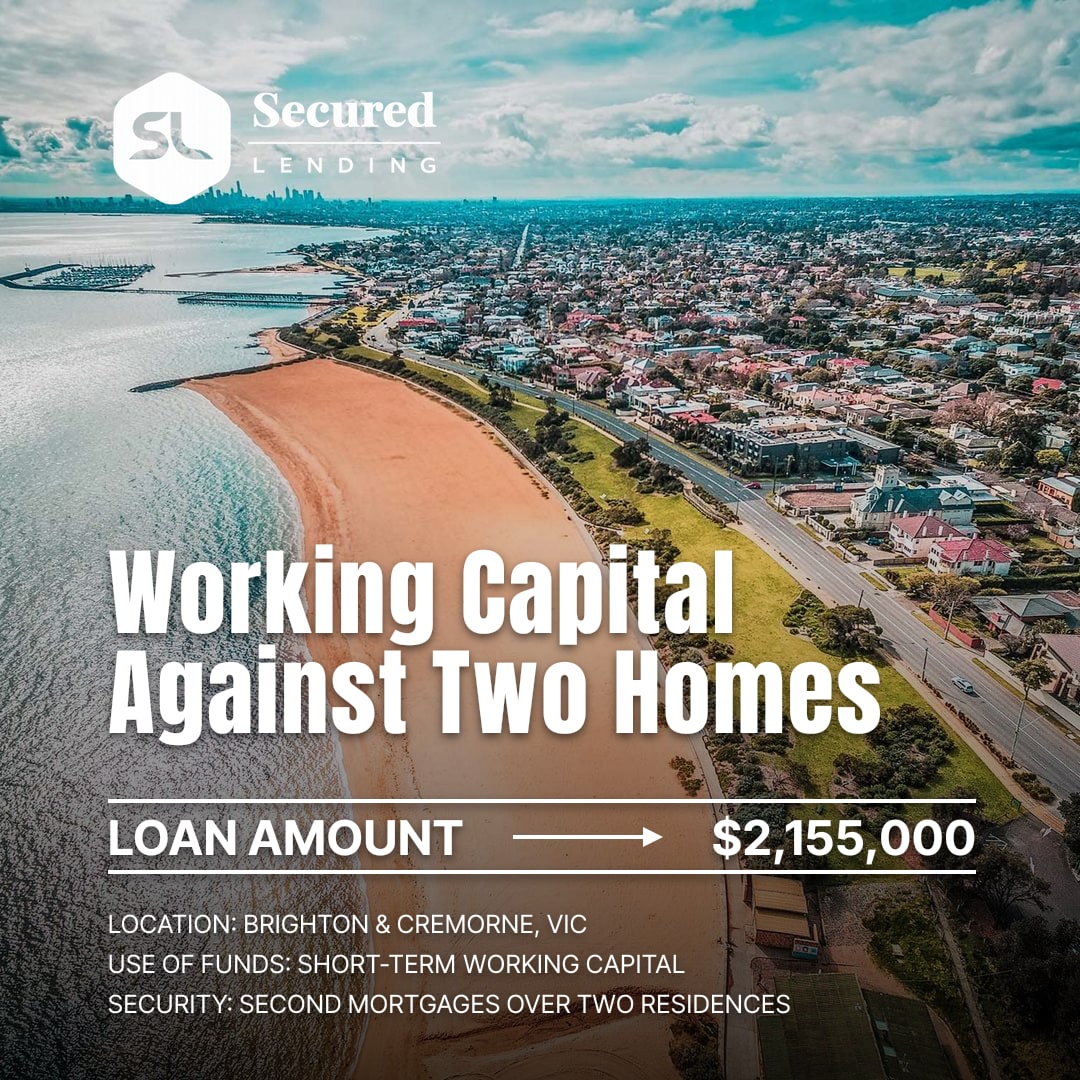
$2.155M Second Mortgage Working Capital Facility Across Brighton and Cremorne
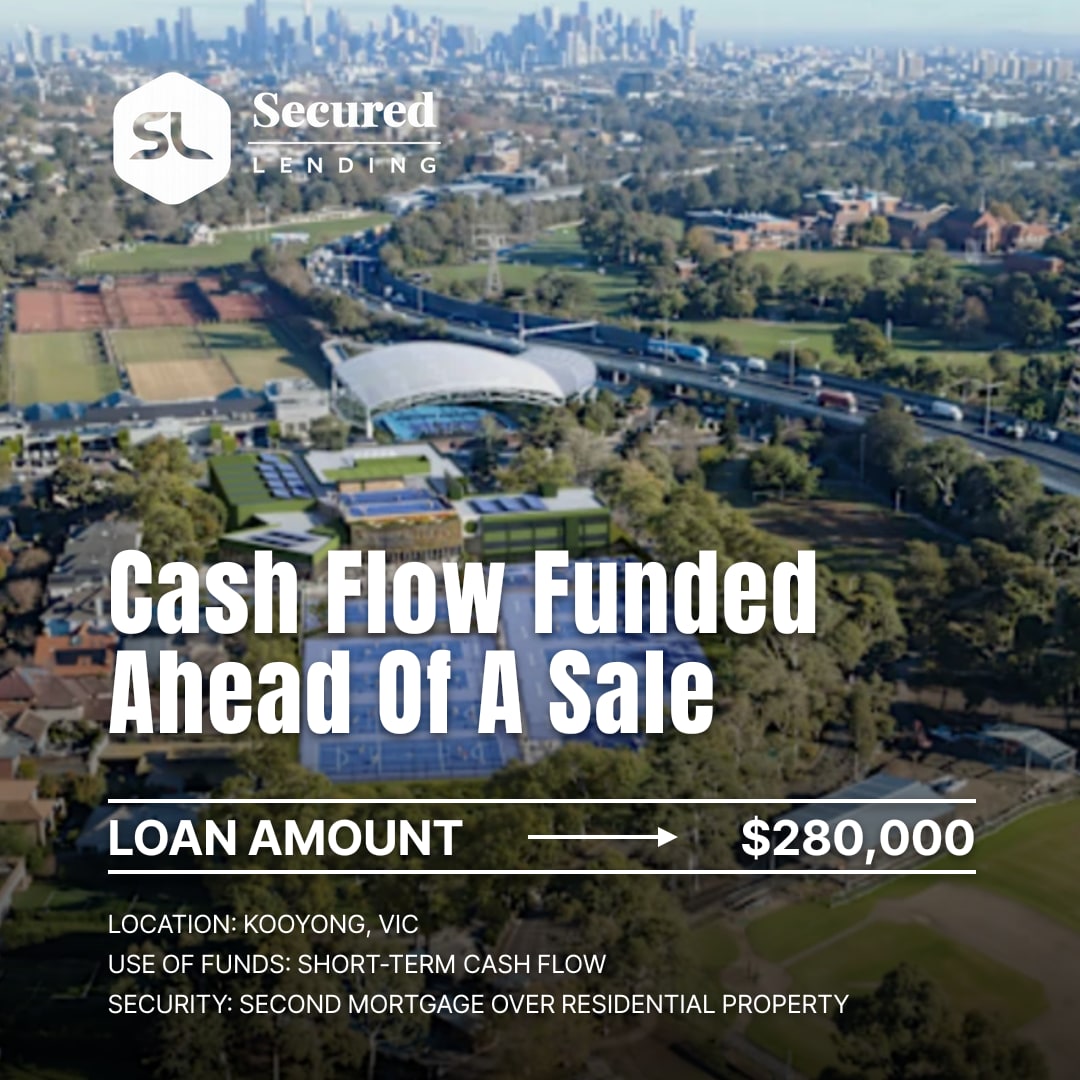
$280K Second Mortgage for Short-Term Cash Flow in Kooyong

$545K Bridging Loan Across Three Suburbs in Melbourne's North-West
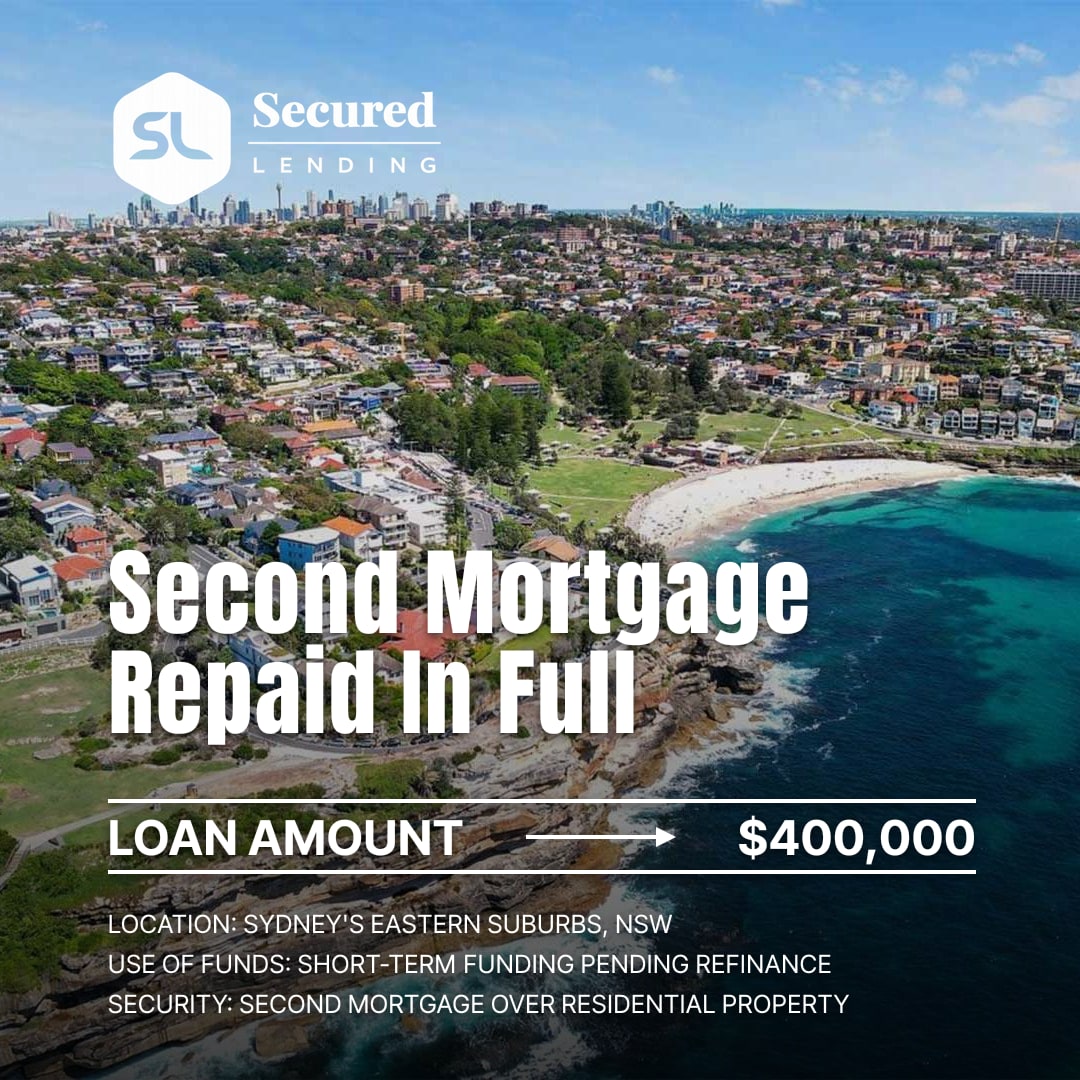
$400K Second Mortgage Repaid in Full After a Flexible Two-Month Extension
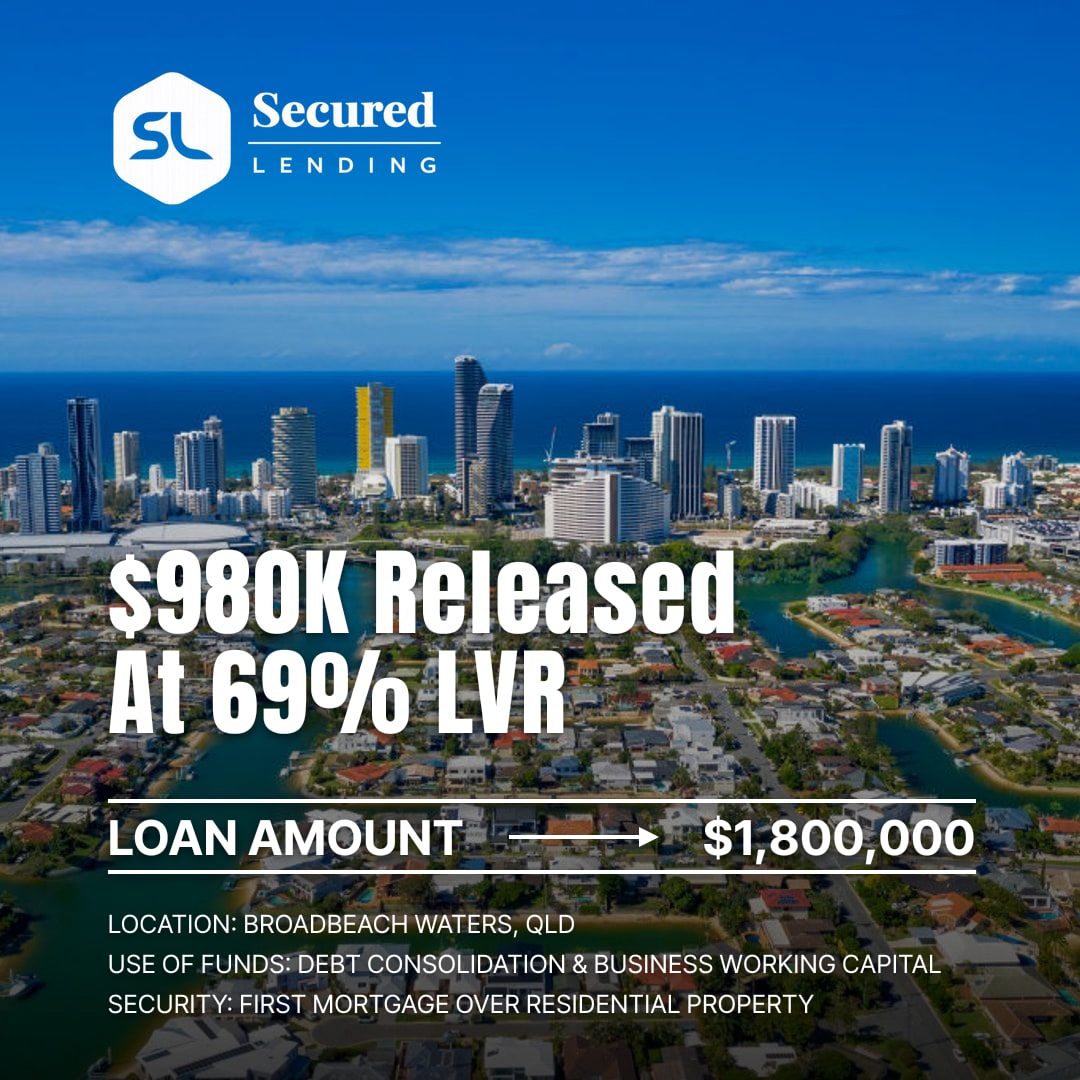
$1.8M First Mortgage Releases $980K of Working Capital for a Solar Business
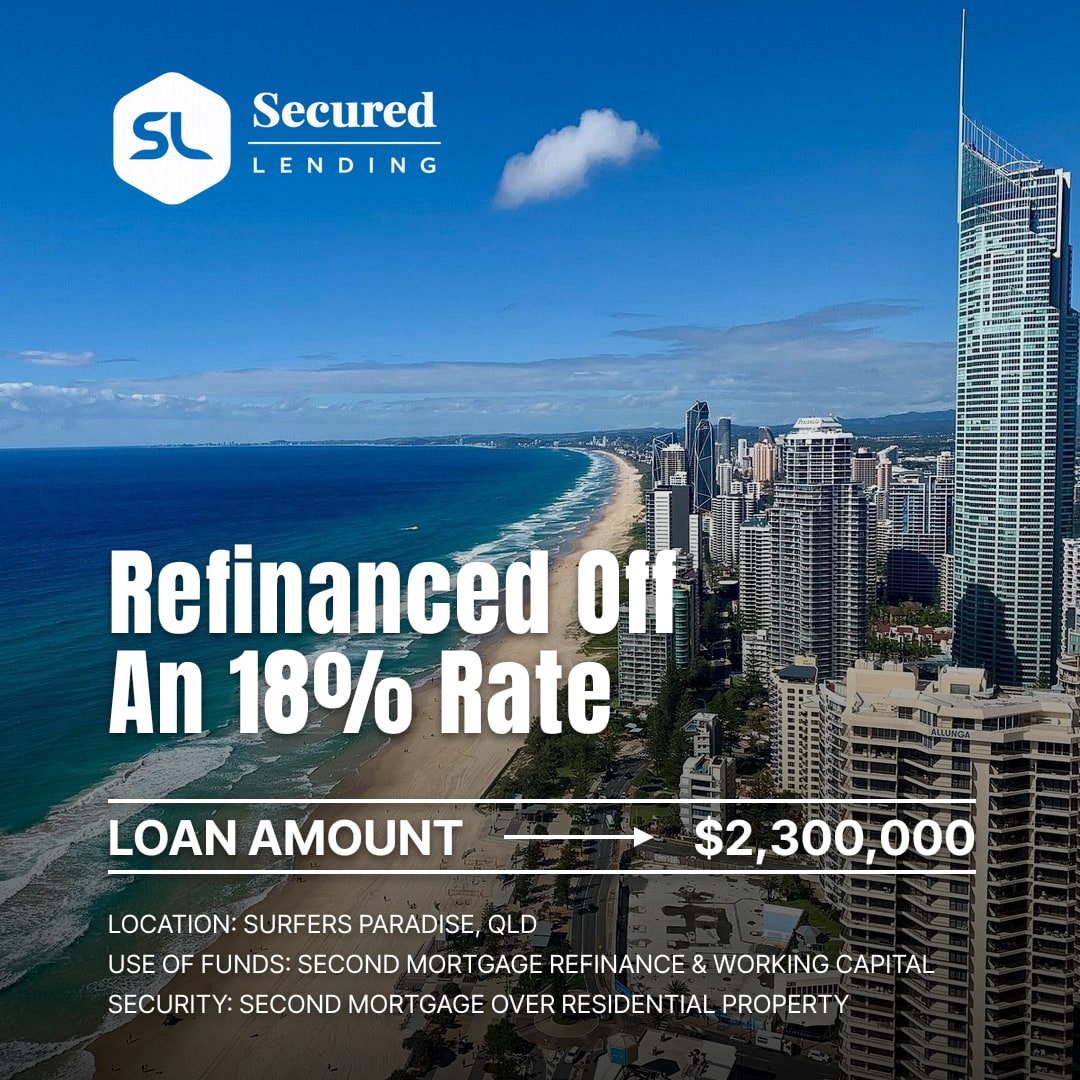
$2.3M Second Mortgage Refinances an 18% Facility for a Glass Manufacturer
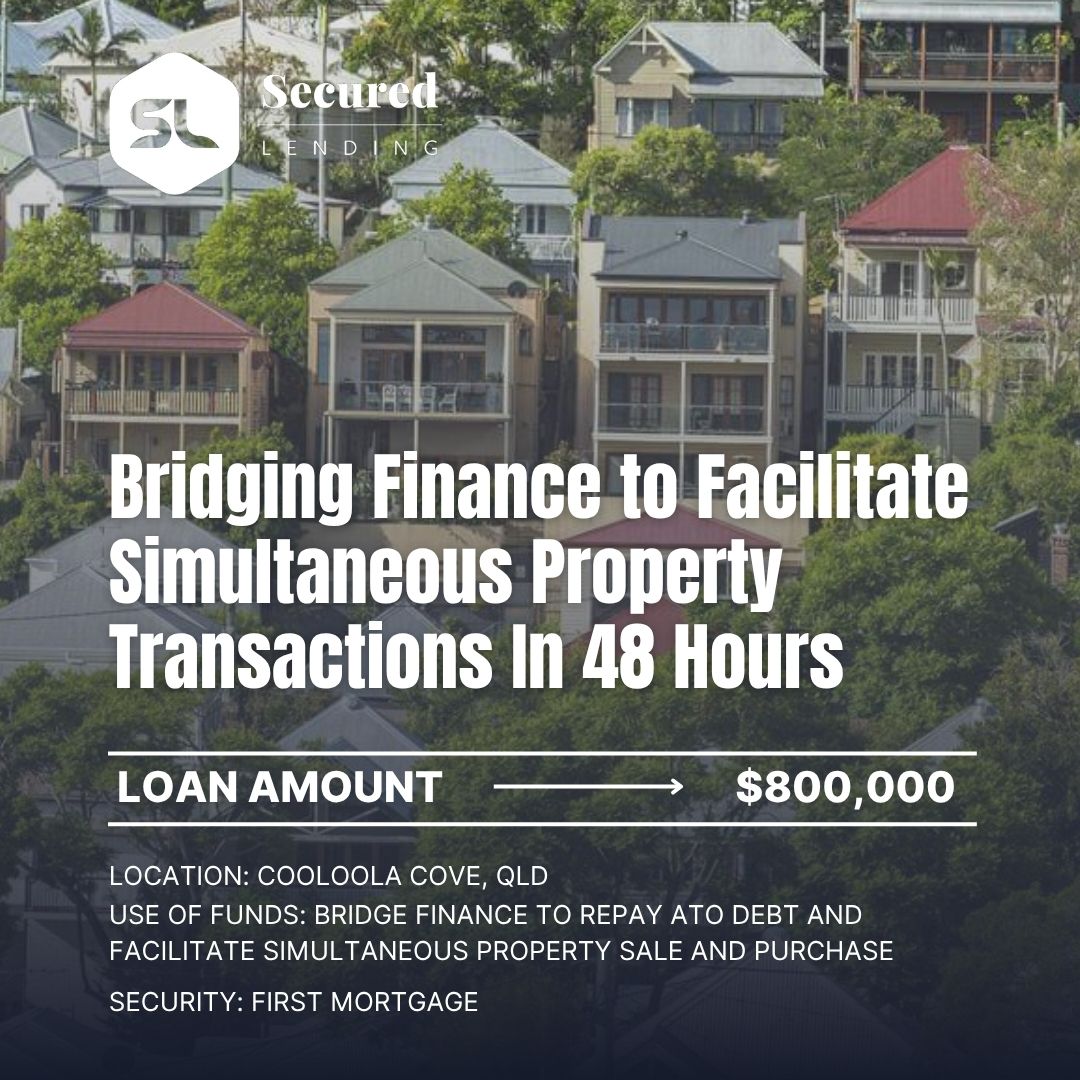
$800K Bridging Finance for Simultaneous Property Transactions in 48 Hours

$300K Second Mortgage for Dental Practice Working Capital in 5 Days
Non-bank private lender for debt consolidation loans
At Secured Lending, we speak to clients every week who require finance and we are happy to provide guidance and requirements for debt consolidation loans. Business owners typically come to us when they need speed, flexibility, or a solution that fits the asset and the situation, not a rigid policy.
Private lending
If you’re looking for private business loans in Australia, we provide specialist lending solutions that can help consolidate debt and stabilise cash flow where traditional lenders can’t move quickly enough.
We are specialist private lenders in secured business loans, private mortgage solutions (including first mortgage and second mortgage structures) and bridging loans. Debt consolidation is often part of a broader strategy to stabilise cash flow, protect key assets, and create breathing room while the business regains momentum.
Why consolidate business debt with a private lender
Debt consolidation is not only about convenience. Done correctly, it can reduce operational stress and help you regain control of your business finances.
Common outcomes business owners are looking for include:
One facility instead of multiple liabilities
A single loan can replace several debts such as business loans, arrears, private lending facilities, and other secured obligations. This can reduce missed payments, late fees, and admin load, while making cash flow planning easier.
It also gives you a cleaner picture of your position: one lender, one repayment schedule, and one set of terms to manage.
Faster decisions when timing matters
When there is a pressing deadline—settlement date, creditor pressure, an upcoming maturity, or a refinance that needs to land quickly—a private lender can often move faster than a bank process.
With Secured Lending:
- •We have funded over $500 million loans
- •We use our own funds for fast decisions
- •We have an internal property valuation team which allows us to move fast within 24 hour
- •We offer loans from $250k to $10M
- •Rates from 9.7% p.a.
- •We specialise in short term finance of 1 to 24 months
This approach can suit consolidation scenarios where speed and certainty are critical, especially when you need to restructure quickly to prevent a problem becoming more expensive.
A practical credit approach for complex scenarios
Banks often assess debt consolidation through a narrow lens, especially if recent trading has been inconsistent or if the current structure is already strained. A private lender may be able to take a more practical view based on the quality of the security, the exit strategy, and the pathway to stabilisation.
This can help when you are dealing with:
- •Multiple existing lenders and securities
- •Pressure from upcoming maturities or default notices
- •A need to pay out higher cost short term facilities
- •Temporary cash flow disruption, tax debt, or arrears that must be cleared to reset the position
- •A time sensitive refinance before a sale or longer term refinance is available
Short-term reset with a clear exit plan
Debt consolidation with a private lender is commonly used as a short term reset. The goal is to consolidate, stabilise, and then exit through a sale, a refinance to a bank, or improved trading.
When the facility is structured around a realistic timeline, it can create a workable bridge between today’s constraints and tomorrow’s better options—without forcing you into a long approval process while pressure builds. In some cases, a short term solution like private bridging finance can provide the breathing room needed to complete a sale or refinance.
Where Secured Lending operates
Secured Lending is a non bank private lender servicing Sydney, Melbourne, Brisbane, Gold Coast, Perth, Adelaide, Canberra and surrounding metro and regional areas. If your security is in a major city or a strong regional market, consolidation may be possible even when traditional lenders are slow.
What a secured debt consolidation loan typically requires
Every scenario is different, but secured debt consolidation commonly relies on property security and a clear plan.
You can expect a focus on:
- •Security details (residential, commercial, or specialised property) and current encumbrances
- •A schedule of debts to be paid out, including payout figures and creditor details
- •Borrower structure (company, trust, or personal borrower) and guarantors where applicable
- •Income and business context, with emphasis on explanation and a credible exit strategy
- •Valuation and settlement readiness, especially when timing is urgent
Because consolidation is often used to protect the business from escalating costs, speed and documentation quality matter. We are happy to guide you on what is required and what will strengthen the application.
When a private debt consolidation loan makes sense
A non bank private lender can be a strong fit when you need action and a workable solution, such as:
- •You have multiple high pressure debts and want one structured facility
- •Your bank has declined, delayed, or offered terms that do not solve the problem
- •You need to clear arrears, remove creditor pressure, or finalise a refinance quickly
- •You are planning a sale or refinance and need short term finance to get there
- •You need a lender that can move quickly with internal decision making and valuation support
Next steps with Secured Lending
If you are considering a debt consolidation loan, the best outcome comes from matching the facility to the problem you are solving. Secured Lending provides secured short term private lending and can help you assess whether consolidation is appropriate, what security will be needed, and what a realistic pathway out looks like.
We speak to clients every week who require finance and we are happy to provide guidance and requirements for debt consolidation loans—including how to present your debts, your security, and your exit strategy so the finance supports your business rather than adding complexity. Depending on your structure and security, this may be arranged as a secured business loan that replaces multiple liabilities with one clear facility.
If you’re comparing options beyond mainstream lenders, we also help clients assess suitable structures within the broader landscape of non-bank business loans.
Frequently asked questions
1) What should my “schedule of debts” include so there are no delays at settlement?
Include each creditor name, facility type, current balance, payout figure (or how it will be calculated), account/reference numbers, security held (if any), and any time-sensitive conditions (expiry dates, break costs, default interest, or legal demands). If there are arrears, list them separately so it’s clear what must be cleared on day one.
2) Can consolidation cover ATO/tax debt, arrears, or creditor pressure costs as well as loan payouts?
Often, yes—consolidation is frequently used to clear arrears and reset the position, especially where unpaid liabilities are creating compounding pressure. What matters is the overall amount required, the available security, and a credible exit pathway.
3) I have multiple securities and lenders—how do you handle discharges and priorities?
These deals usually involve coordinating discharges, payout letters, and settlement sequencing so that existing lenders are repaid and securities are released (or re-registered) in the correct order. Clean documentation and accurate payout figures are critical so settlement doesn’t stall.
4) How fast can you actually move if I have a hard deadline?
If the security and documentation are ready and the exit strategy is clear, private lending can move quickly—especially when valuation and decision-making are handled internally. The biggest causes of delays are missing payout figures, unclear security positions, and incomplete entity/guarantor documents.
5) What makes an exit strategy “credible” for a short-term consolidation loan?
A credible exit is specific and time-linked: a contracted sale, a refinance plan supported by improving financials, a clear timeline to refinance to a bank, or a near-term event that releases funds. The more the exit relies on “future improvement” alone, the more important it is to show what is changing and when.
6) Will consolidating debt hurt my ability to refinance to a bank later?
It can help if it stabilises cash flow, removes arrears/defaults, and creates a cleaner structure. The key is to avoid a short-term facility that doesn’t match the timeline. When consolidation is structured with a realistic term and clear milestones, it can position you for a smoother longer-term refinance rather than adding complexity.
7) Will consolidating actually cost less?
Work it out on the total, not the headline rate. Rolling four facilities at 20% into one at 9.7% is an obvious win. Rolling a cheap bank loan into a private facility is not, unless the point is releasing pressure rather than saving money. Ask us to set the numbers side by side including establishment costs, and if it does not stack up we will tell you.
8) What can and cannot be rolled into the facility?
Anything with a payout figure: short-term business loans, merchant advances, ATO debt, creditor balances, an existing mortgage, arrears. What cannot be rolled in is a debt nobody will quote a payout on, or a total that pushes the position past 70% LVR against the security property. That ceiling is what decides most consolidation files.