



If you’re a business owner with property equity, an equity release loan can unlock capital without selling the asset. This type of secured loan can be used to stabilise cash flow, fund growth, cover a tax obligation, complete a property project, or refinance existing private or bank debt when timing matters. Contact us today.
Recent client success
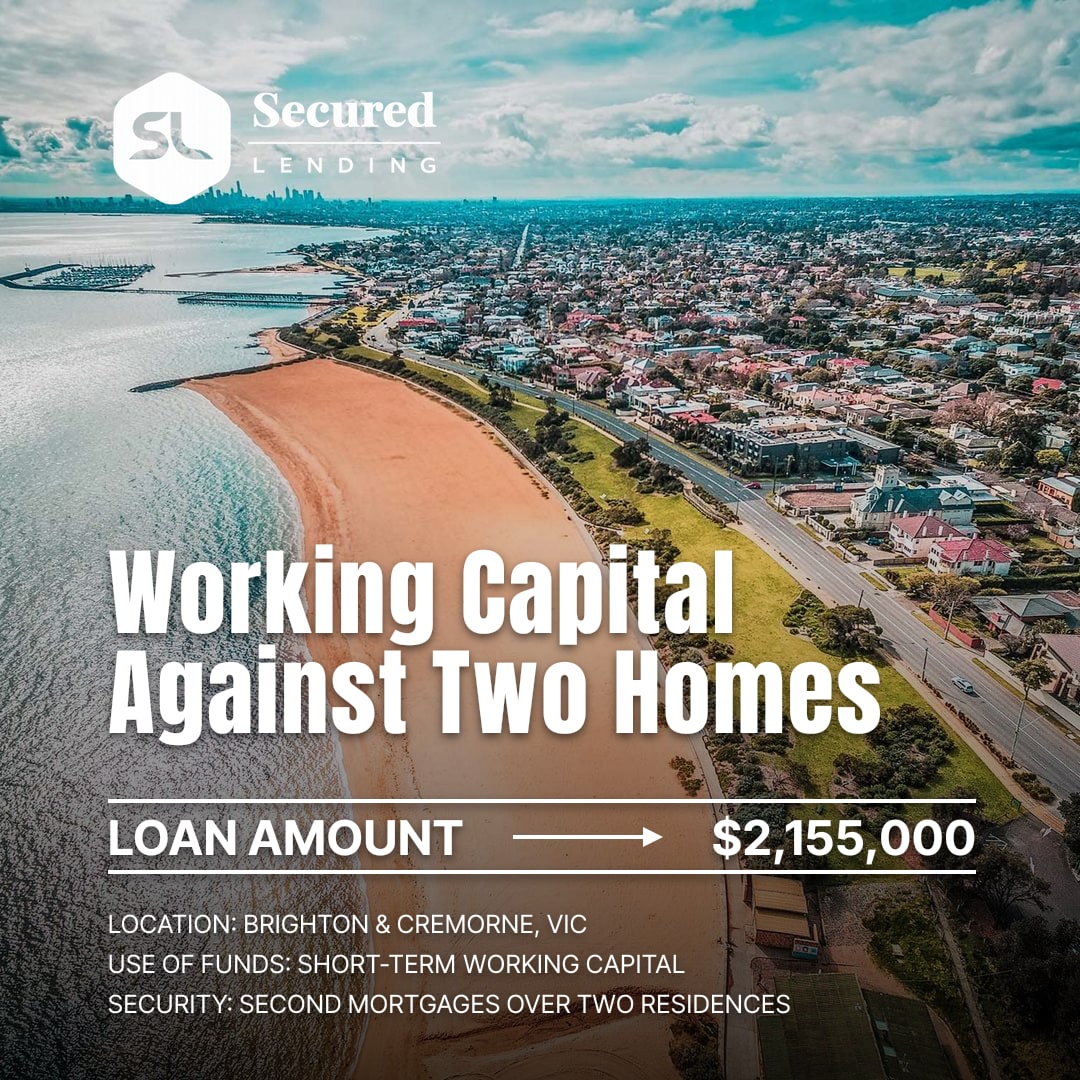
$2.155M Second Mortgage Working Capital Facility Across Brighton and Cremorne

$280K Second Mortgage for Short-Term Cash Flow in Kooyong

$545K Bridging Loan Across Three Suburbs in Melbourne's North-West
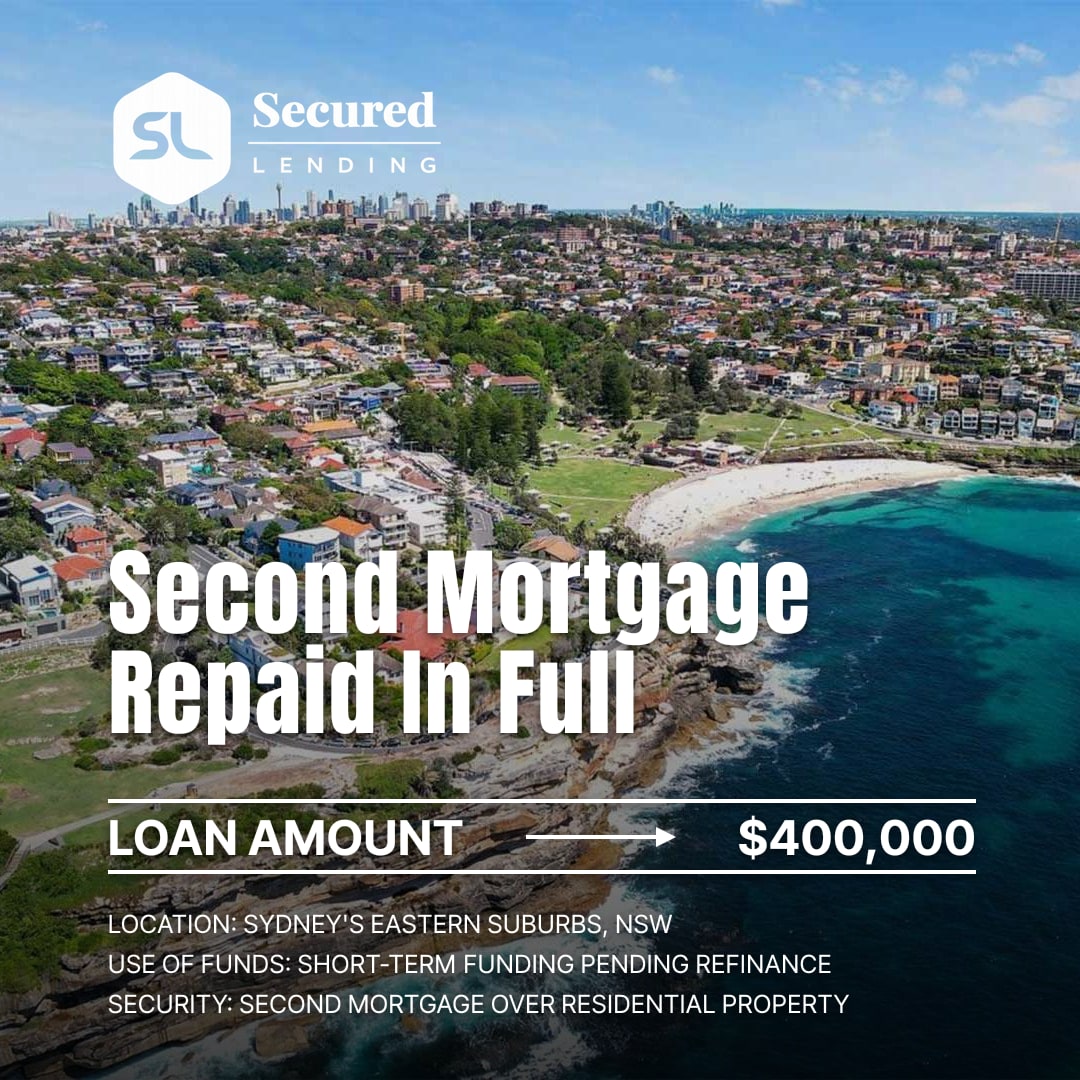
$400K Second Mortgage Repaid in Full After a Flexible Two-Month Extension

$1.8M First Mortgage Releases $980K of Working Capital for a Solar Business

$2.3M Second Mortgage Refinances an 18% Facility for a Glass Manufacturer
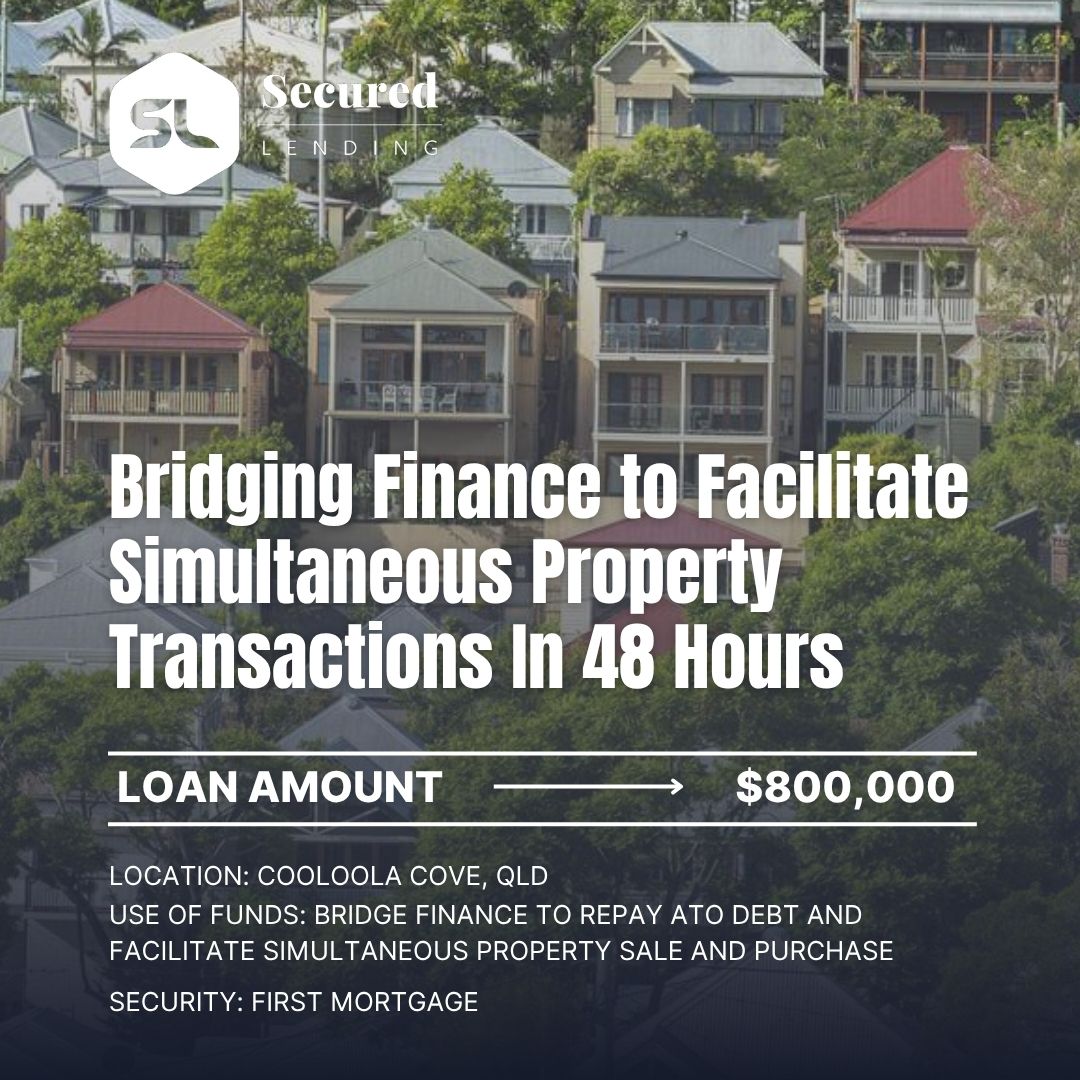
$800K Bridging Finance for Simultaneous Property Transactions in 48 Hours

$300K Second Mortgage for Dental Practice Working Capital in 5 Days
At Secured Lending, we speak to clients every week who require finance and we are happy to provide guidance and requirements for Equity Release Loans. We understand that many borrowers are not just chasing the lowest rate. They need certainty, speed, and a lender that can assess the full scenario, including property, structure, exit strategy, and timelines.
How equity release loans work
An equity release loan is a secured loan where the property value and available equity supports the borrowing. The property can be residential, commercial, or specialised, subject to lending criteria and valuation.
Common equity release use cases
- •Working capital to smooth seasonal revenue or manage payment cycles
- •Business expansion and acquisition funding
- •Funding a deposit or progressing a development timeline
- •Paying supplier arrears or consolidating short term liabilities
- •Refinance when bank policy, servicing, or timing does not fit
Key factors lenders assess
- •Property type, location, and marketability
- •Current debt levels and available equity
- •Loan purpose and how funds will be used
- •Exit strategy, such as refinance, sale, or business cash flow event
- •Borrower profile and overall risk position
When a non bank private lender makes sense
Working with a non bank private lender can be the difference between funding on time and missing an opportunity. Private lending is often suited to business owners who need a practical credit approach, fast internal decision making, and lending that is driven by security and strategy, not just automated policy.
Secured Lending operates as Australia’s fastest private lender, assessing the full scenario so the facility matches the asset, the structure, and the exit timing.
Benefits of a non bank private lender for equity release loans
- •Faster decisions when timelines are tight We use our own funds for fast decisions and have an internal property valuation team which allows us to move fast within 24 hour. This can be critical when you are managing a settlement deadline, a refinancing requirement, or a time sensitive business need.
- •Security led assessment Private lending is typically more focused on the property and equity position, alongside a clear plan for repayment. This can help when bank servicing models do not reflect your true cash flow or when your financials do not fit a bank credit box.
- •Flexibility for short term strategies We specialise in short term finance of 1 to 24 months. This suits borrowers who are executing a clear plan, such as a sale, a refinance to a mainstream lender, or a business event that improves financials.
- •A simpler path when complexity is real Business structures, multiple entities, second mortgages, mixed use properties, and time pressures often require a lender that can evaluate nuance and move decisively.
Secured Lending Equity release loan details
Our equity release loans are designed for business owners who need speed and clarity:
- •We have funded over $500million loans
- •Loans from $250k to $10M
- •Rates from 9.7% p.a.
- •We specialise in short term finance of 1 to 24 months
- •We use our own funds for fast decisions and have an internal property valuation team which allows us to move fast within 24 hour
These features matter when you need funding that aligns with a near term plan and you want a lender that can execute without unnecessary delay.
What to expect when you approach Secured Lending
You should expect a process that is direct, responsive, and based on the deal fundamentals.
What we typically focus on
- •The property and available equity position
- •The loan amount required and how quickly it is needed
- •The purpose of funds, including business or investment outcomes
- •The exit strategy and timeframe, including refinance or sale pathways
- •The overall risk profile and supporting documentation
We are happy to provide guidance and requirements for Equity Release Loans because many business owners are solving for time, not just cost. The right structure at the start can reduce delays, protect your position, and improve approval outcomes.
Specialist capability across secured finance (when equity release isn’t isolated)
We are specialist private lenders in secured business loan solutions, private mortgages including first mortgage and second mortgage structures, and private bridging finance. This matters because equity release is rarely isolated. Often it links to a broader plan such as bridging between transactions, refinancing multiple facilities, or structuring a senior and subordinate lending outcome.
If your scenario involves existing debt, a second position requirement, or a short term bridging need, a specialist secured lender can structure the facility with the full picture in mind.
Where we lend
Secured Lending is a non bank private lender servicing Sydney, Melbourne, Brisbane, Gold Coast, Perth, Adelaide, Canberra and surrounding metro and regional areas. If your property is in a major city or a strong regional market, we can assess the opportunity based on security, valuation, and the quality of the exit.
Is a private equity release loan right for you?
An equity release loan can be a strong fit if:
- •You have usable property equity and need capital now
- •You have a defined exit strategy within 1 to 24 months
- •Speed and certainty matter more than a lengthy bank process
- •Your scenario is time sensitive, complex, or outside bank policy (including non-bank business loans scenarios)
If you want a lender that can move fast, assess security properly, and provide clear guidance, Secured Lending can help you evaluate whether an equity release loan is the right next step for your business, including where a private mortgage structure is the most practical path.
Frequently asked questions
1) What information should I have ready to get a fast decision?
Have the property address, an estimate of current value, your current loan balance(s), the amount you want to raise, and a clear use of funds. Most importantly, outline your exit strategy (sale, refinance, or a defined business cash-flow event) with target dates—this is often what makes the timeline realistic.
2) If my property already has a mortgage, can I still release equity?
Often yes. Equity release can be structured around existing debt, depending on the remaining equity position and whether the new facility is in a senior or subordinate position. The structure is usually driven by available equity, priority position, and how cleanly the exit can repay all facilities.
3) How do you look at “serviceability” if my business cash flow is uneven?
Where banks can lean heavily on rigid servicing calculators, private lending commonly places more weight on the security, the equity buffer, and the credibility of the exit strategy. Your broader risk profile still matters, but the assessment is typically more scenario-based rather than box-ticking.
4) Can an equity release loan be used to cover a tax obligation without disrupting operations?
It can be used that way when timing is critical and you’re protecting working capital. The key is aligning the loan term with your expected repayment event (for example, a refinance window, sale, or seasonal revenue cycle) so the tax solution doesn’t create a longer-term cash squeeze.
5) What makes an exit strategy “strong” in a 1–24 month loan?
A strong exit is specific and date-driven: a property sale already being prepared, a refinance plan that becomes viable after a project milestone, or a business event (contract completion, receivables cycle, asset sale) that clearly improves liquidity. Vague exits tend to slow approvals because they increase risk and uncertainty.
6) If my property is specialised or mixed-use, does that reduce my options?
It can, but it doesn’t automatically rule it out. Specialised and mixed-use properties often require a lender who can assess marketability and valuation nuance rather than applying a blanket policy. The location, the demand profile, and the clarity of the exit tend to matter just as much as the asset type.
7) Is there a limit on what I can use the released equity for?
It has to be a business or investment purpose, and you will be asked to declare that in writing before settlement. Inside that, it is genuinely flexible: working capital, an acquisition, clearing an ATO position, funding a deposit. What it cannot be used for is personal or household spending, because that would put the loan in the wrong regulatory category.
8) How much equity can I actually release?
The gap between 70% of the property’s assessed value and whatever is already owing against it. On a $2,000,000 property with a $900,000 first mortgage, that is $500,000. Our own valuers set the value, and their number is the one that counts, which is why a desktop estimate or a neighbour’s sale price is a starting point rather than an answer.