



If you already have equity in a property, a second mortgage refinance can be a practical way to restructure existing private debt, release cash flow, or replace a loan that no longer suits your business timeline. Many business owners refinance when their current second mortgage is coming to term, the rate is stepping up, a lender is tightening policy, or they need a cleaner structure to support trading, a purchase, or a settlement. Contact us today to discuss a timeframe that works with your payout date.
Recent client success
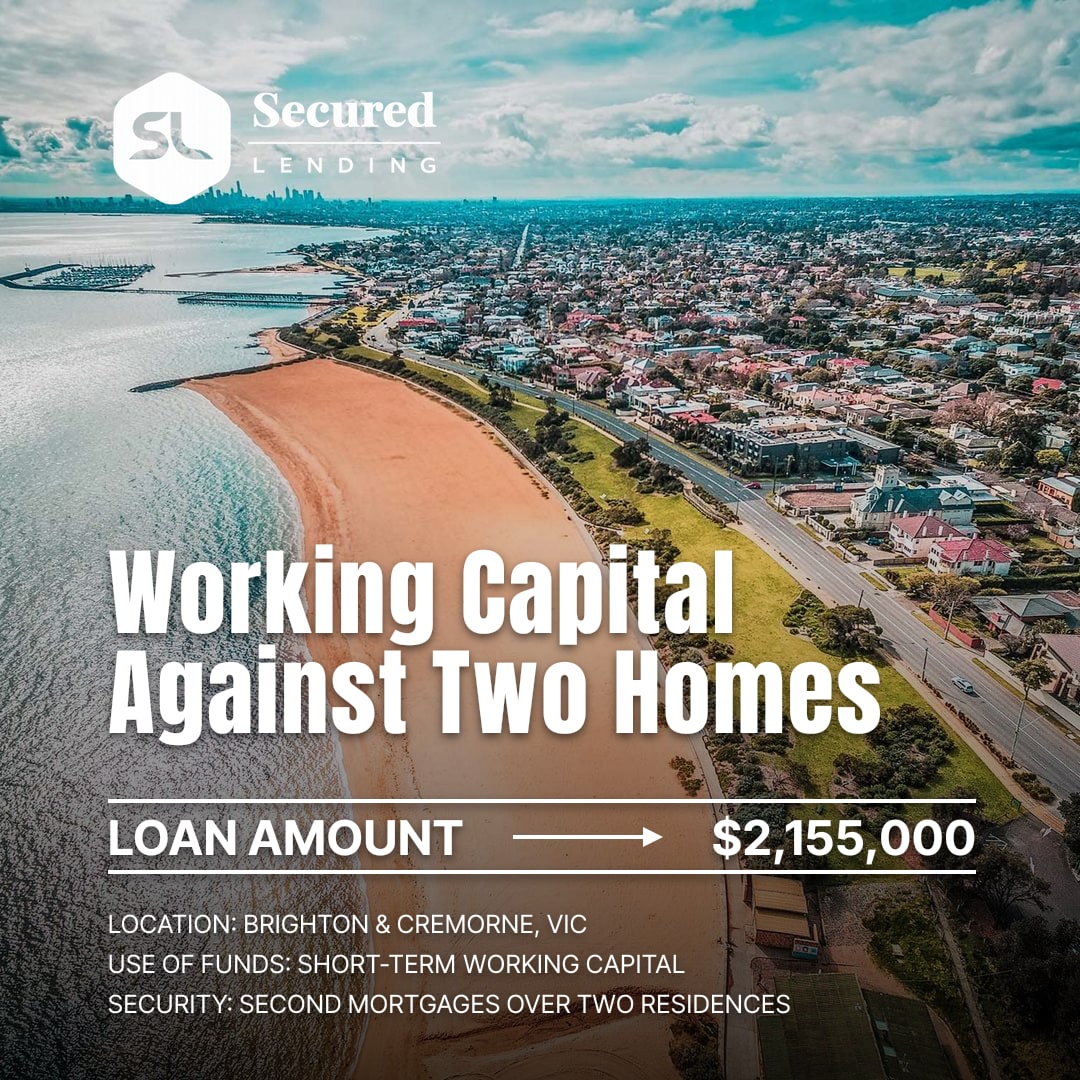
$2.155M Second Mortgage Working Capital Facility Across Brighton and Cremorne

$280K Second Mortgage for Short-Term Cash Flow in Kooyong

$545K Bridging Loan Across Three Suburbs in Melbourne's North-West

$400K Second Mortgage Repaid in Full After a Flexible Two-Month Extension

$1.8M First Mortgage Releases $980K of Working Capital for a Solar Business

$2.3M Second Mortgage Refinances an 18% Facility for a Glass Manufacturer

$800K Bridging Finance for Simultaneous Property Transactions in 48 Hours

$300K Second Mortgage for Dental Practice Working Capital in 5 Days
With second mortgage refinance, speed and certainty matter. Delays with valuations, credit policy, and multiple approval layers can be costly if you’re trying to meet a payout date or protect a transaction.
When a second mortgage refinance makes sense
A refinance is commonly used to:
- •Payout an existing second mortgage and reset the term to suit your next milestone
- •Consolidate multiple secured debts into a simpler structure
- •Access additional funds against available equity for working capital, tax obligations, supplier payments, or a time-sensitive business opportunity
- •Replace a lender where serviceability, documentation, or timing has become a barrier
- •Stabilise cash flow with a short-term facility that matches your exit strategy (sale, refinance to bank, or a business cash flow event)
Second mortgage refinance isn’t only about rate. Often, it’s about execution, term fit, and lender flexibility.
Why a non-bank private lender can be the right fit
Working with a non-bank private lender can be the difference between meeting a deadline and missing it. Private lending is designed for scenarios where decisions need to be made quickly, security is strong, and timing affects the outcome. For many borrowers comparing non-bank business loans, the key difference is often the ability to structure around real-world timing constraints.
Faster decision making
Bank processes can involve multiple teams and extended timeframes. A private lender can assess the security and scenario quickly and move to approval without layers of committee delays.
Security-focused assessment
Second mortgage lending is typically more focused on property equity, overall risk position, and a clear exit strategy—rather than a narrow view of standard bank serviceability.
Fit for short-term timelines
If your plan is to refinance again, sell an asset, or complete a project, short-term finance can be a better match than a long-term product that’s hard to qualify for today, including options such as private bridging finance where appropriate.
More practical structuring
Private lenders can often structure around real business constraints such as seasonal cash flow, temporary disruption, or a time-bound opportunity.
Private lending
At Secured Lending, we speak to clients every week who require finance, and we’re happy to provide guidance and requirements for second mortgage refinance. If you need an Australian private lender that can prioritise execution and settlement coordination, we can assess the security and your exit plan quickly.
How Secured Lending supports second mortgage refinance
Secured Lending are specialist private lenders in secured business loans, private mortgages (including first mortgage and second mortgage facilities), and bridging loans. This matters for second mortgage refinance because the lender needs to understand priority, payout coordination, settlement sequencing, and how to structure a deal that’s realistic for your exit.
We are a non-bank private lender servicing Sydney, Melbourne, Brisbane, Gold Coast, Perth, Adelaide, Canberra, and surrounding metro and regional areas.
Loan parameters and what you can expect
Where your application fits our credit and security requirements, Secured Lending offers:
- •Over $500 million funded
- •Fast decisions using our own funds, with an internal property valuation team to move quickly (often within 24 hours)
- •Loan amounts from $250k to $10M
- •Rates from 9.7% p.a.
- •Short-term finance from 1–24 months
These settings are designed for borrowers who value speed, certainty, and a clear path to exit, including scenarios where a secured business loan is required to align debt with a specific business milestone.
What the refinance process typically looks like
A well-run second mortgage refinance comes down to clarity and coordination. In most cases, the process involves:
- •Confirming the current payout figure for the second mortgage and any timing requirements
- •Reviewing the property security, existing first mortgage position, and available equity
- •Understanding the refinance purpose and confirming the exit strategy
- •Ordering or completing valuation steps to support the required lending position
- •Issuing terms and progressing to settlement in line with the payout deadline
If you’re under time pressure, mapping the payout requirements early—and providing the core documents upfront—makes it much easier to protect your timeframe.
What we usually need to assess a second mortgage refinance
Second mortgage refinance is assessed on risk, equity, and execution. Common requirements include:
- •Details of the property offered as security and the existing mortgage balances
- •Current payout statement for the second mortgage (and any other secured debts)
- •Your refinance objective and why you’re changing lenders now
- •Evidence of your exit strategy (sale campaign, refinance plan, defined cash flow event)
- •Borrower and entity details, including company and trust structures where relevant
If you’re unsure what applies to your situation, Secured Lending can outline the requirements and help you understand what’s achievable before you invest time into a full application, including where a private mortgage structure may suit the timeline.
Why business owners choose Secured Lending for second mortgage refinance
Business owners typically come to a private lender because they want:
- •A fast, direct lending decision
- •A lender that understands second mortgages and settlement timing
- •Funding that matches a short-term plan (not a long-term ideal)
- •A practical assessment based on the security and a credible exit
If you are refinancing an existing second mortgage and need a non-bank private lender that can move quickly, Secured Lending can assess your scenario and provide guidance on next steps.
Frequently asked questions
1) How do I avoid settlement delays when paying out an existing second mortgage?
The biggest time-savers are getting the payout letter early, confirming any break costs/fees, and checking whether the current lender has specific notice periods or discharge requirements. If your payout date is fixed (for example, tied to another transaction), it’s worth aligning valuation and legal steps to that deadline from day one.
2) Can a second mortgage refinance include extra funds on top of the payout?
Yes—if there’s sufficient equity and the overall position is supportable. Many business owners refinance the existing second mortgage and also raise additional funds for items like tax arrears, supplier payments, wages, or working capital, provided there’s a clear reason and a credible exit strategy.
3) What does “exit strategy” actually need to look like for short-term second mortgage refinance?
It needs to be specific and time-bound. Examples include a property sale campaign with an agent and timeline, a refinance plan back to a bank once financials normalize, or a defined business event (such as settlement proceeds, completed project payments, or an asset sale). The clearer the sequence and timing, the smoother the approval process tends to be.
4) If i’m behind on payments with my current lender, can I still refinance?
Often it’s still possible, depending on the equity position, the reason for the arrears, and whether the refinance resolves the pressure (for example, consolidating debts or resetting the term). The key is being upfront about the timeline, any default notices, and what the refinance changes going forward.
5) How do you coordinate with the first mortgage lender during a second mortgage refinance?
Second mortgage refinance typically requires careful coordination around priority, discharge of the existing second mortgage, and settlement sequencing. The first mortgage usually stays in place, but the new second mortgage must fit within acceptable lending parameters and settlement must be coordinated so payouts happen correctly and on time.
6) What should I prepare if my property is held in a trust or company structure?
Have the entity details ready (trust deed/company documents where relevant), confirm who the borrowers/guarantors are, and be clear on how the property is owned and who benefits from the refinance. Entity structure doesn’t automatically prevent a refinance, but it can affect documentation and timing—so providing this early helps avoid back-and-forth later.
7) Can I refinance a second mortgage without touching the first?
Yes, and that is usually the appeal. Leaving a cheap, long-standing first mortgage undisturbed while replacing an expensive second is often the most economical move available. The incoming second sits behind the existing first, the combined position stays inside 70% LVR, and the first mortgagee has to consent to the new second being registered.
8) What if the first mortgagee refuses consent?
Then the options narrow to refinancing the entire position, first and second together, or securing against a different property. Consent is usually about the first mortgagee’s own comfort with the total debt and their arrears position, not about you personally. It is worth testing early, because it is the step most likely to stop the transaction.