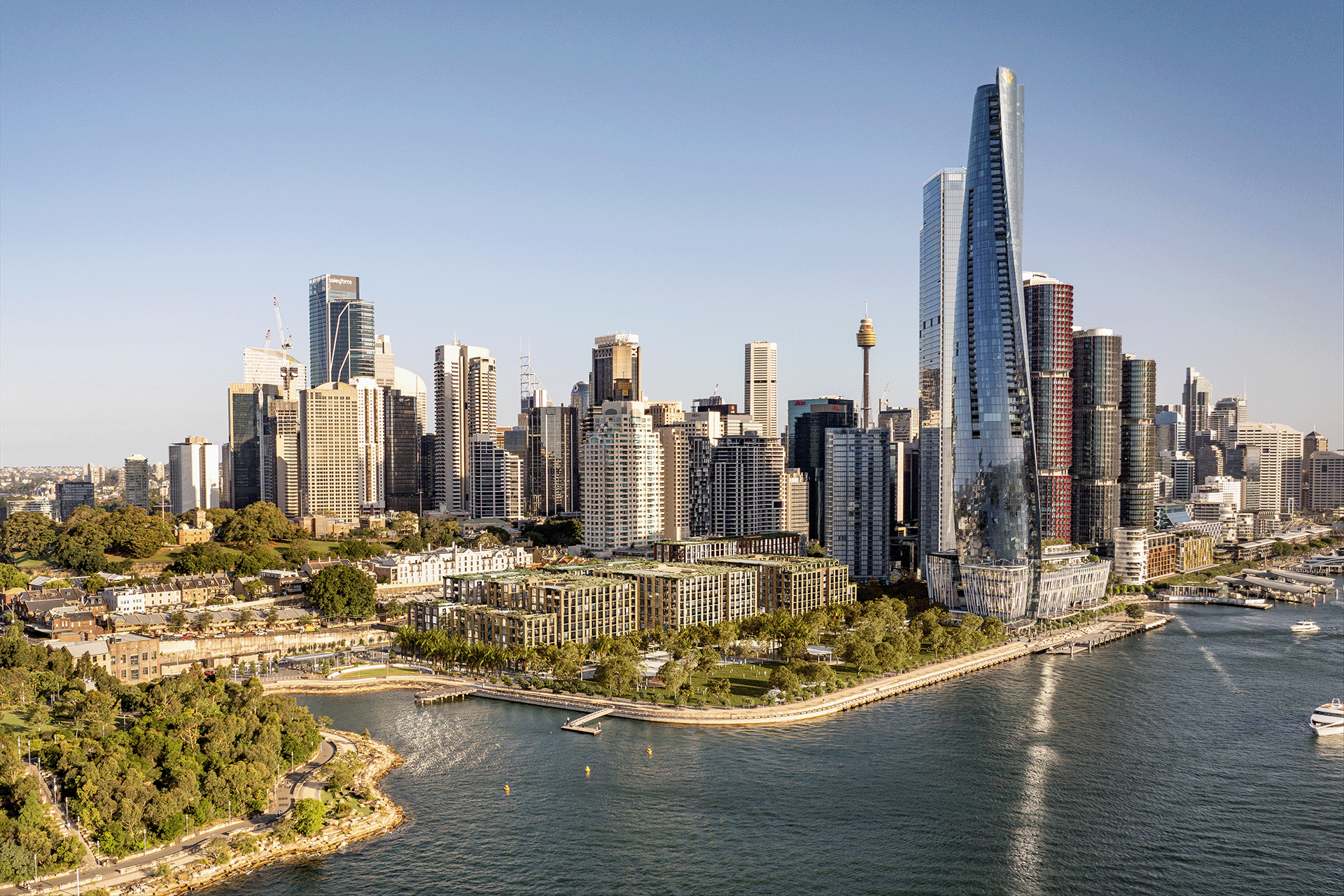


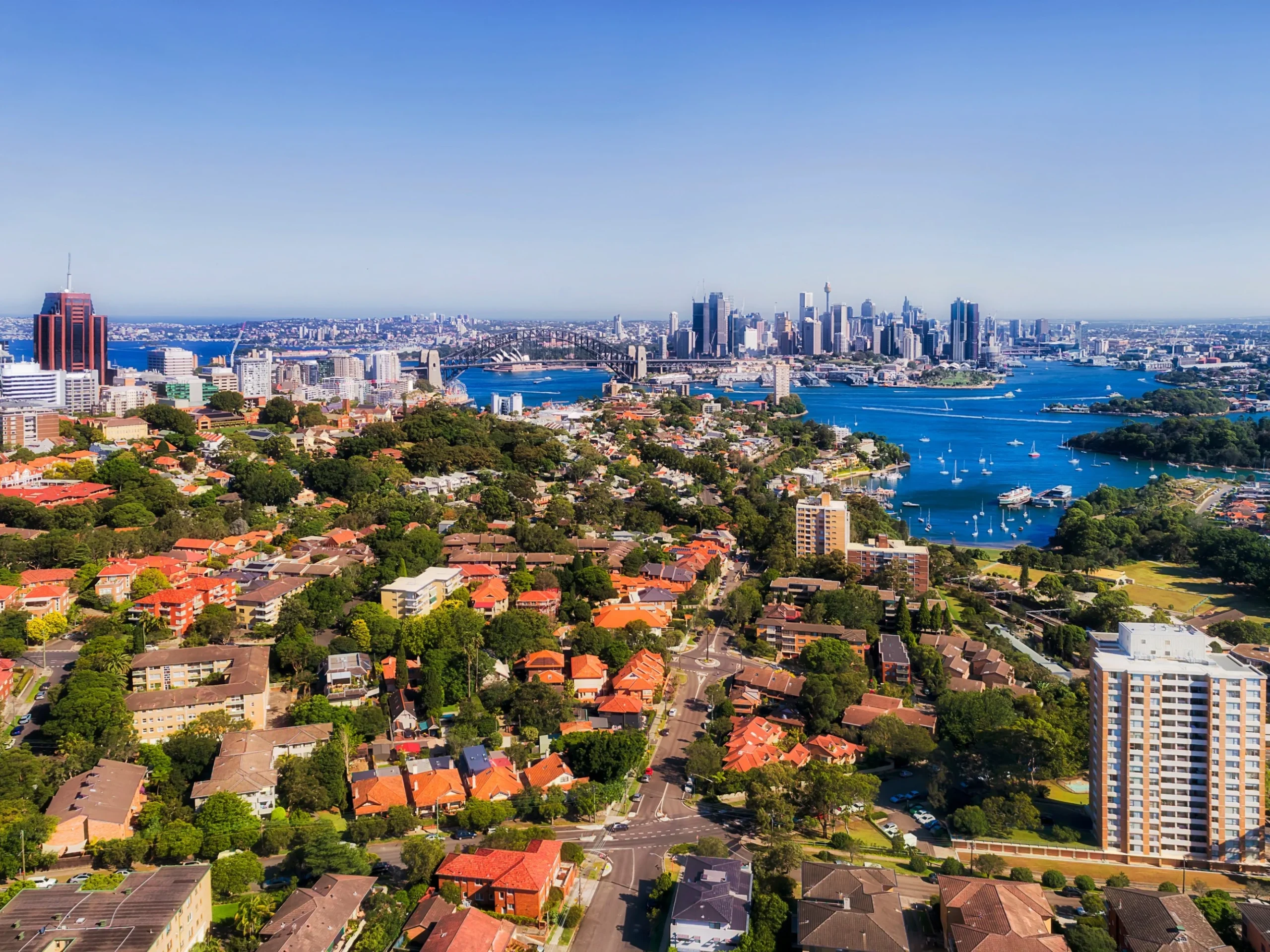
Australia's residential property market crossed $12 trillion in total value in 2025. By any measure, it is one of the most significant concentrations of private wealth on the planet. Sydney's median house sits at $1.41 million. Perth has delivered 97.8% compound growth over five years. The Gold Coast just recorded 18% dwelling value growth in a single year, its best result on record. Brisbane's median house price punched through $1 million for the first time. On paper, Australian property owners have never been wealthier.
And yet, for a growing number of borrowers, that wealth is functionally inaccessible. Not because the asset isn't there. Because the rules that govern how you borrow against it keep tightening, and the institutions that set those rules are not changing course.
This is the story of Australia's great equity trap. And it is precisely why private lending in Australia is growing faster than at any point in the sector's history.
The bank squeeze: rules tightening at the worst possible moment
To understand the scale of the problem, you need to understand what happened to interest rates and lending rules in the space of twelve months.
Through 2025, the Reserve Bank of Australia cut the cash rate three times: in February, May, and August. Each cut signalled that conditions were easing. Borrowers began planning around a falling-rate environment. Property markets responded, with values rising across every major capital city.
Then, in February 2026, the RBA reversed course. With inflation re-accelerating to 3.8% annually, the Board hiked the cash rate by 25 basis points back to 3.85%. The brief easing cycle was over. Borrowers who had structured their plans around rate relief found themselves back where they started, or worse.
At exactly the same moment, APRA activated a new debt-to-income lending cap, effective February 2026. Under the new rules, banks are limited to writing 20% of new mortgage lending at a debt-to-income ratio of six or above. Combined with APRA's existing 3% serviceability buffer, in place since October 2021 and confirmed as permanent by the regulator, banks are now required to stress-test borrowers at effective rates of roughly 6.85% or higher.
The practical consequence is stark. According to Canstar analysis, a single person earning the average full-time Australian wage can currently borrow approximately $544,000. In the nation's most active property markets, where medians sit between $728,000 and $1.41 million, that gap between borrowing capacity and asset values is not a marginal inconvenience. It is a structural wall.
For investors, the self-employed, and business owners with non-standard income profiles, that wall is higher still. They are not being turned away because their assets are weak. They are being turned away because the rules make it impossible for banks to say yes, regardless of the underlying equity position.
Five cities. Five supply crises. One lending gap.
The equity trap is not a uniform experience. Each of Australia's major property markets has its own pressure points, and each creates its own distinct and urgent demand for private capital.
| Factor | Bank Lending | Private Lending |
|---|---|---|
| Approval Speed | Weeks to months | Days to hours |
| Credit Assessment | Rigid, score-based | Flexible, case-by-case |
| Income Verification | Strict documentation | Less emphasis |
| Loan Terms | Long-term (years) | Short-term (months) |
| Interest Rates | Lower | Higher |
| Accessibility | Narrow criteria | Broad criteria |
Sydney
Sydney remains the country's most equity-rich city and its most affordability-constrained. With a median house price of $1.41 million and auction clearance rates around 67%, the market is active but increasingly selective. The borrowers most often locked out are self-employed professionals, investors seeking to unlock equity without disturbing an existing first mortgage, and developers pursuing small-to-medium infill projects where bank feasibility hurdles have risen alongside construction costs.
Private lenders in Sydney are active across all of these use cases. The city's high asset values mean that even conservative loan-to-value ratios produce substantial loan amounts, attracting well-capitalised private lenders who can move at the pace the market demands, without the layered approval processes that define bank lending.
Melbourne
Melbourne is the anomaly of the current cycle. Despite a median house price of $1.02 million, it has been the persistent underperformer, weighed down by Victoria's investor land tax regime, slower economic momentum, and extended affordability-driven demand suppression. Several analysts are now calling Melbourne the value opportunity of the cycle, drawing comparisons to where Brisbane and Perth were three years ago, before their breakout growth phases began.
For private lenders in Melbourne, the opportunity is bifurcated. On one side, distressed borrowers, including business owners with ATO liabilities, investors caught between a property sale and a purchase, and developers needing bridging finance on stalled projects, are turning to private capital as a pressure valve. On the other, sophisticated investors who see Melbourne's undervaluation are moving quickly on assets where bank timelines are simply incompatible with the transaction.
Brisbane
Brisbane's median house price crossed $1 million in 2025, and growth of 11% through the year placed it among the country's strongest performers. Population inflows continue to outpace housing supply. The Olympic infrastructure pipeline, spanning transport, accommodation, and commercial development through to 2032, is generating sustained development activity that requires short-term construction and bridging finance at a scale and pace that mainstream lenders cannot accommodate.
Developers in Brisbane are repeatedly facing the same problem: planning approval in hand, sites identified, equity available, and banks unable to move at the speed the opportunity demands. Private bridging and construction finance is filling that gap directly, often settling deals within days of a lender assessment.
Gold Coast
The Gold Coast is the most dramatic property story in Australia right now. Dwelling values grew 18% in the twelve months to November 2025, far exceeding forecasts and representing the city's strongest annual result on record. The median house price crossed $1.4 million. In a development that crystallises the city's transformation, the Gold Coast's median unit price overtook Sydney's for the first time in history.
Driving this is what analysts have described as the Great Wealth Migration, where high-net-worth buyers who relocated from Sydney and Melbourne during and after the pandemic, pulled family and friends behind them, and collectively repriced the market. The result: 42,000 approved dwellings remain unbuilt due to construction cost blowouts and builder insolvencies, vacancy rates sit near 1%, and buyer competition for limited stock is intense.
For borrowers and lenders alike, the Gold Coast presents a classic high-equity, time-critical environment. Settlement timelines are aggressive. Bank approval windows don't fit the pace at which deals move.
Perth
Perth is the structural story of the decade. Five-year compound house price growth of 97.8%. Population growing at 2.3% annually, the highest of any Australian state. Active listings sitting at roughly 5,000 against a balanced-market equilibrium of 12,000 to 13,000, meaning supply is running at approximately 40% of what the market requires. Rental yields of 5.3% compared to 3.3% in Sydney are drawing eastern-state investors westward in volume.
Private lenders in Perth are working in one of the most supply-constrained property environments in Australian history. Borrowers are competing hard at auction, moving quickly on off-market deals, and accessing equity from existing holdings to fund portfolio expansion. Banks are present, but their timelines and income verification requirements do not match the speed or profile of what is happening on the ground in Western Australia. Private capital, secured against strong assets with demonstrable and growing values, is stepping directly into that space.
The ATO factor: a third pressure on the same borrowers
Layered over the property lending squeeze is a tax enforcement environment applying simultaneous pressure to many of the same borrowers.
The Australian Taxation Office is now the single largest creditor in Australia's personal insolvency system, accounting for $3.2 billion in active liabilities, representing 16.5% of the total. Business tax defaults exceeded 30,000 as of January 2026. Total collectable debt from insolvent small businesses has more than doubled from pre-pandemic levels, rising from $3.9 billion to $8.7 billion. December 2025 recorded 1,366 insolvencies, the third-highest monthly total on record.

The ATO's message through its 2025–26 enforcement program has been unambiguous: Director Penalty Notices are being issued at an accelerating pace, and the flexibility that characterised the pandemic era is over. The ATO has stated publicly that paying tax is not optional, and its actions have matched that language.
For business owners who carry both property equity and ATO liabilities, the situation is particularly acute. They may hold $800,000 in net equity in a commercial or residential property, but a bank will not lend against it to resolve a tax debt. The income documentation required, the credit assessment timeline, and the bank's risk appetite for ATO-related borrowing scenarios all work against approval.
A private lender in Australia, by contrast, assesses the deal on its merits: security value, loan-to-value ratio, and a credible exit strategy. Finance can be structured and settled within days, the ATO liability resolved, and the enforcement clock stopped. This intersection of property equity and tax pressure is one of the most significant and least discussed demand drivers in private lending today.
Why banks withdrew, and why that won't change
The retreat of traditional banks from sections of the property and business lending market is not a temporary reaction to current conditions. It is a structural shift building for over fifteen years.
Since 2009, major Australian banks have halved their commercial real estate exposure, falling from 10% to 5.5% of total assets. Stricter regulatory capital requirements, risk weighting frameworks, and the institutional preference for lower-risk, higher-volume mortgage lending have collectively redirected bank capital away from the borrower segments where private lending now operates.
Private credit assets under management in Australia have nearly tripled over the past decade, reaching approximately A$200 billion. The Reserve Bank of Australia has noted that private credit now accounts for around 11% of all business lending nationally. According to the 2025 ScotPac SME Growth Index, more than 55% of Australian SMEs plan to borrow from non-bank lenders in the next twelve months, a figure that would have been unthinkable a decade ago.
That capital has to come from somewhere. The strongest private lenders are funded by a combination of their own balance sheet and capital raised from wholesale and sophisticated investors, rather than a wholesale bank line that can be withdrawn at short notice. Secured Lending is one example: it lends its own funds alongside the SL Premium Income Fund, the private mortgage investment fund it manages. Controlling its own funding is what allows it to make a credit decision in-house, commit with certainty, and settle on its own timeline rather than a bank's.
APRA itself acknowledged, in announcing the February 2026 DTI cap, that it would monitor spillover into non-bank lending, an implicit recognition that that as bank access tightens, private lending absorbs the displacement. The direction of travel is clear and it is not reversing.
The cost of access vs. The cost of missing out
Private lending is not cheap, and it is not designed as a long-term solution. Interest rates typically range from 10% to 24% per annum depending on loan type, security, and term. Establishment fees, legal costs, and short loan terms all factor into the total cost of a private facility.
But cost is never assessed in isolation. For a developer in Brisbane who misses a site acquisition because bank approval took six weeks, the cost of that delay, covering a lost deposit, a competitor's gain, and months of project delay, will vastly exceeds any private lending rate premium. For a business owner facing a Director Penalty Notice, the cost of not resolving the liability quickly is personal liability that no interest rate comparison can capture. For a Perth investor watching an identified property go to someone else at auction, the private lending fee is irrelevant against the opportunity cost.
Private lending is growing not because borrowers can't get bank finance. It's growing because, in many cases, bank finance arrives too late, under conditions that don't fit, or not at all.
Australia's equity is not evenly accessible
The $12 trillion in Australian property wealth is real. It belongs to real people, held in real assets, across real cities that are growing in value year after year. What is equally real is the structural gap between that wealth and the ability to access it. It is a gap that APRA regulation, bank conservatism, ATO enforcement pressure, and the pace of property markets have collectively widened over the past decade.
Private lending exists because that gap exists. And as supply constraints deepen across Sydney, Melbourne, Brisbane, the Gold Coast, and Perth, and as the regulatory environment for bank lending tightens rather than loosens — the role of the private lender in Australia will only become more central. Not to the margins of the credit market, but to its functioning core. Secured Lending provides bridging finance, second mortgages, and secured business loans to borrowers across all five of these markets. For those whose equity is real but whose bank has said no, the assessment starts with the asset, and it moves quickly from there.