




Rate matters, but for short-term private lending it is rarely the only number that matters. The more useful question is what the loan costs in total over the term you need it, and whether what it makes possible justifies that cost. A borrower who needs to settle on a $1.5M investment property in 72 hours is not comparing private lending to bank lending on rate alone -- they are comparing the cost of a 6-month private facility against the cost of losing the transaction entirely.
Secured Lending offers investment property loans from 9.7% p.a. The specific rate on any given facility is determined by the factors described below. All lending is to Pty Ltd companies, family trusts, and SMSFs. Business purpose only.
What Drives the Rate
LVR is the primary factor. A lower LVR gives the lender more security buffer and represents a lower risk position -- that is reflected in the rate. A facility at 50% LVR on a well-located residential investment property is a materially different risk profile from the same loan at 68% LVR, and it is priced accordingly.
- •LVR: lower loan-to-value ratio means greater security coverage and typically a more competitive rate
- •Property quality and location: well-located metropolitan residential property is assessed more favourably than regional or non-standard assets
- •Deal structure: a clean first mortgage on an unencumbered property is simpler than a second mortgage with an existing lender in first position
- •Exit clarity: a clearly documented and credible exit -- contracted refinance, property under offer, known settlement date -- reduces lender risk
- •Loan term: the term, complexity, and the borrower's overall position are considered together rather than as isolated variables
- •Borrower and entity position: the directors' financial position, guarantees provided, and any existing credit history are part of the overall picture

Why Private Lending Rates Are Higher Than Banks
Banks fund loans from deposits, which is a cheap source of capital. They also filter risk upfront through their income model -- declining borrowers who do not satisfy serviceability means their loan book carries less uncertainty. Private lenders fund from wholesale capital markets or direct investor capital at a higher cost, and they lend to borrowers and situations that fall outside the bank income model. The rate premium reflects both the cost of funds and the risk profile of the borrower segment.
This is not a flaw in the product -- it is the design. Private lending is priced for certainty and speed in situations where banks cannot provide either. Borrowers who intend to hold an investment property for ten years at a low rate should be at a bank. Borrowers who need to move in 48 hours, or whose income structure does not qualify at a bank, are the right fit for private lending at a higher rate for a shorter term.
How Interest Is Calculated
Private lending facilities are typically interest-only. The rate is quoted per annum and applied to the outstanding principal. For a $600,000 loan at 9.7% p.a., the monthly interest cost is approximately $4,850. There are no offset accounts, redraw facilities, or principal and interest options on short-term private lending facilities.
Interest is usually charged monthly, either paid in advance at settlement for the full term or debited monthly in arrears depending on the loan structure. Your solicitor and our team confirm the payment mechanics as part of the loan documentation.
Other Costs to Consider
The total cost of borrowing includes more than the interest rate. An establishment fee applies at the time the loan is drawn. Legal costs cover both the lender's solicitor and your own solicitor's work on the transaction. A valuation fee covers the independent assessment of the security property. In some cases, a discharge or exit fee applies when the loan is repaid. These costs vary by deal and are disclosed in the letter of offer before you commit to proceeding.
For planning purposes, model the total cost over the expected term rather than the annualised rate alone. A 6-month private lending facility with all costs included is a different figure from the same rate annualised, and understanding the full cost helps in comparing the private lending option against alternatives.
Rate in Context: Three Deal Profiles
A Pty Ltd company with a $1.3M residential investment property sought a first mortgage with no existing debt on the property. The security was well-located inner-metropolitan, the LVR was under 55%, and the exit was a confirmed non-bank lender refinance with an approval already in progress. This represents the cleaner end of our deal profile -- lower LVR, strong security, documented near-term exit.
A family trust needed a second mortgage behind an existing first mortgage, with a combined LVR approaching 68%. The security property was in a regional centre. The exit was sale of the property within 12 months. Second mortgage position, higher combined LVR, and a regional property are each factors that place this deal at a different point on the pricing range compared to the first profile.
An SMSF with a maturing LRBA facility needed an urgent refinance to prevent the existing lender from commencing action. The property was sound and the LVR comfortable, but the time pressure and the arrears position on the existing facility are factors the lender prices for. Distressed timing refinances sit at the higher end of the range, reflecting the complexity and the risk that the exit may not proceed smoothly.
Related Finance Options
Frequently Asked Questions

Get an indicative offer within hours, not weeks.
No credit check. No obligation.
Why Secured Lending?
Case Studies


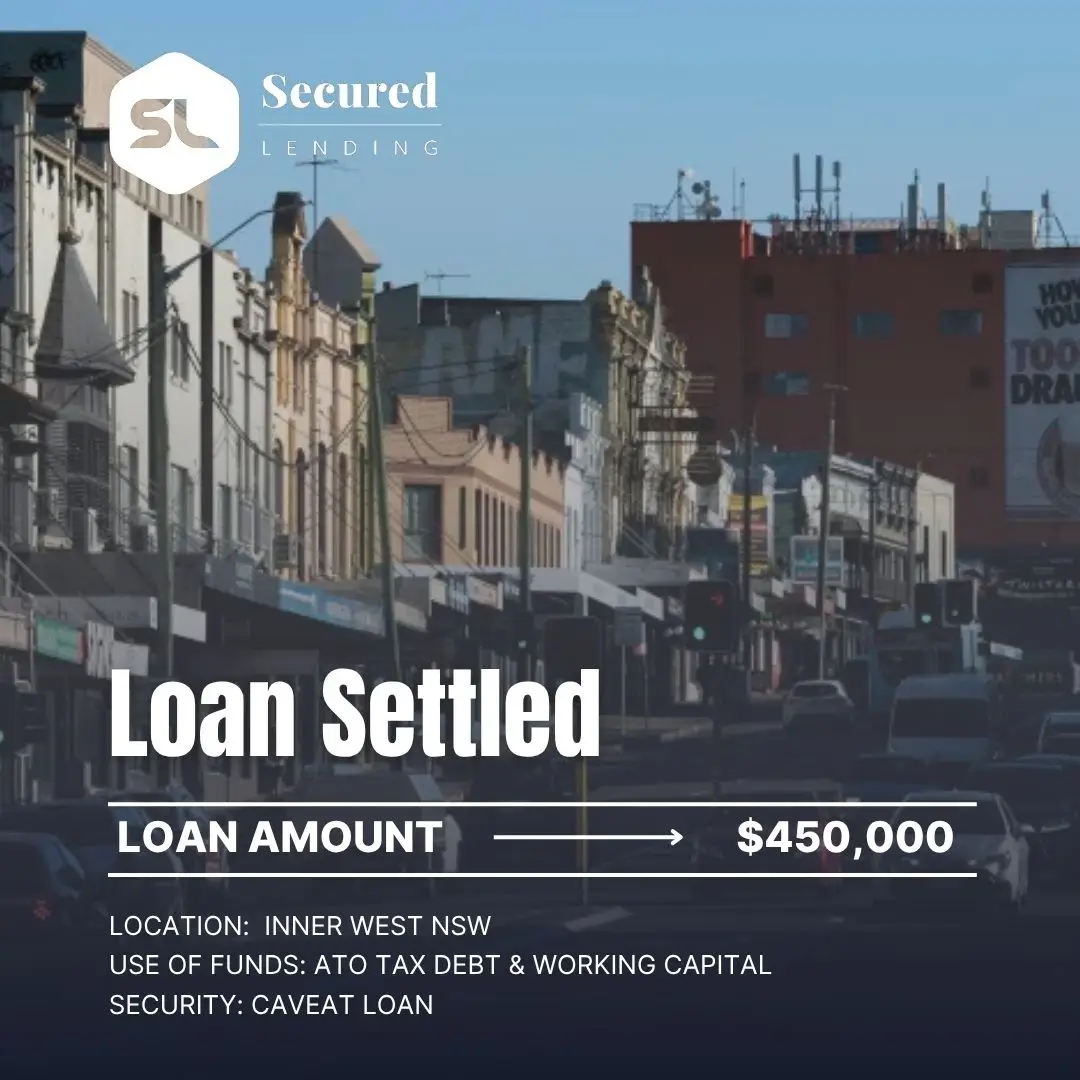
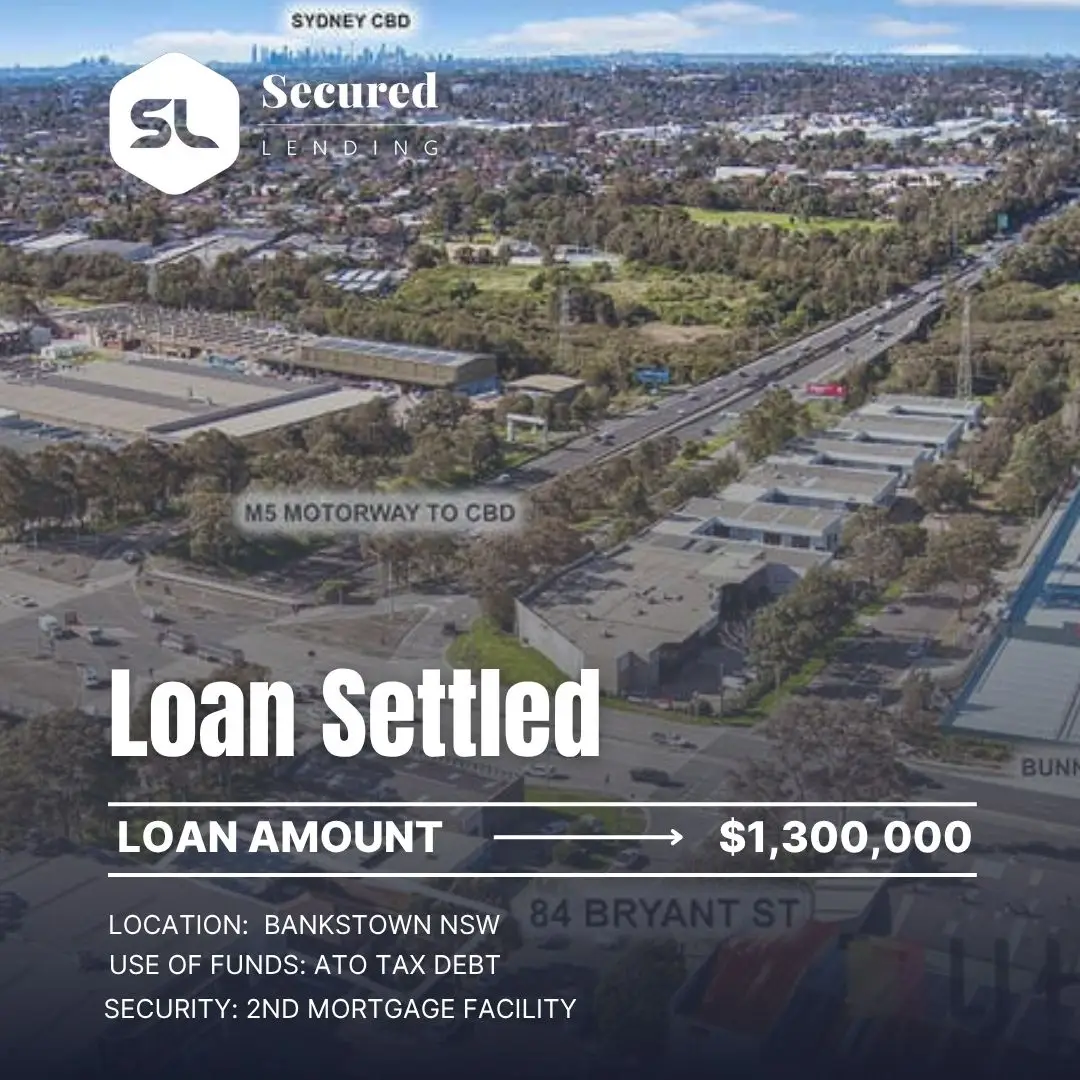
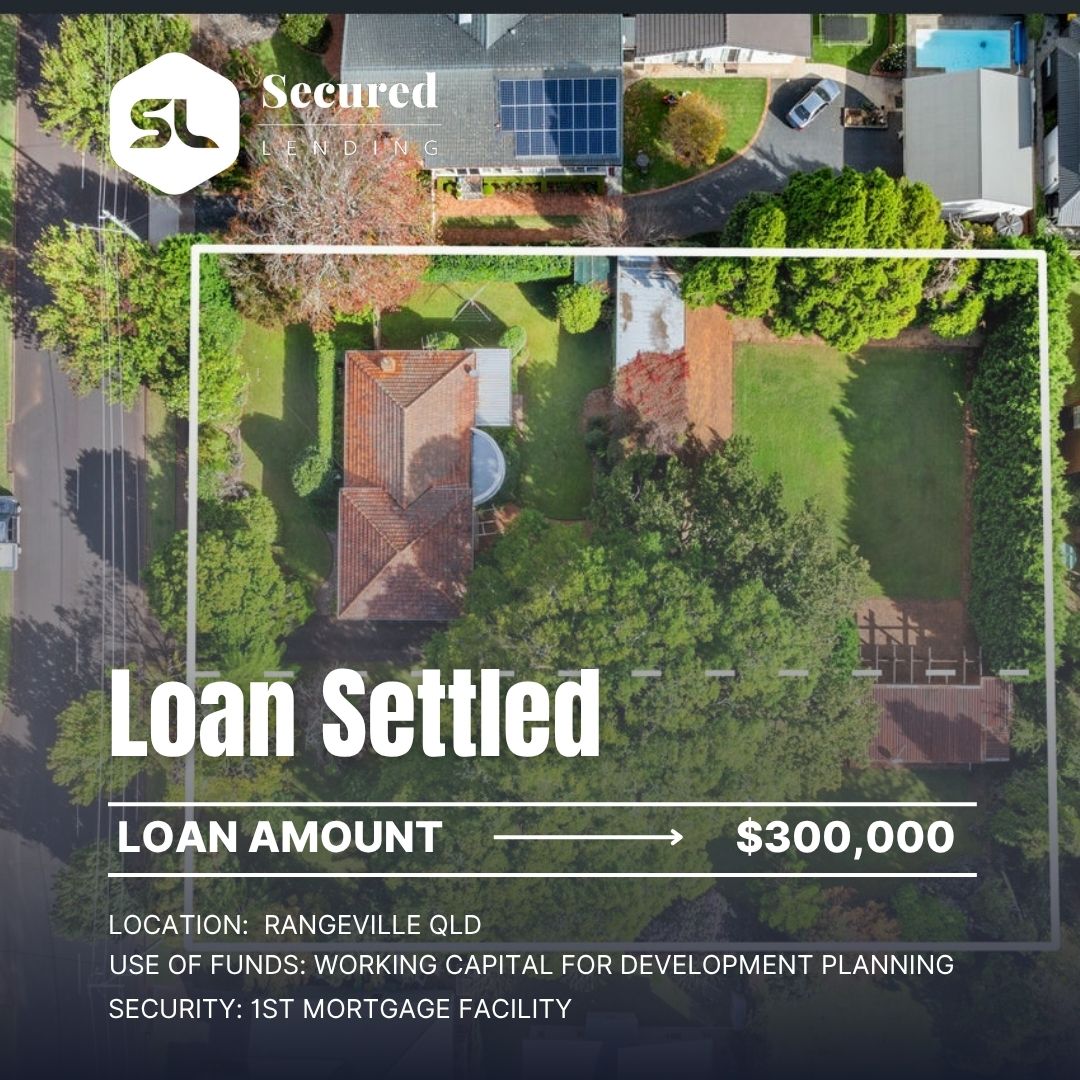
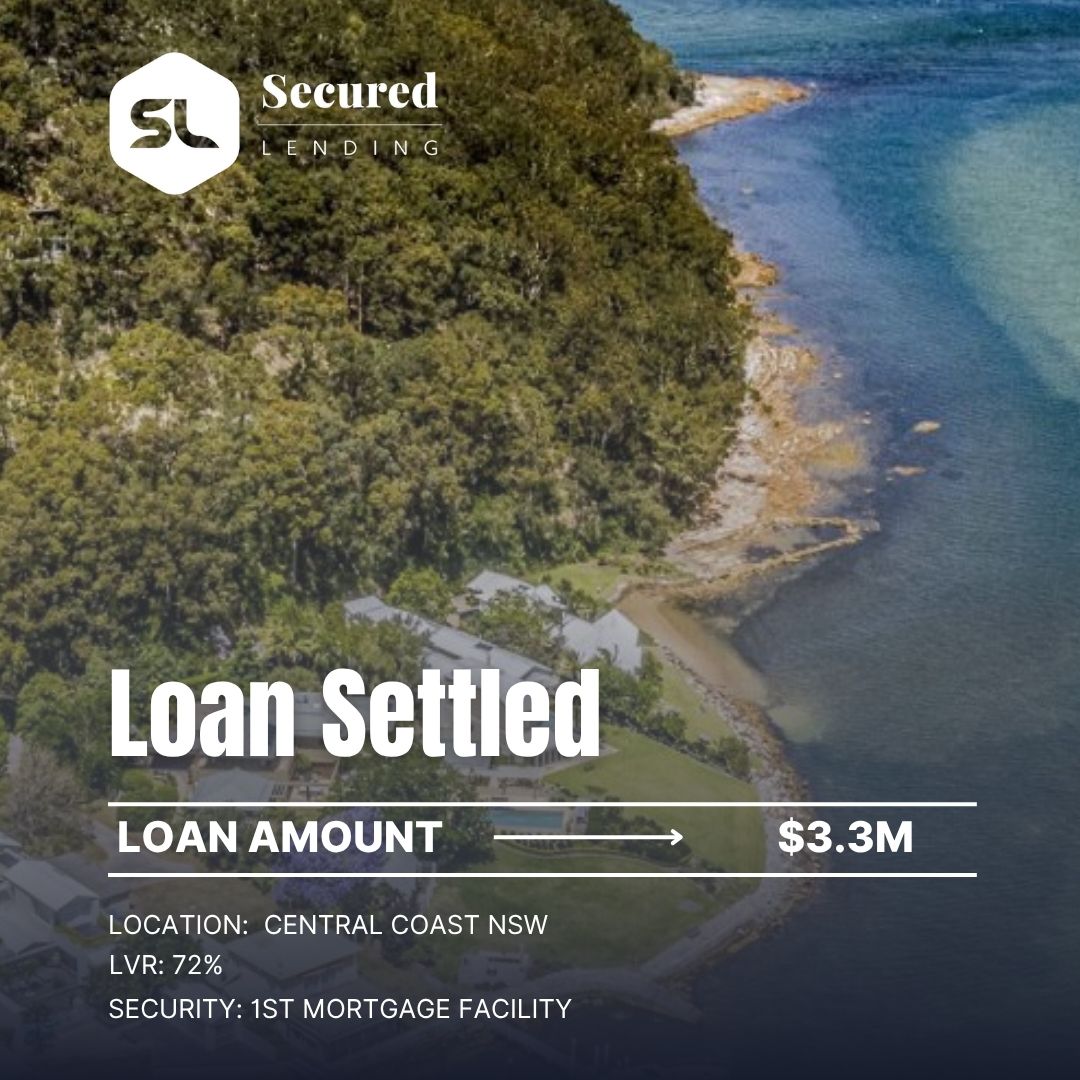
Get an indicative offer within hours, not weeks.
No credit check. No obligation.
Why Secured Lending?
Scenarios We Can Help With
Browse our full range of services, industries, locations, and resources to find the right financial solution for your needs.
Our Loan Solutions

Bridging Finance
Short-term funding to bridge the gap between a property purchase and a longer-term finance solution.

First Mortgage
Private first mortgage loans secured against residential, commercial, or industrial property.

Second Mortgage
Unlock equity in your property without refinancing or disturbing your existing first mortgage.

Caveat Loans
Urgent caveat loans secured by property. No need to refinance your existing mortgage.

ATO Tax Debt
Fast funding to help businesses resolve ATO obligations before penalties, garnishees, or director penalty notices escalate.

Debt Consolidation
Roll multiple high-rate facilities into one property-backed loan. Simplify repayments and restore cash flow.
Urgent Business Loans
When timing is critical and banks can't move fast enough, we step in. Property-secured funding for businesses that need an answer today — not next week.
Short Term Loans
Flexible property-secured loans designed for businesses that need capital now and a clear exit path later. Ideal for bridging gaps, seizing opportunities, or managing short-term pressure.