




A bank decline on an investment property application is not a verdict on the deal. Banks use rigid credit models calibrated for the median borrower — standardised serviceability buffers, debt-to-income limits, income documentation requirements, and LVR ceilings. When a borrower falls outside those parameters, the application fails even if the underlying transaction is entirely sound. The property may be well-located, the equity may be strong, and the exit strategy may be clear. None of that changes the outcome if the income figure misses a threshold.
The question after a decline is whether the reason the bank said no is one that a private lender assesses differently. In many cases, it is. Secured Lending reviews investment property applications on a deal-by-deal basis with direct credit authority — same-day assessment, settlement from 24 hours for clean deals.
Common Reasons Banks Decline Investment Property Applications
- •Serviceability buffer: banks stress-test the loan at approximately 3% above the actual rate, which frequently eliminates otherwise viable applications at higher LVRs
- •Debt-to-income ratio: most banks apply a hard limit of 6 to 8 times total income, regardless of asset quality or equity position
- •Complex entity structure: companies, trusts, and SMSFs with limited trading histories or non-standard income profiles often fail automated credit assessment
- •Recent credit events: a missed payment, default, or ATO debt in the past 2 to 5 years can trigger a bank decline even where it has since been resolved
- •Insufficient documentation: self-employed investors without two full years of tax returns for the borrowing entity commonly hit this barrier
- •Property type or location: banks apply tighter LVR restrictions to certain postcodes, property types, or high-density buildings that private lenders assess more flexibly

What Changes with a Private Lender
Our assessment centres on the security property, the LVR, and the borrower's exit strategy. We do not apply the same serviceability buffer or debt-to-income limits that banks use as hard filters. For a borrower with solid equity in well-located residential investment property and a credible plan to refinance or sell at term end, the fact that a bank has declined the application is context — not a reason for us to decline as well.
We are not a solution for every declined deal. If the security property is weak, the LVR is unsupportable, or there is no credible exit, we will say so quickly. But where the bank's credit model has produced a result that does not reflect the actual quality of the deal, private lending is the appropriate next step.
If Timing Is Now the Issue
A bank decline often introduces a timing problem that did not exist before. Settlement dates are fixed. Vendors are not always willing to grant extensions. A declined application with a 14-day settlement window is a different situation from the same application with 60 days to spare. If you have a deadline, tell us upfront when you enquire — we can prioritise and, for clean deals, move from enquiry to settlement in 24 to 72 hours.
Three Post-Decline Deals We Have Funded
A Pty Ltd company was declined by its existing bank for an investment property purchase of $1.35M. The decline came 11 days before the contracted settlement date. The bank cited the company's debt-to-income ratio exceeding their policy threshold. We assessed the property, the company's equity position, and the director's guarantee. Settled one day before the deadline. The borrower refinanced to a specialist non-bank lender 10 months later.
A family trust had been in bank credit assessment for nine weeks on an $895,000 investment property purchase. The vendor refused a further extension. The bank had not yet issued a decision. We provided an indicative approval within four hours of receiving the enquiry and settled within three business days.
An SMSF was declined by its incumbent lender for an LRBA refinance of $580,000. The lender had exited the SMSF market and would not renew the facility on maturity. With the fund's existing LRBA expiring, we refinanced the position within 48 hours and gave the trustees time to arrange a long-term SMSF facility without the pressure of a maturing loan.
"When a borrower comes to us after a bank decline, we start by understanding exactly what the bank assessed and why. In many cases the property is strong, the equity is there, and the issue is a serviceability model that was not built for the borrowing entity in front of it. A decline from one lender is information that helps us structure the right approach, not a verdict on the deal."

Gino Tabila
Associate Director
Benefits of a Private Mortgage After an Investment Property Bank Decline
A bank decline does not end the deal. For many corporate borrowers, the reason the bank said no is precisely the type of situation a private mortgage lender handles routinely.
- •Independent assessment from scratch — we do not adopt the bank's decline as our starting point; we review the deal on its own merits
- •Addresses the root cause — understanding why the bank declined tells us immediately whether our assessment model produces a different result
- •Same-day decision — if the deal works, we confirm quickly rather than leaving a borrower in limbo after a decline
- •Specialist in company, trust, and SMSF declines — entity structure, income type, and documentation gaps are the situations we handle most often
- •Keeps the deal alive — a bank decline is not the end of the transaction if the underlying asset and exit strategy are sound
Related Finance Options
Frequently Asked Questions

Get an indicative offer within hours, not weeks.
No credit check. No obligation.
Why Secured Lending?
Case Studies
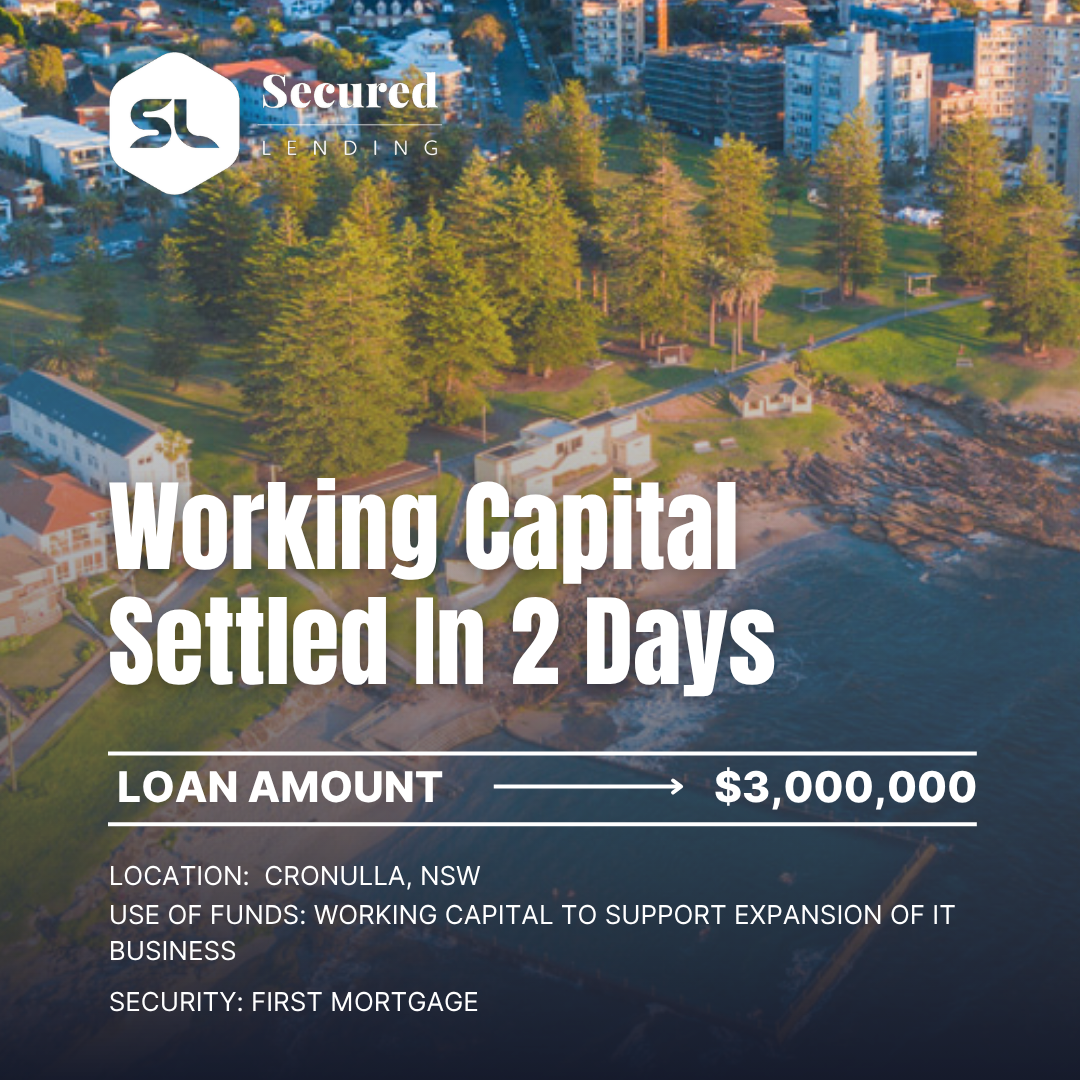
$3M Working Capital for IT Business Expansion Settled in 2 Business Days
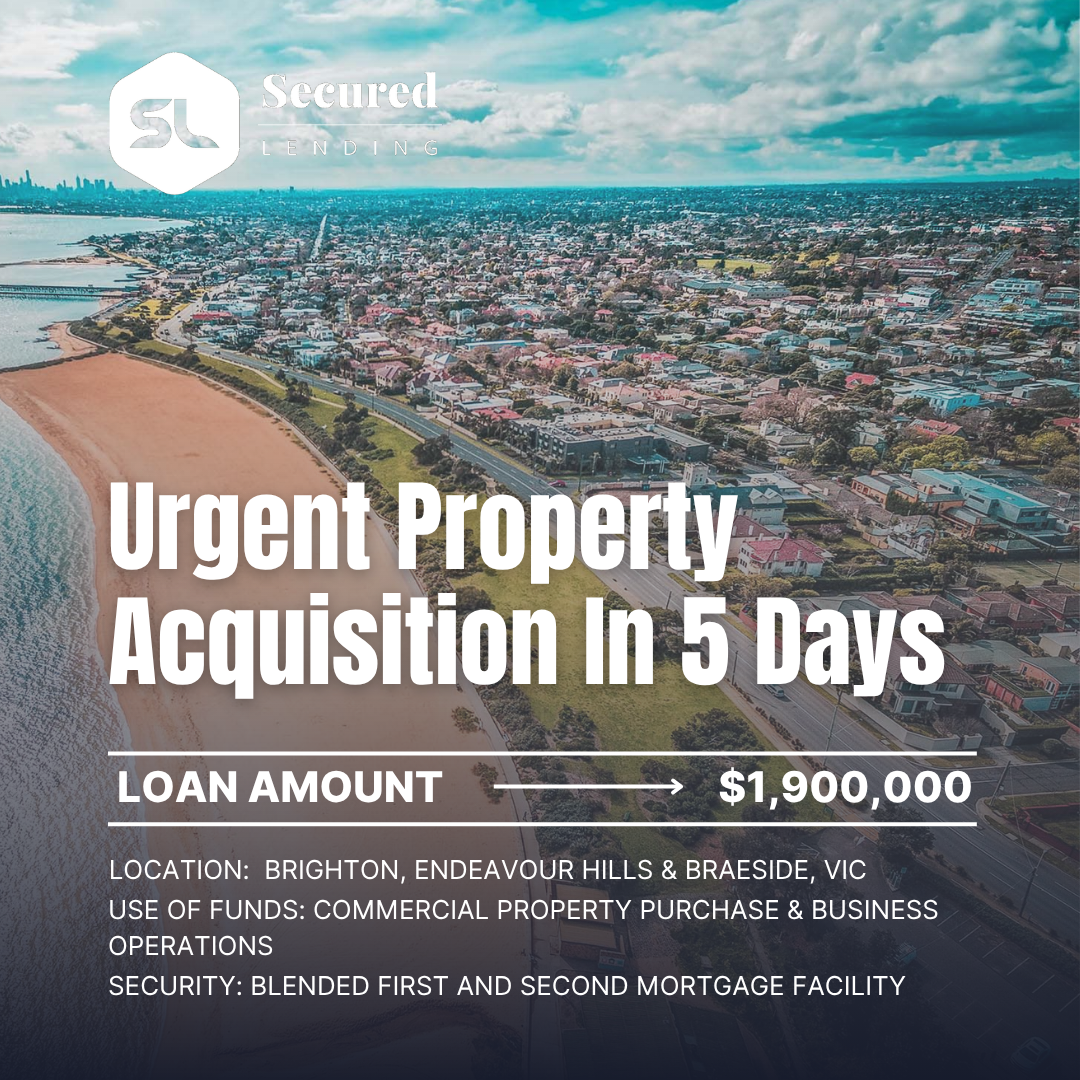
$1.9M Commercial Property Acquisition for Growing Doggy Daycare Business
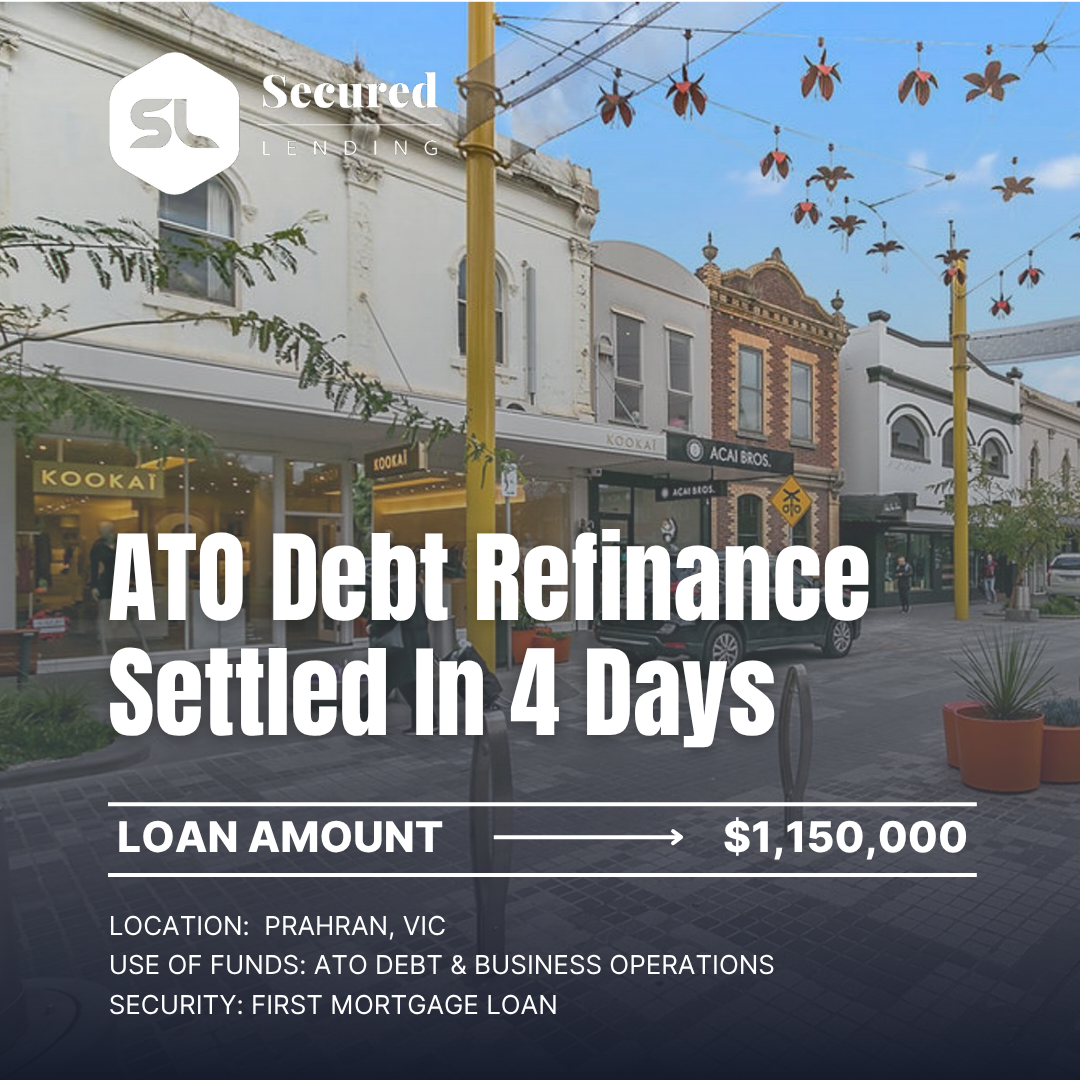
$1.15M ATO Debt Cleared in 4 Business Days for Prahran Pub Operator
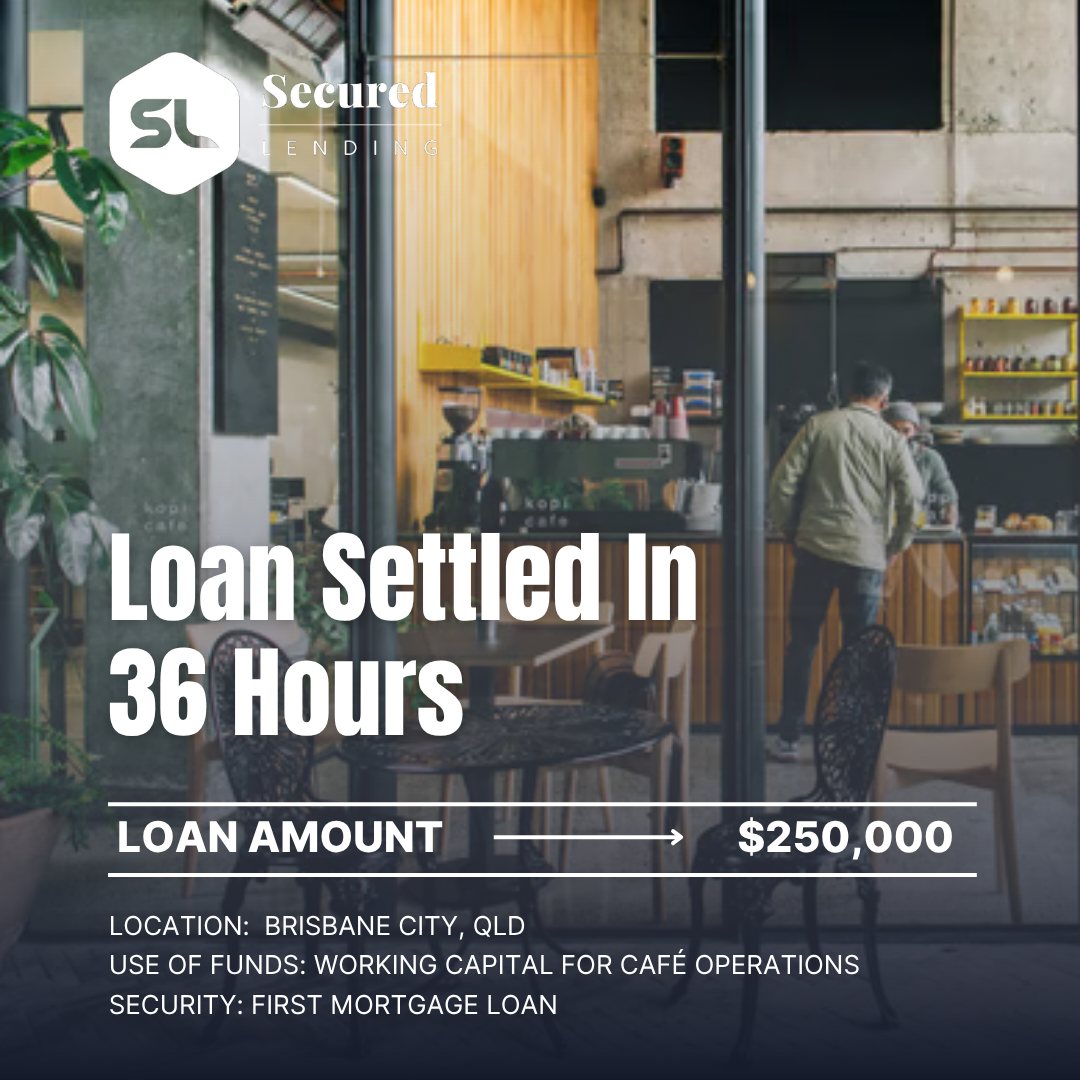
$250K Working Capital for Brisbane Café in 36 Hours

Case Study: Bridging the Payment Gap – How a Short-Term BLOC Saved a Commercial Builder's Project

$1.1M in 72 Hours: How We Helped A Developer Get Back on Track
$450,000 Caveat Loan Against Commercial Property Saved Sydney Café From Insolvency
$1.3M Second Mortgage Helped Bankstown Industrial Borrower Clear Tax Debt and Refinance
Get an indicative offer within hours, not weeks.
No credit check. No obligation.
Why Secured Lending?
Scenarios We Can Help With
Browse our full range of services, industries, locations, and resources to find the right financial solution for your needs.
Our Loan Solutions

Bridging Finance
Short-term funding to bridge the gap between a property purchase and a longer-term finance solution.

First Mortgage
Private first mortgage loans secured against residential, commercial, or industrial property.

Second Mortgage
Unlock equity in your property without refinancing or disturbing your existing first mortgage.

Caveat Loans
Urgent caveat loans secured by property. No need to refinance your existing mortgage.

ATO Tax Debt
Fast funding to help businesses resolve ATO obligations before penalties, garnishees, or director penalty notices escalate.

Debt Consolidation
Roll multiple high-rate facilities into one property-backed loan. Simplify repayments and restore cash flow.
Urgent Business Loans
When timing is critical and banks can't move fast enough, we step in. Property-secured funding for businesses that need an answer today — not next week.
Refinance
Replace an existing loan that is maturing, under pressure, or no longer working. We move fast and lend where banks won't.