




Banks want income that fits a calculator. For most self-employed property investors, income does not fit neatly — it is a combination of director salary, trust distributions, retained business profits, dividends, and sometimes income from several related entities. Even when the overall financial position is strong, the bank's assessed income figure can fall well short of what is needed to service the loan under their standard model.
This is not a credit quality problem. It is a documentation and assessment methodology problem. Secured Lending does not use the same income model as banks, which means self-employed investors with genuine financial capacity often find a workable path through private lending where a bank has stalled or declined.
All borrowers must be a Pty Ltd company, family trust, or SMSF. We do not lend to self-employed individuals borrowing in their personal name. Loans from $250,000 to $10,000,000, secured against residential investment property.
Why Self-Employed Income Creates Problems at Banks
Banks require two years of tax returns and apply a serviceability buffer on top of the assessed rate — currently around 3% above the loan rate. For a director who pays themselves a modest salary and retains most profits in the company, the tax return income figure may dramatically understate their actual financial capacity. Distributions from a family trust get assessed conservatively or excluded where they vary year to year. A business that generates strong revenue but has significant legitimate deductions can show a low taxable income that triggers an automatic serviceability failure.
Recent business changes compound this. A director who restructured their business 18 months ago, moved income streams between entities, or started a new company will not have two clean years of consistent financials to present. Banks treat the first two years of any new structure with significant caution, regardless of how long the underlying business has operated.

Who This Is For
- •Company directors whose salary alone does not satisfy bank serviceability, but whose actual financial position is strong
- •Trust beneficiaries receiving variable distributions as their primary income source
- •Investors who recently restructured their business, changed entities, or started a new company
- •Self-employed investors with multiple businesses or income streams across several entities
- •Sole traders or contractors who have recently incorporated and lack two years of company financials
- •Not for individuals borrowing in personal name — the borrowing entity must be a Pty Ltd company, family trust, or SMSF
How We Assess Instead
Our assessment centres on the security property, the LVR, and the exit strategy. For a short-term facility, the core question is whether the property supports the loan amount and whether there is a credible, documented plan to repay or refinance at term end — not whether the borrower's income, when stress-tested at 9.5%, covers the repayment schedule.
We do not ignore income entirely. We want to understand the borrower's overall financial position and how they intend to exit the loan. But we are not running that income through a rigid calculator and declining the deal because it misses a threshold by $200 per month. We are making a judgement about the deal as a whole.
Three Deals We Have Funded
A marketing agency director in Sydney operated through a Pty Ltd company and paid herself a $90,000 salary, leaving the rest of the company's $620,000 annual profit retained. Her bank assessed her income at $90,000, which failed serviceability at their buffer rate. Her company purchased a $1.2M residential investment property through Secured Lending on a 12-month term, with exit via refinance once she had two years of consistent company financials.
A family trust in Queensland received distributions across four adult beneficiaries. The primary investor wanted to purchase an additional $980,000 residential investment property through the trust. The bank averaged two years of distributions, applied a 20% haircut for variability, and the deal failed serviceability. We assessed on the property, the trust's existing portfolio equity, and a 9-month term. Funded in 48 hours.
A building contractor had operated as a sole trader for six years before incorporating 14 months earlier. His new company had strong cashflow but only 14 months of financials — not enough for any bank. He wanted to purchase a $750,000 residential investment property through the company. We assessed on the security, director guarantee, and a clear 12-month exit plan. Settled within 72 hours.
"Some of our most financially sophisticated borrowers are self-employed directors who have built genuine wealth through retained profits and smart property investment. The income picture looks different on a tax return than it does on a balance sheet, and we assess both. When the equity position is strong and the exit is credible, a self-employed structure becomes an advantage rather than a liability."

Gino Tabila
Associate Director
Benefits of a Private Mortgage for Self-Employed Property Investors
Self-employed investors build wealth differently from PAYG employees — through retained equity, business assets, and structure. A private mortgage lender assesses wealth, not salary.
- •Income assessed on the whole picture — retained company profits, trust distributions, and business assets are all considered, not just tax return income
- •Recent business restructure is not disqualifying — we want to understand the current structure, not penalise a director for changing it 18 months ago
- •No two-year financials requirement — self-employed investors with less than two full years of entity financials can still access private mortgage finance
- •Asset-based underwriting matches how self-employed wealth is built — through retained equity, not declared salary
- •Company and trust borrowers are the expected profile — not an exception that triggers additional scrutiny or delay
Related Finance Options
Frequently Asked Questions

Get an indicative offer within hours, not weeks.
No credit check. No obligation.
Why Secured Lending?
Case Studies
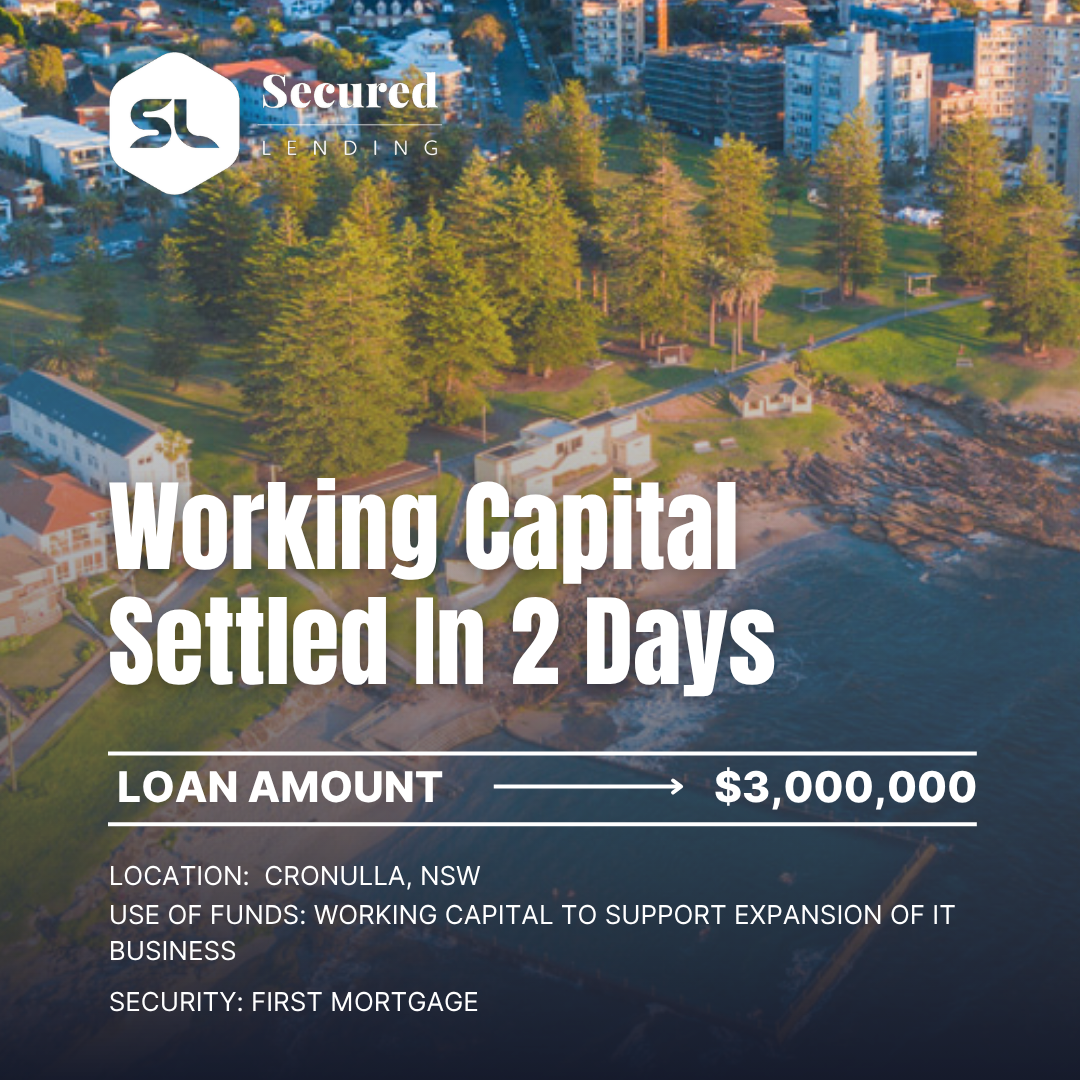
$3M Working Capital for IT Business Expansion Settled in 2 Business Days
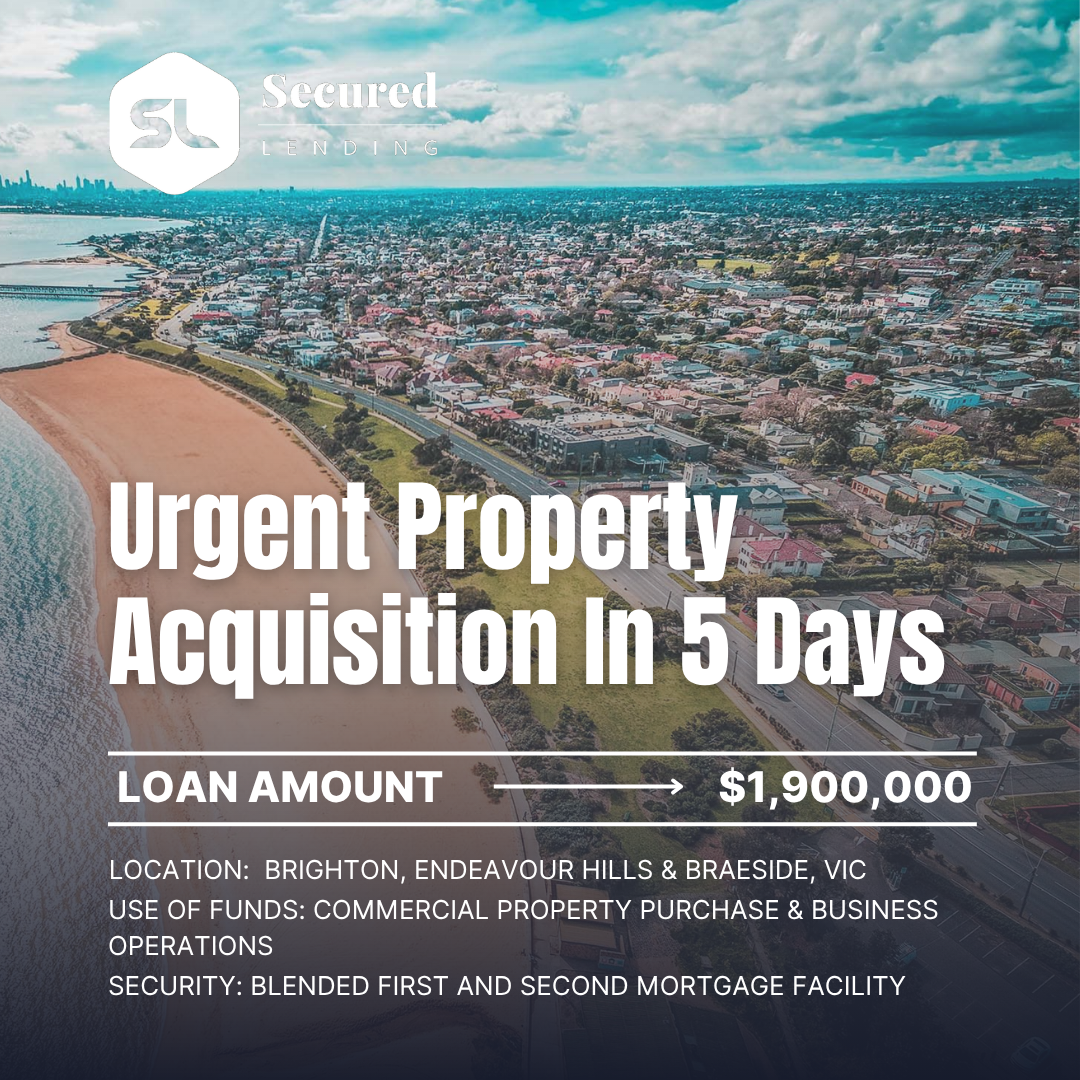
$1.9M Commercial Property Acquisition for Growing Doggy Daycare Business
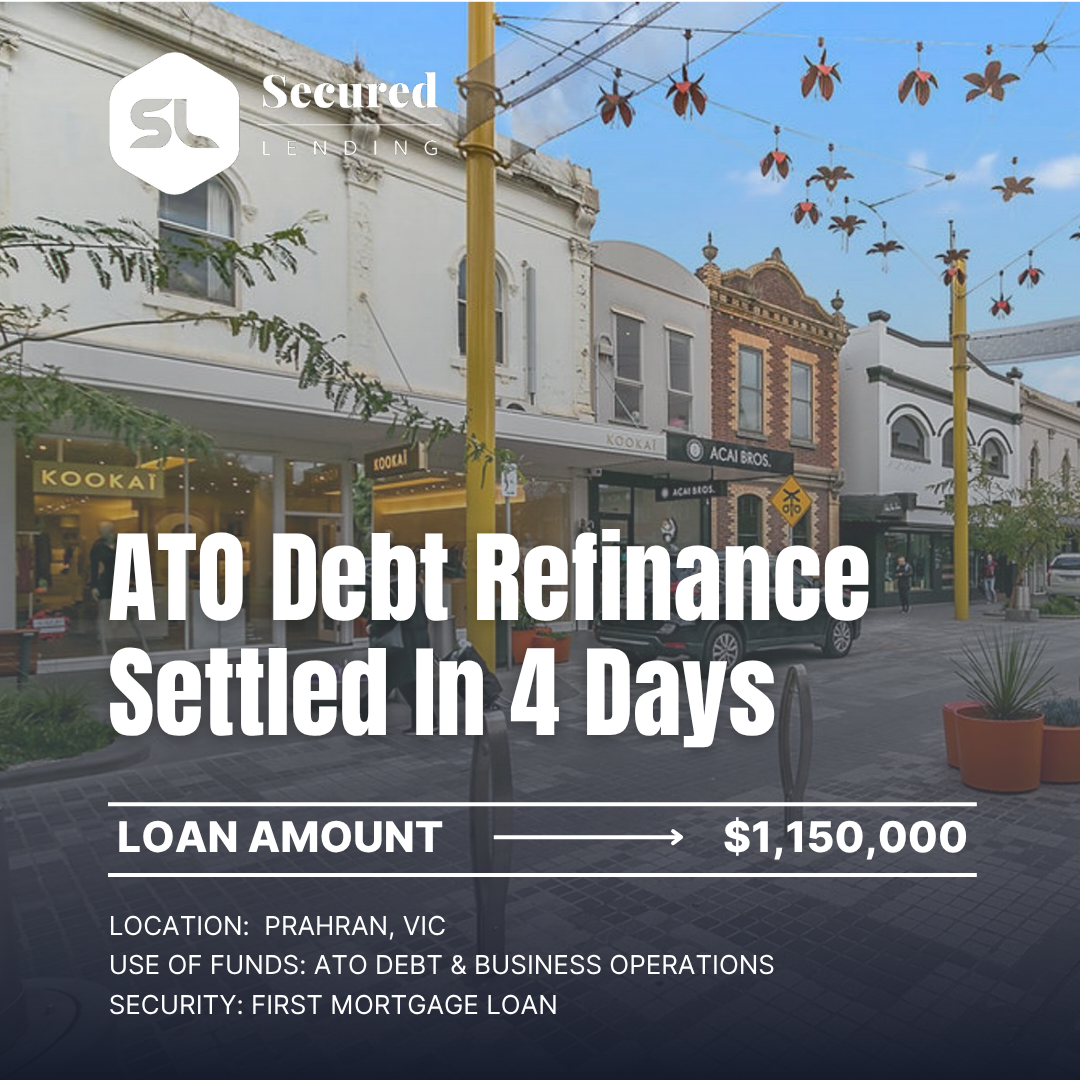
$1.15M ATO Debt Cleared in 4 Business Days for Prahran Pub Operator
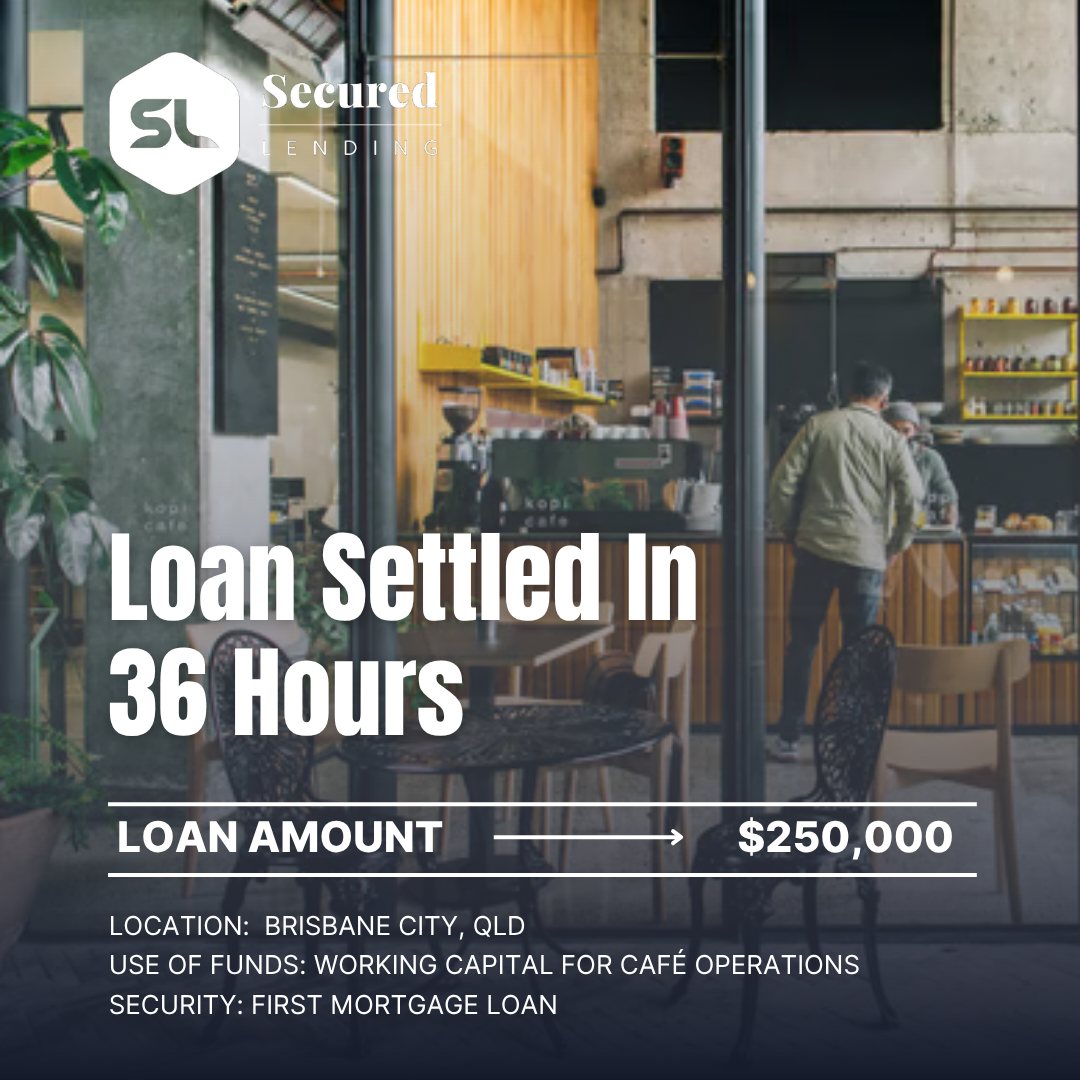
$250K Working Capital for Brisbane Café in 36 Hours

Case Study: Bridging the Payment Gap – How a Short-Term BLOC Saved a Commercial Builder's Project

$1.1M in 72 Hours: How We Helped A Developer Get Back on Track
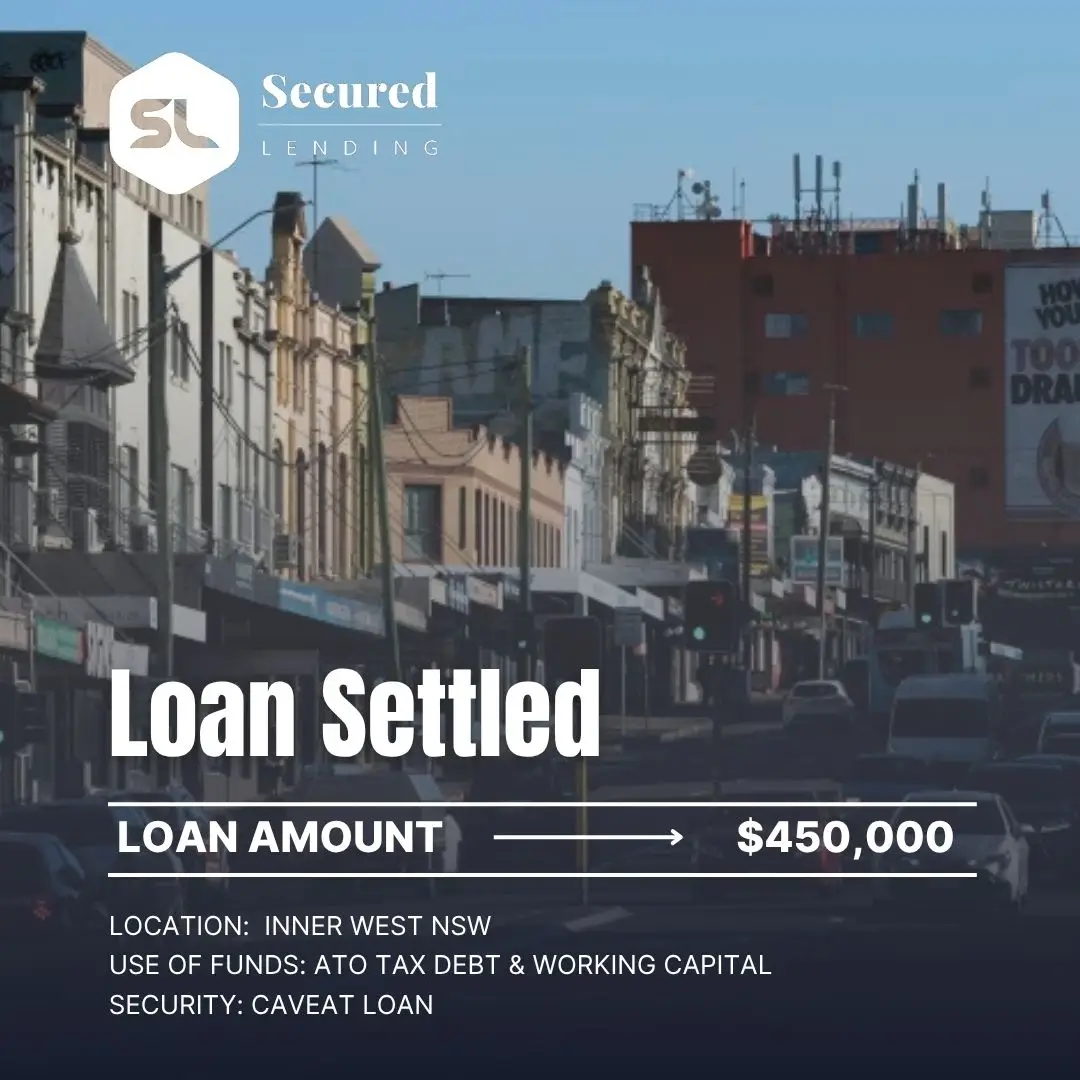
$450,000 Caveat Loan Against Commercial Property Saved Sydney Café From Insolvency

$1.3M Second Mortgage Helped Bankstown Industrial Borrower Clear Tax Debt and Refinance
Get an indicative offer within hours, not weeks.
No credit check. No obligation.
Why Secured Lending?
Scenarios We Can Help With
Browse our full range of services, industries, locations, and resources to find the right financial solution for your needs.
Our Loan Solutions

Bridging Finance
Short-term funding to bridge the gap between a property purchase and a longer-term finance solution.

First Mortgage
Private first mortgage loans secured against residential, commercial, or industrial property.

Second Mortgage
Unlock equity in your property without refinancing or disturbing your existing first mortgage.

Caveat Loans
Urgent caveat loans secured by property. No need to refinance your existing mortgage.

ATO Tax Debt
Fast funding to help businesses resolve ATO obligations before penalties, garnishees, or director penalty notices escalate.

Debt Consolidation
Roll multiple high-rate facilities into one property-backed loan. Simplify repayments and restore cash flow.
Urgent Business Loans
When timing is critical and banks can't move fast enough, we step in. Property-secured funding for businesses that need an answer today — not next week.
Refinance
Replace an existing loan that is maturing, under pressure, or no longer working. We move fast and lend where banks won't.