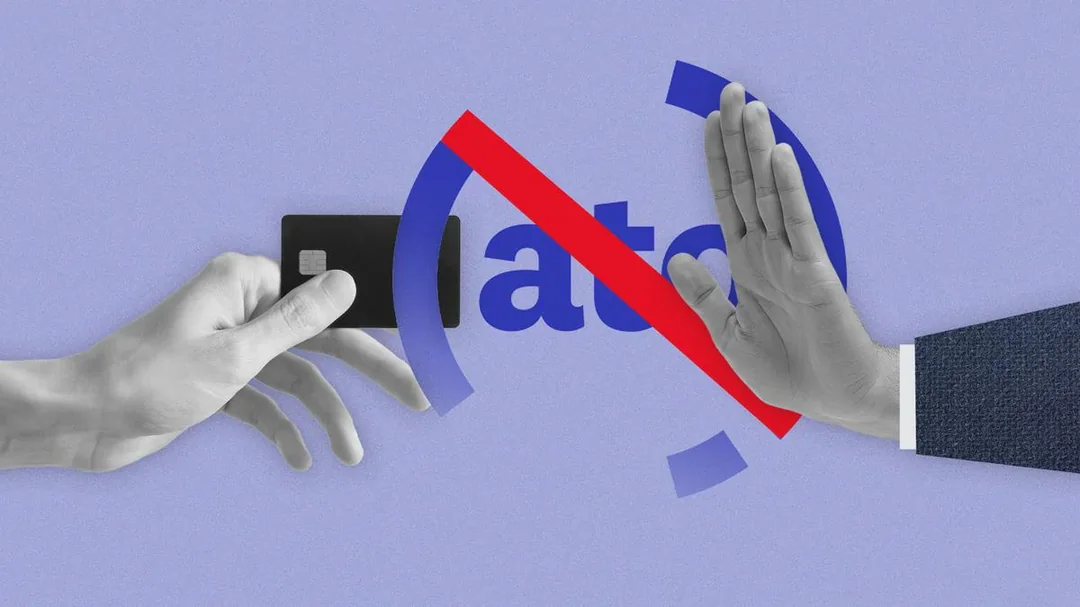


Payday Super is now law, and it changes how every Australian employer has to fund superannuation. If a tight payroll leaves you short and super does not reach your employees' funds in time, Secured Lending can help you cover the shortfall or clear an ATO tax debt before it escalates. Contact us today if you need urgent help.
From 1 July 2026, the old quarterly super deadlines are gone. Employers must now pay superannuation guarantee (SG) at the same time as salary and wages, and the money has to be received by each employee's fund within 7 business days of payday. Miss that window and the unpaid super does not just sit there quietly. It converts into a Superannuation Guarantee Charge (SGC), a liability you owe directly to the Australian Taxation Office.
Below is a factual breakdown of the rules, what happens when the deadline is missed, and how the right finance keeps you compliant.
What is payday super?
Payday Super is the reform that ties superannuation to every pay run. It is delivered by two Acts, the Treasury Laws Amendment (Payday Superannuation) Act 2025 and the Superannuation Guarantee Charge Amendment Act 2025, both of which received Royal Assent on 6 November 2025 and commenced on 1 July 2026.
The change is simple to state and significant in practice. Where employers previously had until 28 days after the end of each quarter to pay SG, super now has to be paid on, or very close to, each payday. For most businesses, that means moving from four super runs a year to one on every payroll cycle, weekly, fortnightly or monthly.
The reform is confirmed by the Fair Work Ombudsman and the Australian Taxation Office, and it applies to virtually all employers paying SG.
The 7-business-day rule
The core obligation is a timing test. For each payday, an employee's super contribution must be received by their super fund within 7 business days of the day they are paid.
Two details matter here:
- •
It is about receipt, not dispatch. The deadline is met when the fund receives the contribution with enough information to allocate it to the member, not when you send the payment. Clearing times through your payroll system and the super clearing house count against the 7 days, so you cannot leave the transfer until the final day and assume it will arrive.
- •
New employees get a longer first window. The first SG payment for a new starter (including a returning employee) has a 20-business-day window rather than 7, which gives you time to collect fund details and set them up correctly.
The day the employee is paid is the reference point for the whole calculation. Everything downstream, including any charge, is measured from that payday.
How super is now calculated: qualifying earnings
Alongside the new timing, Payday Super changes the base you calculate super on. From 1 July 2026, SG is worked out on qualifying earnings rather than ordinary time earnings.
Qualifying earnings broadly capture ordinary time earnings plus other amounts that already counted towards salary and wages for super purposes, such as commissions, director fees, salary-sacrifice amounts and certain contractor payments. The SG rate applied to qualifying earnings is 12%.
For most standard payrolls the practical figure will look familiar, but it is worth checking that your payroll software has been updated to the qualifying earnings base so the amount you pay each payday is correct.
What happens if you miss the deadline: the SGC
This is where a missed payroll becomes an ATO problem. If the correct super is not received by the fund within 7 business days, you become liable for the Superannuation Guarantee Charge, and the SGC is payable to the Commissioner of Taxation, not to the employee's fund. In other words, unpaid super stops being a contribution and becomes a tax debt owed to the ATO. If you are already carrying one, our ATO tax debt finance can help you deal with it before recovery action starts.
Under the redesigned charge, the SGC is built from several components that stack on top of the shortfall:
- •
The SG shortfall. The super that should have reached the fund on time, calculated as 12% of qualifying earnings for that payday, reduced by anything that did arrive on time.
- •
Notional earnings. Interest on the shortfall at the ATO's general interest charge rate, compounding daily, running from the payday itself until the shortfall is paid or the ATO assesses it.
- •
An administrative uplift. A charge of up to 60% of the shortfall and notional earnings. It can be reduced, potentially to nil, for a clean compliance record over the prior 24 months or for a genuine voluntary disclosure made promptly.
- •
A choice loading. Up to a further 25% where an employer has also breached the choice-of-fund rules.
If the assessed SGC is then left unpaid, a late-payment penalty of 25% of the outstanding amount can apply (rising to 50% for a repeat within 24 months), together with general interest charge on the unpaid assessment.
One point that has changed under the new law, and that catches people out: from 1 July 2026 the core SGC is tax-deductible (the shortfall, notional earnings and the administrative uplift), which reverses the old position. The general interest charge on an unpaid SGC assessment and the late-payment penalties remain non-deductible. Deductible or not, the SGC is still a real debt to the ATO that has to be paid.
Directors are personally on the hook
Unpaid SGC can attract a Director Penalty Notice under the tax law, which makes current and former directors personally liable for the company's super shortfall. Where a notice locks down, that personal liability generally cannot be wiped by placing the company into administration or liquidation. It has to be paid. This is the same enforcement lever the ATO has been using more aggressively across unpaid GST, PAYG withholding and super.
The ATO has signalled a more facilitative, risk-based approach to genuine mistakes during the first year of Payday Super. That is a compliance posture for honest errors, not a waiver. The 7-business-day rule and the SGC liability apply from day one.
Why this puts pressure on cashflow
The quiet consequence of Payday Super is a cashflow one. Under the old quarterly system, many businesses used the gap between accruing super and paying it as unofficial working capital. That float is gone. Super now leaves the business on every pay run, in step with wages.
For a business with steady receivables that is a manageable administrative change. For one waiting on a large invoice, a delayed progress claim, or a seasonal dip, a single tight fortnight can be enough to miss the deadline on a payroll you fully intended to fund. The intent to pay does not matter to the calculation. Once the 7 business days pass, the SGC is triggered.
How private lending helps you stay compliant
This is where finance has a clear, practical role, and it is the reason employers come to us.
Secured Lending provides fast funding secured against real property, residential, commercial or industrial, that you or your business owns. We release capital against that property, and you decide what it funds. Our pay day super loans are built for exactly this. In a Payday Super context, that typically means one of two things:
- •
Paying super on time. Where a temporary cashflow gap threatens a pay run, bridging finance secured by property can put money in the business quickly, so super reaches your employees' funds inside the 7 business days and no charge is ever triggered.
- •
Clearing an SGC debt already owed. Where the deadline has already passed and the ATO liability exists, property-secured funding lets you pay out the ATO tax debt before it escalates into a Director Penalty Notice or formal recovery action.
To be clear about how this works: the security is always the property, never the super, the debt or the underlying assets of the business. What the funds are used for, paying super or settling an ATO charge, is a separate question from what secures the loan. That distinction is why we can move quickly for business owners the banks cannot help in time.
If Payday Super has left your business short, or you are already facing an ATO super liability, our team can structure finance that keeps you compliant and protects your directors. Contact us today.
FAQs
1. When does payday super start?
Payday Super commenced on 1 July 2026. It is delivered by the Treasury Laws Amendment (Payday Superannuation) Act 2025 and the Superannuation Guarantee Charge Amendment Act 2025, which received Royal Assent on 6 November 2025. It applies to super payable from that date.
2. What is the 7-business-day rule?
From each payday, an employee's superannuation must be received by their super fund within 7 business days. The test is when the fund receives the money, not when you send it, so clearing times count. New employees have a longer 20-business-day window for their first payment.
3. What is the SGC and who is it owed to?
The Superannuation Guarantee Charge is the liability that arises when super is not received on time. It is payable to the Commissioner of Taxation, so unpaid super effectively becomes a tax debt owed directly to the ATO. It includes the shortfall, interest at the general interest charge rate, and an administrative uplift of up to 60%, with further loadings and penalties possible.
4. Can directors be held personally liable for unpaid super?
Yes. Unpaid SGC can attract a Director Penalty Notice, which makes current and former directors personally liable. Once such a notice locks down, that liability generally cannot be avoided by placing the company into administration or liquidation.
5. Can I borrow money to pay super on time?
Yes. Secured Lending can provide fast funding secured against real property you or your business owns, so you can meet super on payday or clear an existing ATO super debt. The property is the security; paying super or the ATO is simply what the funds are used for.