Urgent Short Term Loans When a Receiver or Administrator Is Appointed
Pay out the lender that appointed a receiver, or buy property from a receiver or administrator



Experts in strategic, short-term finance

When a receiver or administrator is appointed, the directors lose control of some or all of the company's decisions, and the creditors' meetings fall within weeks. A loan can still help: paying out the lender that appointed a receiver, for example, or buying property a receiver or administrator is selling. We can fund in as little as 24 hours once the loan documents are signed.
We are a lender, not an insolvency practitioner, and we do not give insolvency advice. Your accountant, a registered liquidator or your solicitor can advise you on the appointment itself.
Who controls the company
- •In a receivership, the receiver has power to borrow on the security of the property it was appointed over
- •In voluntary administration, the administrator controls the company, and the directors cannot use their powers
- •Under a deed of company arrangement, the deed's terms decide who can act for the company
- •We lend to companies, never to a director personally, and we need to learn your scenario in full before we issue terms
What the loan can fund
- •Paying out the secured lender that appointed a receiver
- •Buying property from a receiver or administrator
- •A refinance once the company returns to the directors' control
Administration deadlines
- •The administrator must hold the first creditors' meeting within 8 business days of appointment
- •The second meeting, where creditors decide the company's future, is held within 25 business days, or 30 around Christmas or Easter
- •If creditors approve a deed of company arrangement, the company must sign it within 15 business days, or it goes into liquidation
How a receivership loan moves
First call. Tell us who has been appointed, what property is involved and what the loan is for. We confirm with your lawyer who needs to sign.
Valuation. We value the property, with access arranged through the receiver, administrator or owner.
Approval. The borrowing company agrees the terms and signs the letter of offer.
Settlement. Funds are paid at settlement, within 24 hours of signing.
Information we need
- •The appointment documents and the appointee's contact details
- •The secured lender's payout figure, if it is being paid out
- •The proposed deed of company arrangement, if there is one
- •Details of the property offered, and who owns it
- •The repayment plan
Loans that suit a receivership or administration
- •First mortgage: to pay out the lender that appointed the receiver
- •Second mortgage: over a director's own property, with the company as the borrower
- •Bridging loans: where the sale of the property will repay us
- •Secured business loans: to fund a business once the directors are back in control
Loan terms in a receivership or administration
| Loan feature | Detail |
|---|---|
| Loan size | From $250,000, with larger loans assessed case by case |
| Interest rate | From 9.7% p.a. on a first mortgage, from 11.95% p.a. on a second mortgage |
| Term | 1 to 24 months, interest only |
| Maximum LVR | 70% of the property value, including any existing mortgage |
| Security | A first or second mortgage over property the company owns, or over a director's own property, with the company as the borrower |
| Settlement | From 24 hours once the person with authority signs |
Repaying the loan
Repayment usually comes from a sale of the property, or from a bank refinance once the company is back under the directors' control after a deed has been completed. Where a director's own property secures the company's loan, it may come from a sale of that property. We agree the plan before settlement.
A receivership loan we funded
“In a receivership or administration, the first question is always who can sign. Once we know that, the lending itself is familiar: we value the property and look at how we will be repaid. We work with the appointee and the owner's lawyer, so everyone knows what the loan is for.”

Gino Tabila
Associate Director
Recently Asked Questions

Get an indicative offer within hours, not weeks.
No credit check. No obligation.
Why Secured Lending?
Are you a broker? Find out why brokers love working with us.
Case Studies

$2.155M Second Mortgage Working Capital Facility Across Brighton and Cremorne

$280K Second Mortgage for Short-Term Cash Flow in Kooyong

$545K Bridging Loan Across Three Suburbs in Melbourne's North-West

$400K Second Mortgage Repaid in Full After a Flexible Two-Month Extension

$1.8M First Mortgage Releases $980K of Working Capital for a Solar Business

$2.3M Second Mortgage Refinances an 18% Facility for a Glass Manufacturer
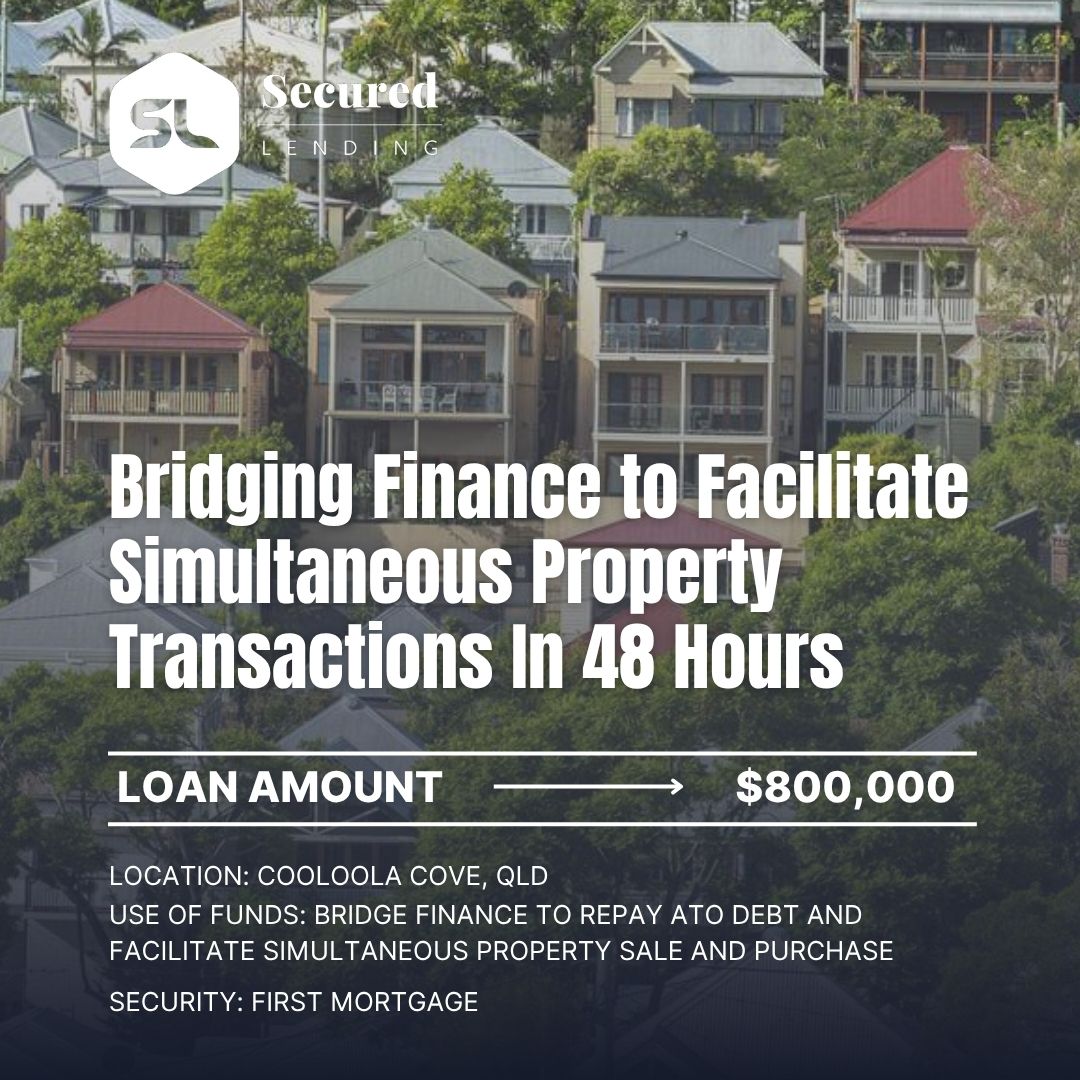
$800K Bridging Finance for Simultaneous Property Transactions in 48 Hours

$300K Second Mortgage for Dental Practice Working Capital in 5 Days
Get an indicative offer within hours, not weeks.
No credit check. No obligation.
Why Secured Lending?
Are you a broker? Find out why brokers love working with us.
Other Urgent Loans We Fund
Each page covers one deadline: what we fund, what to send us and how quickly we can settle.