Fast Non-Bank Commercial Finance
Smart commercial loans without the delays



Experts in strategic, short-term finance

Secured Lending is a non-bank commercial private lender based in Barangaroo, Sydney, funding clients across Melbourne, Brisbane, Perth, Adelaide, Canberra, and select regional areas. We provide property-backed commercial loans with fast approvals, minimal paperwork, and settlement in as little as 24–72 hours for qualifying deals.
What Is a Non-Bank Commercial Lender?
A non-bank commercial lender operates outside the traditional banking system. We assess the deal based on property security, equity position, loan purpose, exit strategy, and timing requirements. This approach gives borrowers more flexibility, faster decision-making, and higher approval likelihood, especially in urgent or complex situations where banks say no.
Why Businesses Work With a Non-Bank Commercial Lender
- •Speed: banks can take weeks or months; we approve and settle fast, often within 24–72 hours
- •Flexibility: no rigid rules, credit scoring models, or years of financials required; if the security is strong and the exit strategy makes sense, we can usually fund the deal
- •Practical lending: our loans are structured for real-world scenarios: bridging, settlements, cash flow gaps, tax obligations, supplier payments, development requirements, and urgent opportunities
Commercial Loans We Offer
- •Commercial business loans and working capital facilities
- •First mortgages and second mortgages
- •Caveat loans
- •Short-term commercial bridging loans
- •Commercial property loans
- •Developer and investor funding (selected scenarios)
Work Directly With a Specialist
Secured Lending is direct, transparent and fast. No call centres, no delays, no rigid bank-style assessments. We provide clear, practical paths to commercial funding with real valuation and property development experience, straight answers without the back-and-forth, and direct access to decision-makers.
Non-Bank Commercial Lending for Bad Credit Borrowers
A bank runs your file through a credit model and the model decides. We do not have one. Our credit team reads the security property, the equity position inside 70% LVR, the loan purpose and the exit, then makes a judgment. That is why a commercial borrower carrying defaults, ATO debt or a recent decline can get an answer here in hours rather than another decline in weeks.
Industries We Service
A non-bank commercial lender for builders and contractors
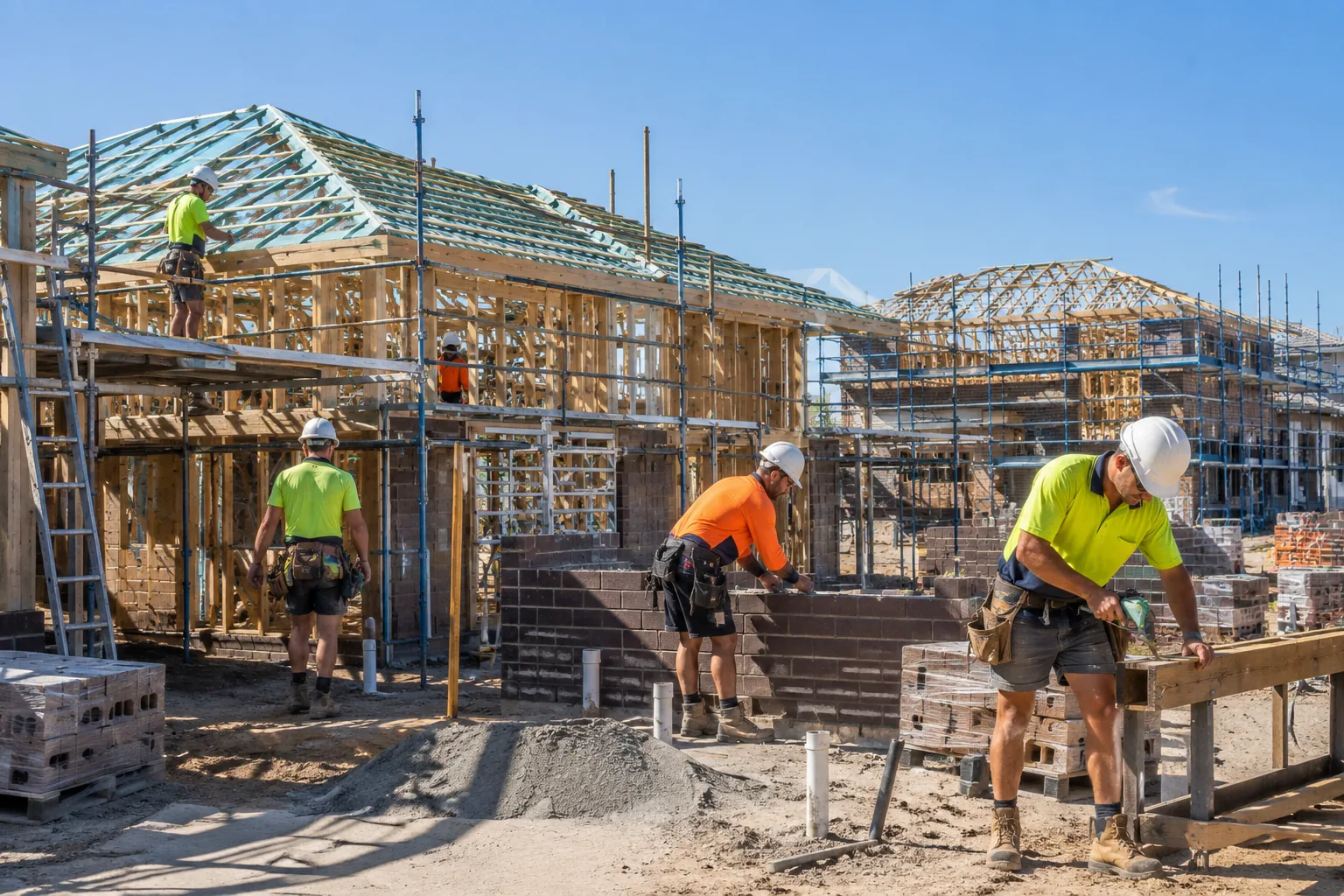
A serviceability model reads a builder's income as lumpy and therefore risky. It is neither. It is a progress claim cycle, and the money is contracted, certified and owed. As a non-bank lender we assess the security and the exit rather than a twelve month average of an income that was never meant to be even.
We lend our own funds under our own credit authority, so a construction file does not have to survive a policy written for salaried borrowers. Retentions, variations and a slow certifier are things we can read, and they are the reason a bank file often stalls.
A non-bank commercial lender can help you:
- Be assessed on a certified claim rather than a serviceability average
- Borrow when two lean quarters sit inside an otherwise strong year
- Have retentions and variations understood rather than penalised
- Get an answer from the people who make the credit decision
- Avoid a policy written for borrowers with even monthly income
- Fund a job that a credit committee would still be reviewing
A non-bank commercial lender for pubs, hotels and venues

Hospitality trade arrives in waves around holidays, events and the summer run. Averaged into a single annual figure, a strong venue can look like a weak one, and that average is what a serviceability model sees. We look at the venue, the licence and the exit.
We lend our own funds under our own credit authority. A quiet winter is not a failing business, and a venue with a good year behind it should not have to prove that to a policy that cannot see the year.
A non-bank commercial lender can help you:
- Be assessed on the venue property rather than on an averaged trading year
- Borrow when a quiet season sits inside a strong twelve months
- Have a licence and a going concern valued properly
- Fund a venue a credit policy has already declined on the numbers
- Deal with a lender that understands seasonal takings
- Get a decision without a venue being reduced to a ratio
A non-bank commercial lender for property developers

A development file is judged on presales, coverage ratios and a policy position on the postcode, and a project can be sound and still fail all three. As a non-bank lender we assess the site, the feasibility and the exit, and we can hold a position a bank policy has ruled out.
We lend our own funds, and our valuers are our own. That is why a settlement date is something we can meet rather than something a file has to be scheduled around.
A non-bank commercial lender can help you:
- Fund a project that fails a presale coverage requirement
- Borrow in a postcode a credit policy has quietly stopped funding
- Be assessed on the property and the feasibility rather than on a policy grid
- Avoid a valuation queue that would cost you the settlement
- Deal directly with the people who approve the facility
- Fund a site a committee would still be considering next month
A non-bank commercial lender for manufacturers

A manufacturer with a full order book and thin historic financials is a good business that reads badly on a serviceability model, because the model looks backwards and the order book points forwards. We assess the factory and the exit.
We lend our own funds under our own credit authority, so an order that has to be built now does not wait for a policy that was written to look at last year.
A non-bank commercial lender can help you:
- Be assessed on the factory property rather than on historic financials
- Borrow against property when a backward-looking model ignores the order book
- Fund a large order that would fail a serviceability test
- Have complex or restructured financials read rather than rejected
- Deal with a lender that will look at the security first
- Fund a machine purchase a credit policy has already declined
A non-bank commercial lender for transport and warehousing operators

Transport is capital heavy, margin thin, and financed vehicle by vehicle, which makes the balance sheet look worse than the business is. A serviceability model sees the debt and not the contracts it is servicing. We look at the depot and the contract.
We lend our own funds, so an operator with a signed contract and no time to wait is not held up by a policy about fleet age or gearing.
A non-bank commercial lender can help you:
- Be assessed on the depot property rather than on a geared balance sheet
- Borrow when vehicle finance makes the gearing look worse than it is
- Fund a contract a policy on fleet age would not support
- Have a signed contract count for more than a historic ratio
- Deal with a lender that will take property as the security
- Move on a contract before a credit policy has finished reading it
A non-bank commercial lender for retailers

Retail is judged on a trading history that a single quiet quarter can distort, and most retailers lease, so there is no business property for a policy to lend against. We lend against a director's home or investment property and assess the exit.
We lend our own funds, so a shop with a strong season ahead of it is not declined for a season behind it.
A non-bank commercial lender can help you:
- Borrow when a quiet quarter has distorted the trading history
- Be assessed on a director's property, not on a leased shopfront
- Fund a season a backward-looking credit policy would decline
- Have a strong forward order read as an asset, not ignored
- Deal with a lender that will lend without business premises
- Get an answer before the stock window for the season closes
A non-bank commercial lender for wholesalers and importers

An importer's balance sheet is mostly stock and debtors, and a serviceability model discounts both heavily. The business can be profitable and still fail the test. We lend against the warehouse, or a director's property, and assess the sell-through.
We lend our own funds under our own credit authority, so a container that is already at the port is not waiting on a policy about inventory valuation.
A non-bank commercial lender can help you:
- Borrow when a balance sheet is mostly stock and debtors
- Be assessed on property rather than on discounted inventory
- Fund an import cycle a working capital policy will not support
- Have a profitable business judged on more than its ratios
- Deal with a lender that does not discount your stock to nothing
- Fund a shipment while a policy is still valuing the inventory
A non-bank commercial lender for property investors
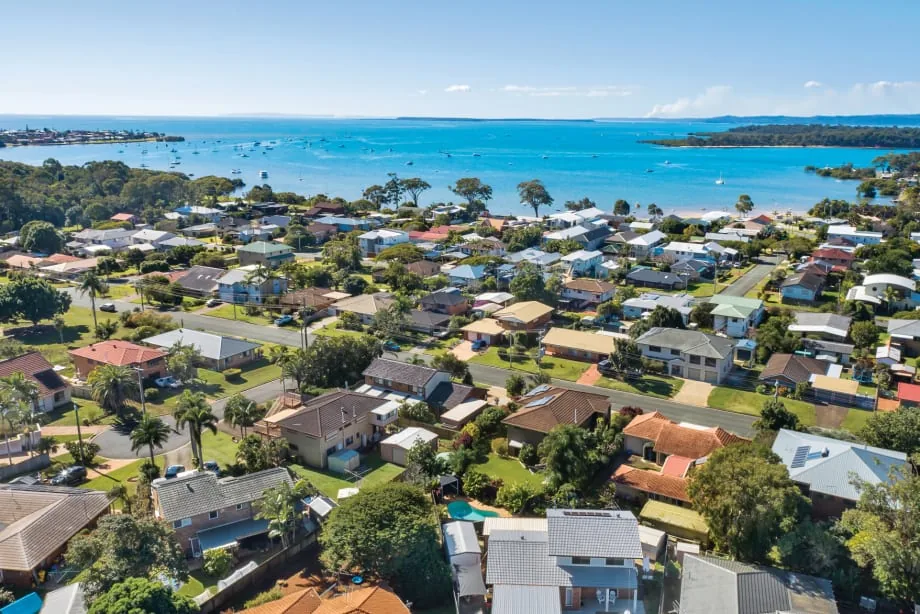
An investor with a large portfolio is often at the limit of what a serviceability model will allow, regardless of how much equity sits inside it. The equity is real, and the model cannot see it. We can, and we lend against it.
We lend our own funds, which is why an unconditional bid on a Saturday is something we can support rather than something a policy has to catch up with.
A non-bank commercial lender can help you:
- Borrow when a serviceability ceiling has been reached
- Be assessed on portfolio equity rather than on a debt ceiling
- Fund a purchase held in a company or trust structure
- Move on a property before a credit policy could be applied
- Have an unconditional bid supported rather than second-guessed
- Deal with a lender that reads equity, not just servicing capacity
A non-bank commercial lender for technology companies

A bank credit policy reads a technology company through profit, tangible assets and three years of consistent accounts. A company that has reinvested everything into the product has none of those, and the decline is the result of credit policy rather than an assessment of the business itself.
We lend our own funds under our own credit authority, so the file is assessed by the people who decide it rather than referred to a credit committee elsewhere, and a decision takes hours. Low profit, a short trading history or a complex share register are circumstances we assess, not automatic declines.
A non-bank commercial lender can help you:
- Be assessed without three years of profitable accounts
- Borrow after a year of low profit caused by reinvestment
- Borrow where a company has revenue but no tangible assets
- Deal with a lender that does not need to value the intellectual property
- Borrow through a holding company, a trust or a multi-shareholder structure
- Get an answer in hours rather than wait on a credit committee
A non-bank commercial lender for practices and professional firms
A practice buy-in is usually funded on goodwill, and a policy on goodwill lending is slow, conservative, and often decided somewhere other than the room you are sitting in. We lend against a director's home or investment property, and against the exit.
We lend our own funds under our own credit authority, so a vendor's deadline is a date we can work to rather than a date a file has to be queued behind.
A non-bank commercial lender can help you:
- Borrow against property instead of waiting on a goodwill policy
- Be assessed without a valuation of a patient list or a fee book
- Fund a buy-in on the vendor's timetable rather than a lender's
- Have a partnership structure read rather than referred upward
- Deal with a lender that does not need to value your goodwill
- Complete a transaction a slower process would have cost you
"Non-bank commercial lending comes down to credit judgement rather than rigid policy, and that is where we can add real value. On the right asset we can hold a higher LVR position, structure interest capitalisation where cash flow needs it, and settle within the same week when timing is tight. That flexibility is hard to find inside a standard bank credit model, and it is what we are built for."

Gino Tabila
Associate Director

Get an indicative offer within hours, not weeks.
No credit check. No obligation.
Why Secured Lending?
Are you a broker? Find out why brokers love working with us.
Case Studies
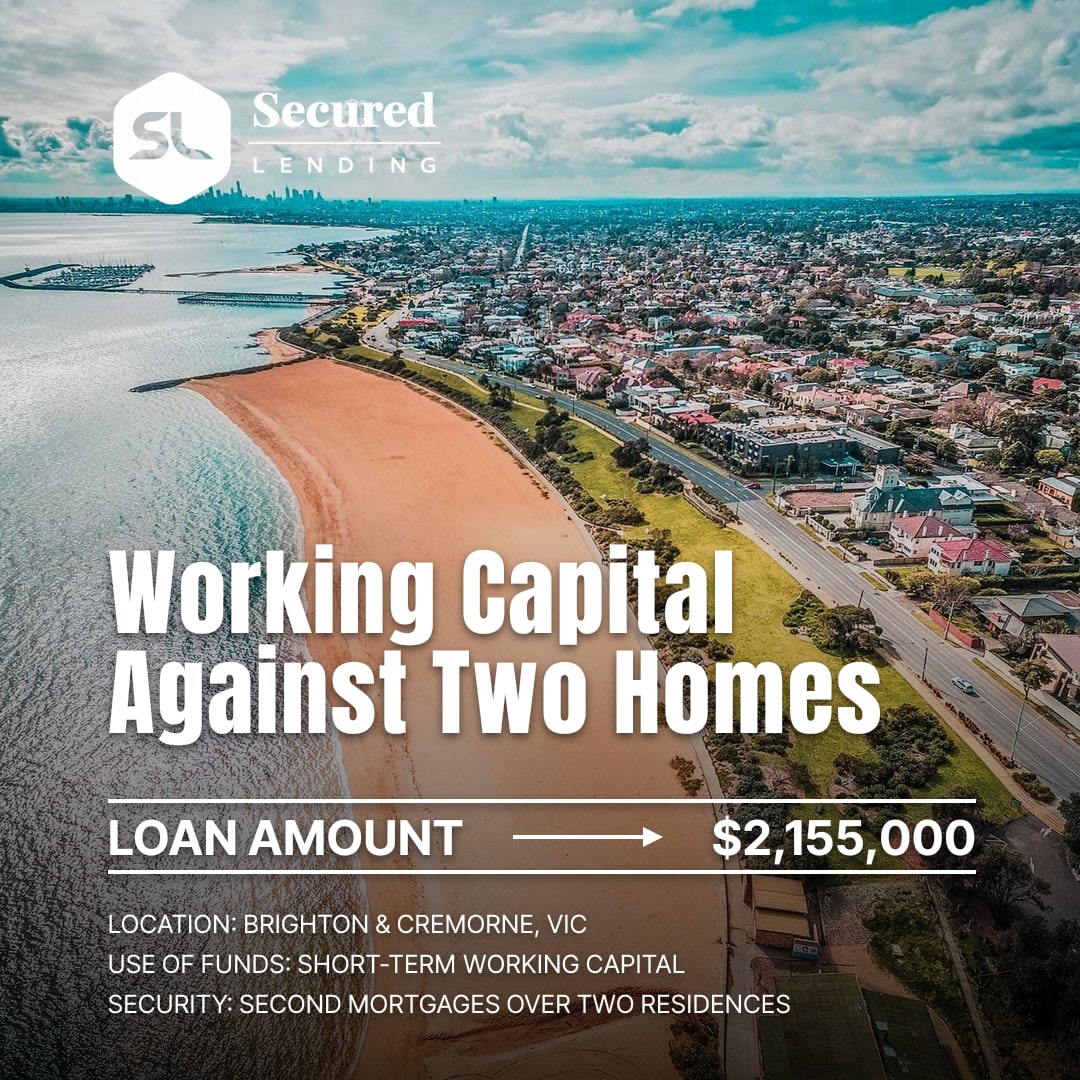
$2.155M Second Mortgage Working Capital Facility Across Brighton and Cremorne

$280K Second Mortgage for Short-Term Cash Flow in Kooyong

$545K Bridging Loan Across Three Suburbs in Melbourne's North-West
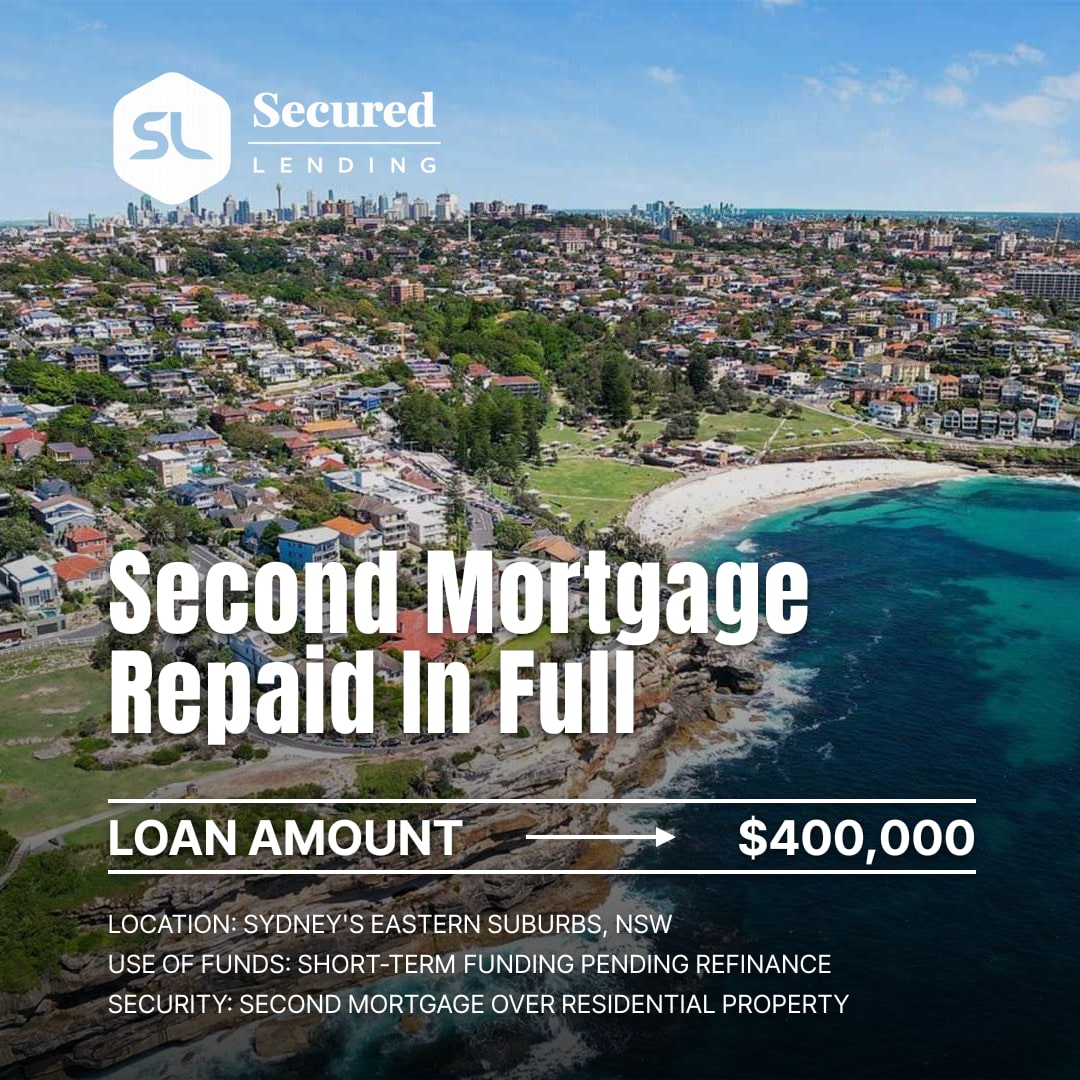
$400K Second Mortgage Repaid in Full After a Flexible Two-Month Extension
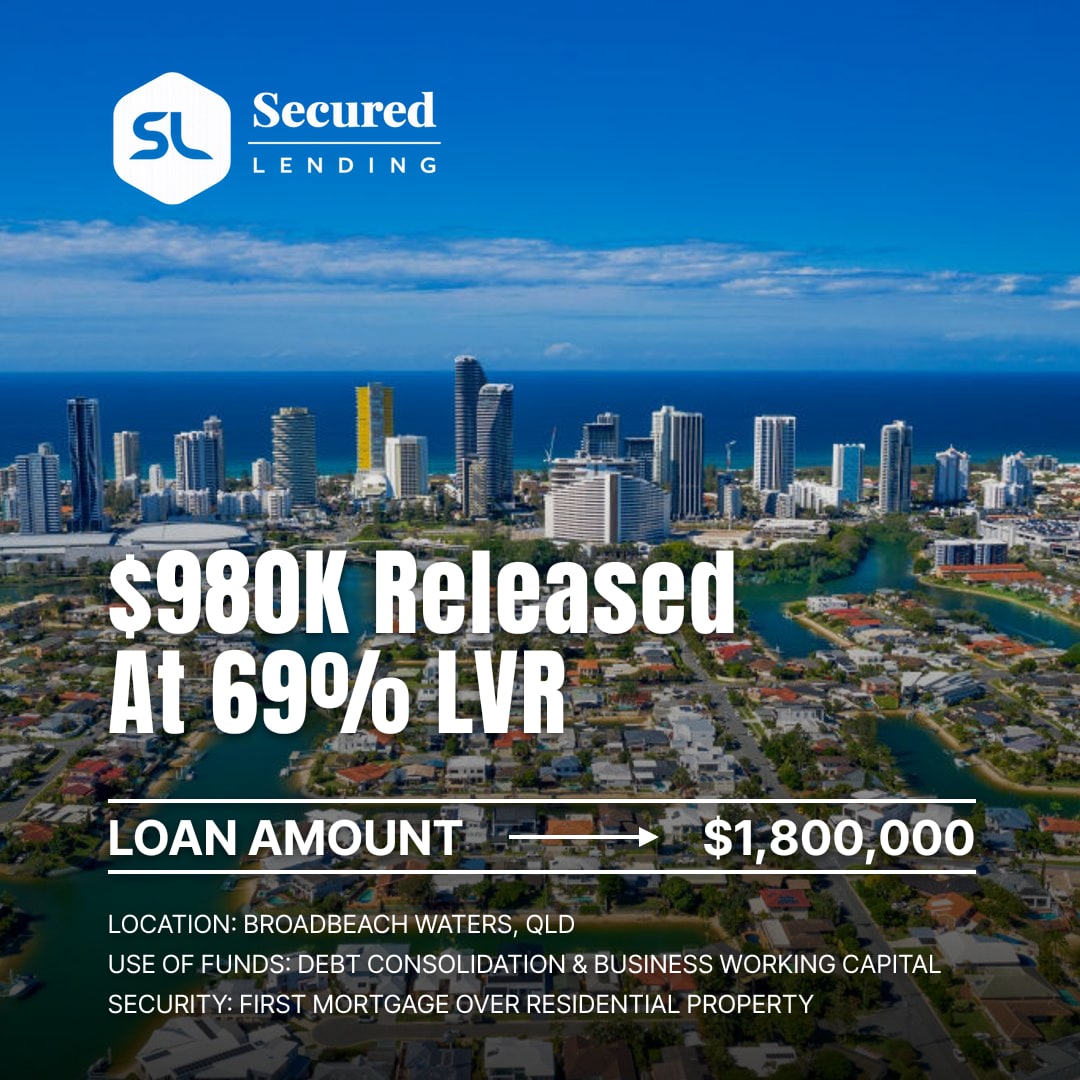
$1.8M First Mortgage Releases $980K of Working Capital for a Solar Business
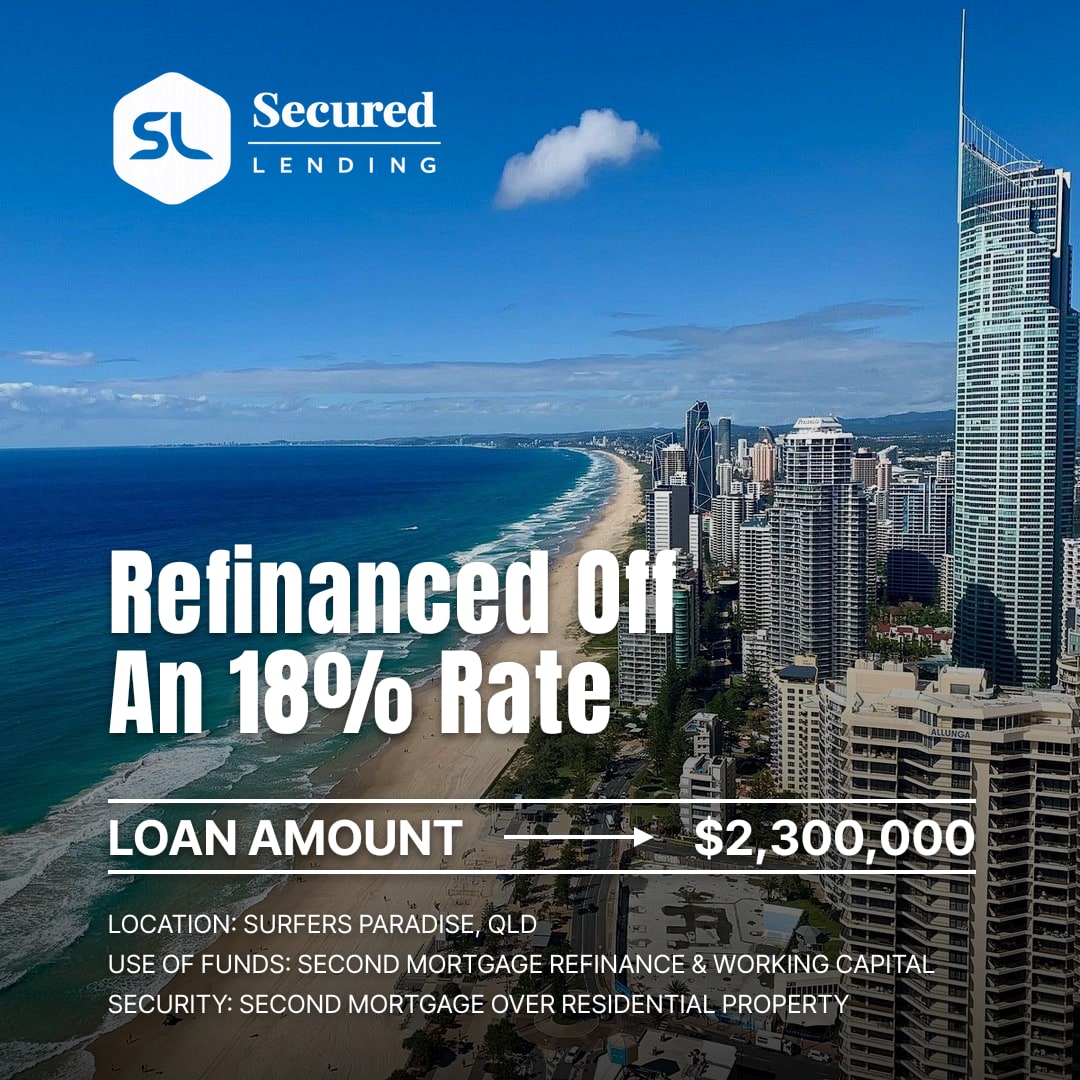
$2.3M Second Mortgage Refinances an 18% Facility for a Glass Manufacturer
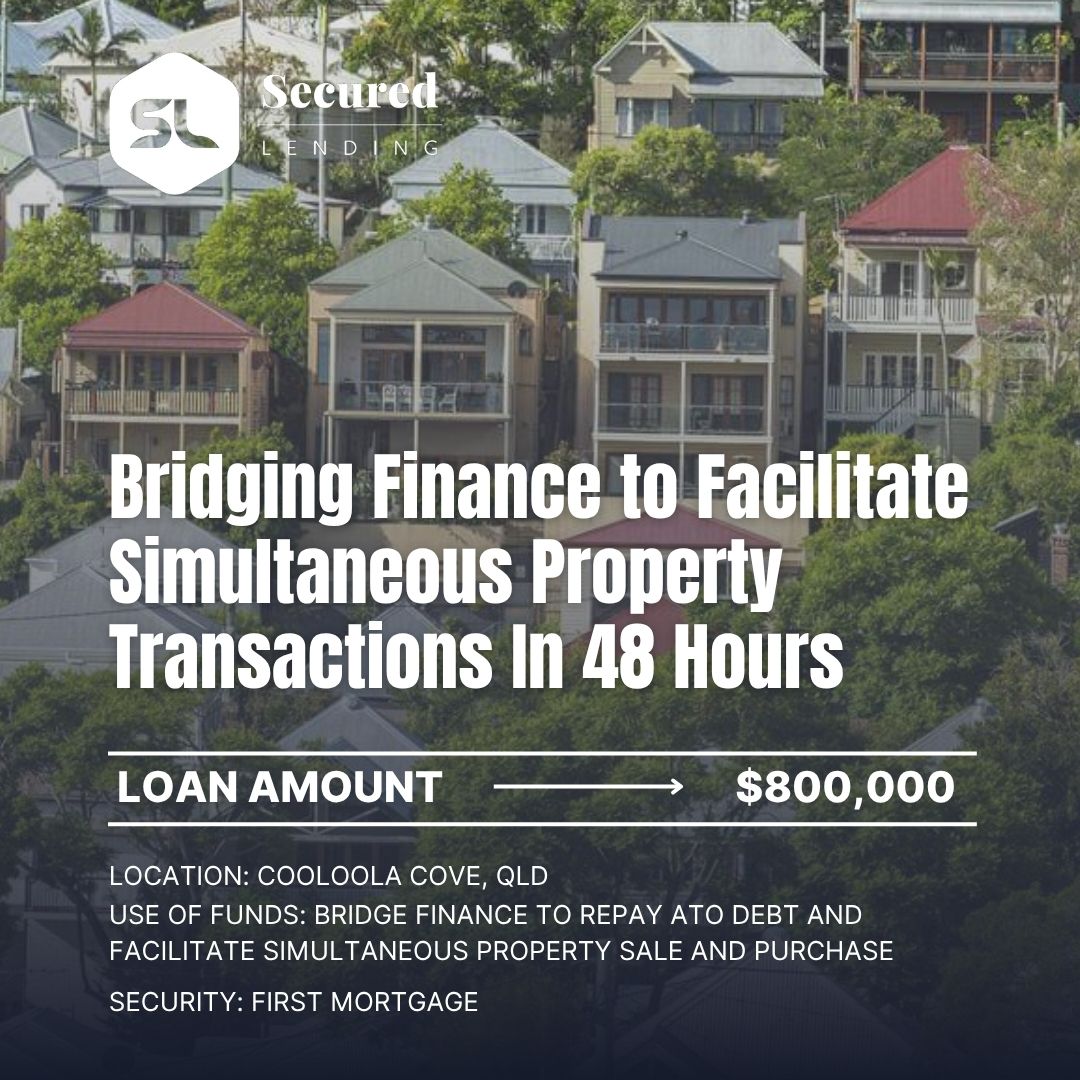
$800K Bridging Finance for Simultaneous Property Transactions in 48 Hours

$300K Second Mortgage for Dental Practice Working Capital in 5 Days
Recently Asked Questions
Get an indicative offer within hours, not weeks.
No credit check. No obligation.
Why Secured Lending?
Are you a broker? Find out why brokers love working with us.
Scenarios We Can Help With
Browse our full range of services, industries, locations, and resources to find the right financial solution for your needs.