



Key takeaways
- •In September 2026 one of Australia's largest private credit managers froze withdrawals from two wholesale funds holding more than $9 billion, and several other managers have limited redemptions.
- •Global banks have become more selective about the warehouse lines that fund many private lenders, and are steering away from smaller managers and those heavily exposed to real estate.
- •A lender that lends its own capital, such as Secured Lending, does not wait on a warehouse bank or a redemption queue, so it can still approve and settle deals quickly.
- •Secured Lending is actively funding residual stock loans, urgent settlements and bridging loans, loans to clear Australian Taxation Office debt with a clear exit, and loans at conservative loan-to-value ratios.
- •Before a broker sends a scenario to any private lender, it is worth asking where the lender's capital comes from and whether it has funds ready to lend this week.
- •A deal secured by property, with a realistic valuation and a defined exit, can get a clear answer from Secured Lending in hours, with settlement in days and within 24 hours where the scenario qualifies.
If you are a broker trying to place a commercial or private deal right now, you have probably noticed that getting a straight answer, let alone a settlement, is harder than it was twelve months ago.
Rates have risen further than many borrowers budgeted for. The Reserve Bank raised the cash rate target to 4.85% on 3 November 2026, up from 4.60%. A large developer group entered administration in August owing about $3 billion to some 40 lenders, and most of those lenders were private credit firms. Credit committees have changed what they will approve.
Behind the scenes there is also a shortage of ready capital that most lenders will not mention on a business development call. We lend our own funds, so we are still approving and settling deals. Here is why so many lenders have slowed down, and what we are funding right now.
Why funds with redemption queues have slowed their lending
Investors are asking for their cash back. On 30 September 2026 one of Australia's largest private credit managers froze withdrawals from two wholesale funds holding more than $9 billion. Other managers have limited or frozen redemptions from their own funds in recent months.
A freeze on withdrawals does not automatically stop a fund from lending. In our experience, though, when a fund is gating withdrawals or working to meet quarterly redemption requests, new loans are the first thing it quietly shelves.
Why warehouse-backed lenders are declining more deals
The pressure is not only on the investor side. Many private lenders fund their loan book with a warehouse line from a major bank, and the bank sets the eligibility criteria. A lender in that position does not fully control which loans it can write.
Those banks have become more selective. Bloomberg reported in October 2026 that global banks are cooling on financing Australian private credit funds, tightening lending terms, favouring the largest managers and steering away from smaller firms and those heavily exposed to real estate. If a deal does not fit inside a narrow institutional matrix, it is declined.
Who is still lending
So if funds are managing redemptions and warehouse lenders are restricted, who is still funding deals?
Lenders whose capital is not tied to a warehouse bank or a redemption queue: balance-sheet lenders and family offices with committed funds. Secured Lending lends its own funds, so we can still move quickly, provided the deal makes commercial sense in today's market. These are the four kinds of deal we are actively funding, and the ones worth chasing before year-end.
1. Residual stock loans with realistic pricing
Developers holding finished dwellings that have not yet sold are paying more to hold them. We are funding residual stock loans where the developer has adjusted its price expectations to the current market.
The loan is a mortgage over the finished dwellings themselves, which are real property. It gives the developer 6 to 12 months to sell them in an orderly way, rather than at a discount to clear debt.
2. Urgent commercial settlements and short-term bridging
Mainstream banks and warehouse lenders are taking weeks to clear simple conditions. Where a borrower has a binding contract, a time-sensitive commercial purchase, or a gap to bridge while waiting on a confirmed sale, we can settle in days, and within 24 hours where the scenario qualifies.
Case study: a $1.9 million commercial property purchase settled in 5 business days

The owners of a fast-growing doggy daycare business, renting their premises month to month, had the chance to buy a commercial property that suited the business. The contract timeframe was too short for a traditional lender to approve and document the loan.
We issued indicative terms within 2 hours of the enquiry and settled a $1.9 million blended facility in 5 business days: a first mortgage over the property being bought, and second mortgages over two other properties the owners held in Brighton and Braeside. The business now operates from premises it owns.
3. ATO debt and creditor workouts with a clear exit
Higher rates and tighter cash flow have left plenty of profitable businesses carrying Australian Taxation Office arrears or older tax debt. Many traditional lenders will not lend to clear it. We will, as long as the loan is secured by property, the debt is disclosed in full upfront, and there is a clear, verifiable exit, such as a refinance once the ATO debt is cleared, or a property sale. The loan funds are paid to the business, which then pays the ATO, and our page on urgent ATO debt loans sets out how it works.
Case study: a $1.15 million first mortgage to clear ATO debt before a bank refinance

A pub operator in Melbourne's inner south had a letter of offer from a bank, but the bank could not settle in time to clear an urgent ATO debt. The operator offered an investment property in Prahran, valued at about $2 million, as security.
We issued indicative terms within 2 hours of the enquiry and settled a $1.15 million first mortgage at a loan-to-value ratio of about 58% in 4 business days. The bank refinance was the exit, and the loan was repaid in full during its second month.
4. Conservative loan-to-value ratios on good-quality metro property
In an uncertain economy, an accurate valuation matters more than ever. Deals secured by strong metro residential, industrial or established commercial property at a loan-to-value ratio under 65% are getting through credit fastest. Our maximum is 70%, and the average across our loan book is around 45%. If the property would sell readily and the ratio leaves a real buffer for everyone, we do not need a 40-page credit memo to say yes.
Case study: a $2.3 million second mortgage at a combined 52% loan-to-value ratio
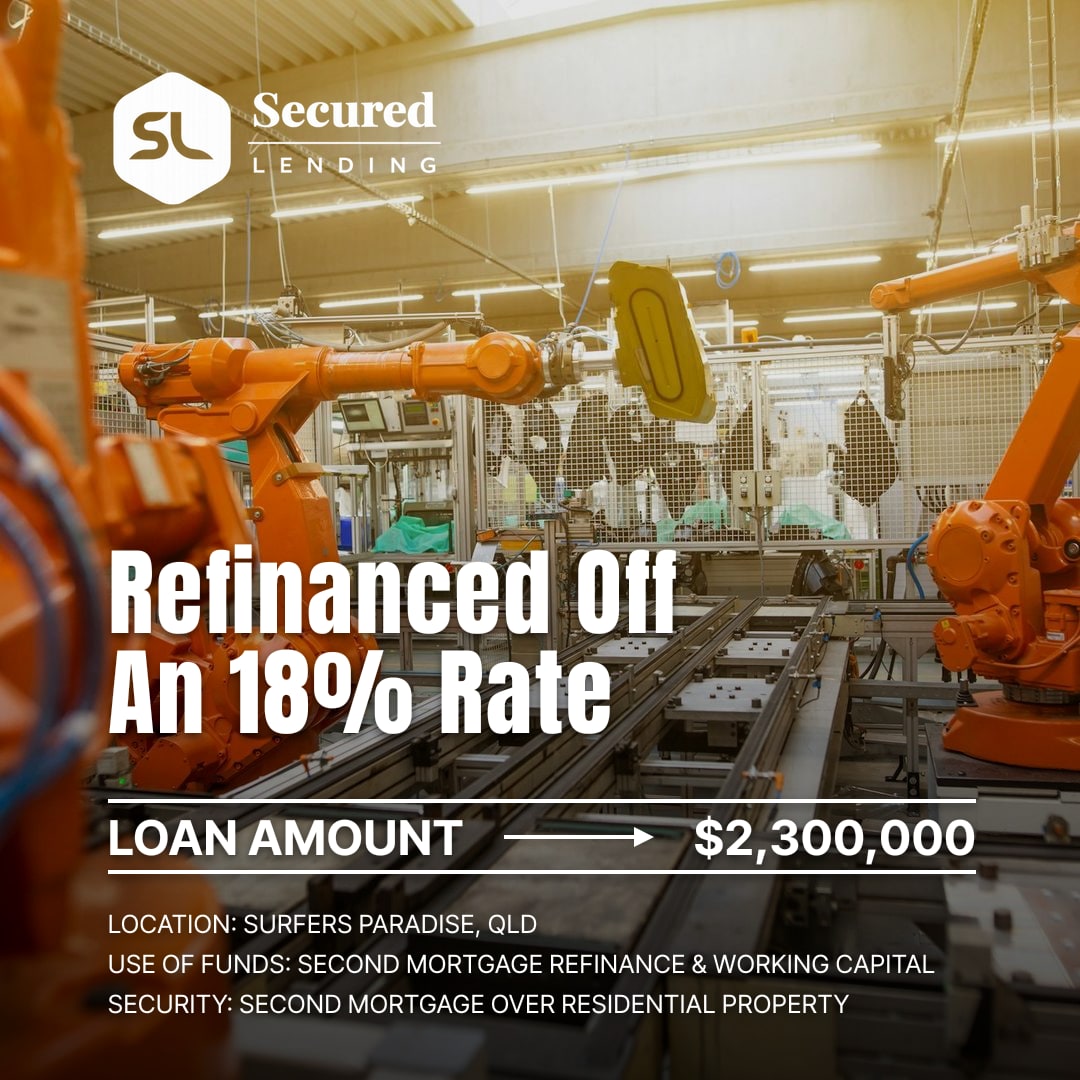
A glass manufacturing and supply business was paying roughly 18 to 20% a year on an existing $1.8 million second mortgage, and also needed working capital.
We refinanced it with a $2.3 million second mortgage over an owner-occupied home at Surfers Paradise valued at about $17 million, at a combined loan-to-value ratio of about 52%. The extra funds went to the business's working capital. The home was already on the market, and its sale is the planned exit.
The question to ask before you send a scenario
Before you spend two weeks on a submission to a lender that may be short of capital or waiting on warehouse sign-off, ask it one question: "Where does your capital come from, and do you have funds ready to deploy this week?"
A lender that can answer both parts plainly can usually give you a decision just as plainly.
How Secured Lending Can Help
We lend our own funds, so our decisions do not wait on a warehouse bank or a redemption queue. We lend to companies, from $250,000, secured by a first or second mortgage over residential, commercial or industrial property, for terms of 1 to 24 months.
If you have a deal secured by property, with a realistic valuation and a defined exit, we would be glad to look at it, and we can usually give you a clear answer in hours, not weeks. You are welcome to call us on 1300 795 175 to talk it through, or send the scenario through and we will come back to you.